

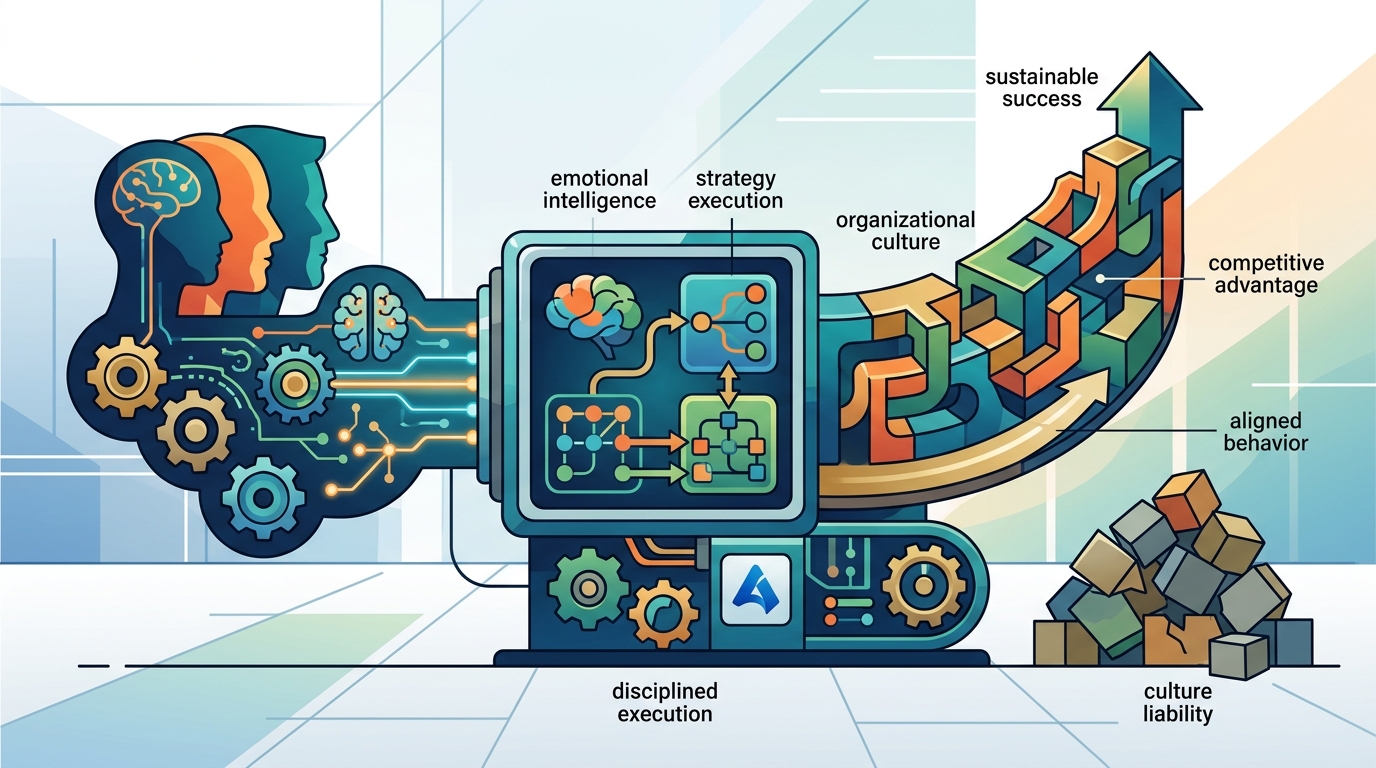
Organisational culture is not shaped by posters on the wall or annual surveys. It is shaped daily by the way leaders think, decide, and behave. When leadership thinking is intentional, emotionally intelligent, and aligned with strategic goals, culture becomes a competitive advantage rather than a liability. This guide explores the best practices leaders can adopt to deliberately shape culture, drawing on evidence from behavioural science, governance research, and decades of real-world leadership experience. Whether you lead a team of five or a workforce of five thousand, these principles apply.
What Is Leadership Thinking and Why Does It Matter?
Leadership thinking is the deliberate process by which leaders examine their own assumptions, values, and mental models before making decisions that affect their teams. It goes beyond strategy documents and task management. It is how a leader interprets situations, responds to pressure, and signals what matters to the organisation.
According to Harvard Business School, every communication a leader delivers can shape organisational culture. Leaders who are thoughtful about their thinking patterns create clarity for their people and consistency in the culture they build.
Culture Is an Outcome, Not a Cause
One of the most important reframes for any executive is understanding that culture is an outcome of leadership behaviour, not a standalone initiative. As Uncapped Potential articulates, leadership behaviour is the cause, and culture is the result. When leaders delay performance conversations, ignore behavioural issues, or tolerate toxic senior leaders, the downstream cultural effects are predictable and damaging.
Boards and executive teams that treat leadership capability as a strategic risk control create a more stable and predictable operating environment. This means assessing leadership conduct, emotional intelligence, and consistency of management action with the same rigour applied to financial and operational risks.
Why Strategy Alone Is Not Enough
Many organisations invest heavily in strategic planning but underinvest in the leadership behaviours needed to execute that strategy. Uncapped Potential's strategy and performance advisory addresses this gap by connecting disciplined execution with emotionally intelligent leadership at every level.
Emotional Intelligence as the Foundation
Emotional intelligence is the capacity to recognise, understand, and manage your own emotions while also recognising and influencing the emotions of others. Research by Daniel Goleman established it as a critical differentiator for leadership effectiveness, and this has only become more relevant as workplaces grow more complex.
At Uncapped Potential, emotional intelligence is positioned as the real competitive advantage for modern leaders. Organisations that embed it into leadership frameworks outperform on engagement, retention, and performance metrics. It is not a soft skill. It is a strategic capability.
The Role of Self-Awareness
Self-awareness is the cornerstone of emotional intelligence. Leaders who understand their triggers, biases, and behavioural patterns are far better equipped to model the culture they want to create. Uncapped Potential explores this in depth in their article on the power of self-awareness in leadership.
Best Practices for Shaping Culture Through Leadership
1. Model the Behaviour You Expect
Effective leaders lead by example. As SHRM research confirms, employees look to leadership for cues on what is important, what is acceptable, and what is rewarded. If leaders say they value transparency but hoard information, the culture will reflect that contradiction.
2. Invest in Leadership Capability at Every Level
Line managers carry the day-to-day burden of psychosocial safety and performance management. Boards should expect systematic investment in early intervention skills, conflict management, and emotionally intelligent leadership. Explore Uncapped Potential's leadership development programs to see how this works in practice.
3. Align Values With Daily Decision-Making
Values must go beyond words on a wall. They need to be woven into hiring, performance management, promotions, and rewards. Microsoft's transformation under Satya Nadella is a well-documented example: by emphasising empathy and a growth mindset, the company achieved a cultural shift that spurred innovation across the organisation.
Traditional vs. Emotionally Intelligent Leadership
| Dimension | Traditional Leadership | Emotionally Intelligent Leadership |
|---|---|---|
| Decision-Making | Top-down, data only | Inclusive, data plus human insight |
| Conflict Response | Avoidance or authority | Early intervention with empathy |
| Performance Feedback | Annual review cycle | Ongoing purposeful conversations |
| Culture Approach | Policy-driven compliance | Behaviour-driven, values-led |
| Risk Management | Financial and operational focus | Includes leadership behaviour as risk |
| Employee Engagement | Survey-based measurement | Lived experience and triangulated data |
Measuring Culture Beyond Surveys
Traditional culture surveys can distort or mask reality. Uncapped Potential has written extensively about the hidden costs of relying on anonymous surveys as a proxy for cultural health. Boards must triangulate data, seek independent insight, and understand lived experience rather than relying solely on executive narratives.
Tools like the Human Synergistics LSI provide a structured, evidence-based approach to understanding the thinking and behavioural styles that drive culture at both individual and team levels. According to SHRM, managing culture involves regular assessment and alignment with current business objectives through cultural audits, engagement surveys, and other metrics.
Key Takeaways
- Culture is an outcome of leadership behaviour, not a standalone initiative to be managed separately.
- Emotional intelligence is a strategic capability that directly drives engagement, retention, and performance.
- Leaders must model the behaviours they expect and align organisational values with daily decisions.
- Leadership capability should be governed with the same rigour as financial and operational risk.
- Anonymous culture surveys alone can create a false sense of transparency. Triangulate your data.
- Self-awareness is the cornerstone of emotionally intelligent leadership and cultural transformation.
- Investing in leadership development at every level, especially line managers, creates lasting cultural change.
Frequently Asked Questions
What is the most important leadership trait for shaping culture?
Self-awareness and emotional intelligence are the most critical traits. Leaders who understand their own thinking patterns and emotional triggers are better equipped to model the behaviours that shape a positive culture.
How does leadership behaviour affect organisational culture?
Leadership behaviour directly creates the norms, expectations, and trust levels within a team. When leaders consistently demonstrate values-aligned behaviour, the culture reflects those values. When they do not, dysfunction follows.
Can culture be changed without changing leadership?
Rarely. Because culture is an outcome of leadership behaviour, meaningful cultural change almost always requires a shift in how leaders think, decide, and act. Programs that focus only on policies or processes without addressing leadership mindset tend to fail.
What is emotional intelligence in a leadership context?
Emotional intelligence in leadership is the ability to recognise and manage your own emotions while understanding and positively influencing the emotions of your team. It includes self-awareness, self-regulation, empathy, social skills, and motivation.
How do you measure organisational culture effectively?
Effective culture measurement goes beyond annual surveys. It combines structured diagnostic tools like the Human Synergistics LSI, qualitative interviews, behavioural observation, and triangulated data to understand what is actually happening below the surface.
Why do traditional leadership programs often fail to change culture?
Many programs focus on knowledge transfer rather than behavioural change. Without embedding emotional intelligence, ongoing coaching, and accountability into the development process, leaders revert to old patterns quickly.
What role do boards play in shaping organisational culture?
Boards set the governance tone. They should treat leadership capability, conduct, and emotional intelligence as strategic risk controls, not optional extras. This ensures culture is actively governed rather than left to chance.
How long does it take to shift organisational culture?
Meaningful culture shifts typically take 12 to 36 months of sustained effort, depending on organisational size and the depth of change required. Quick fixes rarely produce lasting results.
Take the Next Step
If you are ready to move beyond surface-level culture initiatives and build leadership capability that drives real, measurable cultural change, book a consultation with Uncapped Potential. With over 30 years of lived leadership experience and certified expertise in emotional intelligence and Human Synergistics diagnostics, the team delivers tailored solutions grounded in what actually works.