

Emotional intelligence is the ability to recognise, understand, and manage your own emotions while also influencing the emotions of those around you. For leaders, it is the single most important differentiator between good performance and exceptional impact. Research from Harvard Business School confirms that 71 percent of employers now value emotional intelligence over technical skills when evaluating candidates. This guide walks you through the most effective resources, tools, and practices to build genuine EI capability, whether you are an emerging manager or a seasoned executive looking to sharpen your edge.
Why Emotional Intelligence Matters More Than Ever for Leaders
The modern workplace demands more from leaders than technical competence. A 2025 Gallup report found that 70 percent of team engagement is attributable to the manager. Engaged teams consistently deliver lower turnover, higher productivity, and stronger customer outcomes.
Meanwhile, a 2023 EY Empathy in Business Survey of more than 1,000 U.S. workers found that mutual empathy between leaders and employees leads to increased efficiency (88%), creativity (87%), and job satisfaction (87%). These are not soft metrics. They translate directly to revenue and retention.
As Uncapped Potential describes it, emotional intelligence is a superpower and the one capability AI cannot replace. Organisations that invest in emotionally intelligent leadership create cultures where strategy turns into action.
The Five Components of Emotional Intelligence
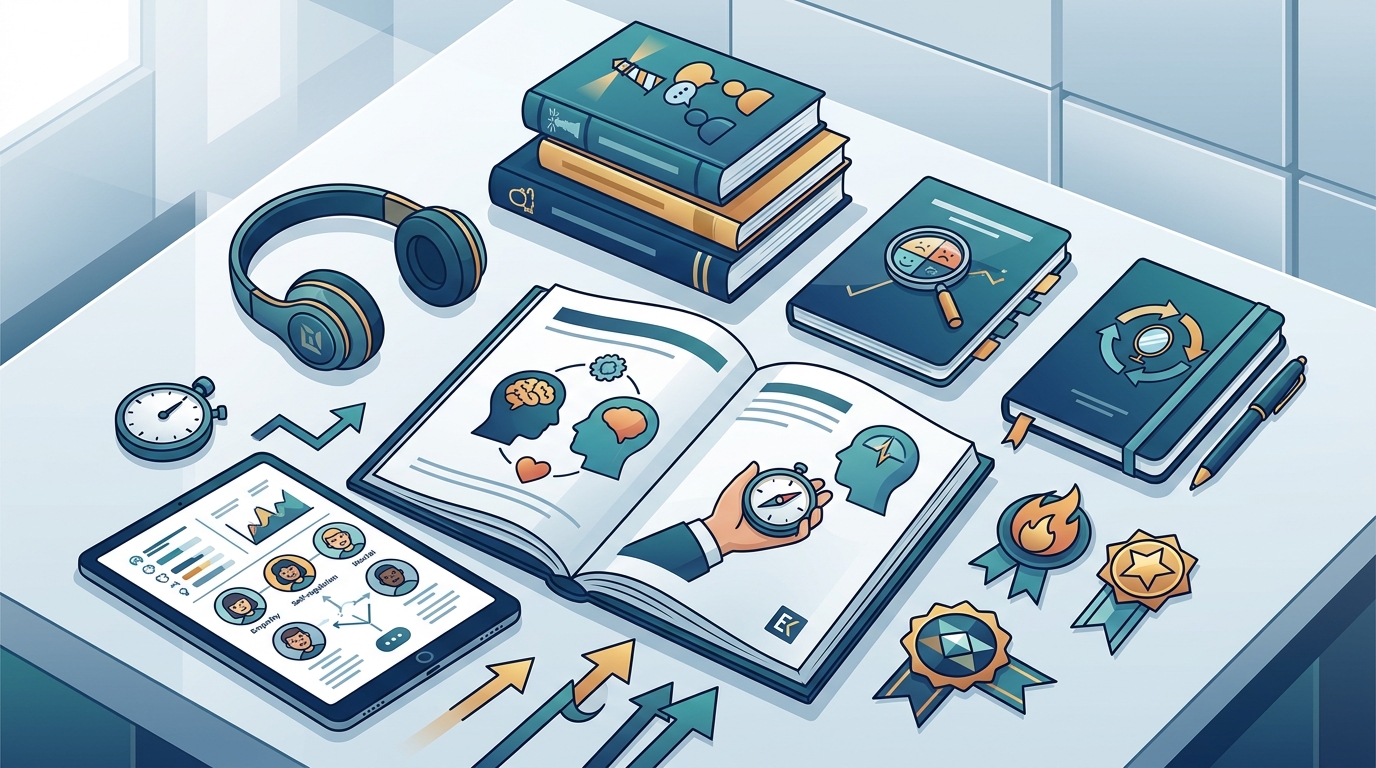
Psychologist Daniel Goleman identified five core components of emotional intelligence in his landmark 1995 book Emotional Intelligence. These components are self-awareness, self-regulation, motivation, empathy, and social skills. Goleman asserts that these domains represent learned capabilities, not inborn traits, and can therefore be developed at any career stage.
Self-Awareness: The Foundation
Self-awareness is the conscious knowledge of your own character, emotions, and triggers. Research by organisational psychologist Tasha Eurich suggests that only 10 to 15 percent of people are truly self-aware, even though 95 percent believe they are. As Uncapped Potential explores in their article on why self-awareness is the most overlooked driver of leadership performance, high performers are particularly at risk because success reinforces behaviour without questioning its cost.
Self-Regulation, Motivation, and Empathy
Self-regulation is the ability to control impulsive reactions and redirect disruptive emotions. Motivation, in Goleman's model, refers to intrinsic drive toward goals beyond money or status. Empathy involves understanding and responding to the emotional states of others. Together, these three components allow leaders to navigate conflict, inspire teams, and make balanced decisions under pressure.
Social Skills
Social skills encompass the abilities needed for effective interpersonal interactions, including communication, influence, and collaboration. Leaders with strong social skills build cohesive teams and foster environments where psychosocial safety and trust become performance drivers.
Diagnostic Tools and Assessments
Before you develop EI, you need to measure it. Diagnostic tools provide a baseline and highlight blind spots that self-reflection alone cannot uncover.
Human Synergistics Life Styles Inventory (LSI)
The Human Synergistics LSI is a powerful diagnostic that maps individual thinking and behavioural styles. Used by Uncapped Potential as a core part of their advisory work, the LSI helps leaders understand how their inherent thinking patterns drive behaviour, decisions, and impact on others.
360-Degree Emotional Intelligence Assessments
Tools such as the EQ-i 2.0 and the MSCEIT provide multi-rater feedback on emotional competencies. Harvard's Emotional Intelligence in Leadership program includes a 360-degree EI assessment as standard, requiring feedback from at least three colleagues. This approach surfaces the gap between how leaders see themselves and how others experience them.
Formal Training Programs and Masterclasses
Structured programs provide accountability, expert facilitation, and peer learning. Not all programs are equal, however. As Uncapped Potential argues in their piece on why typical leadership training does not work, generic content delivered without diagnostic depth rarely drives lasting change.
Tailored Advisory and Masterclasses
Uncapped Potential delivers emotionally intelligent leadership masterclasses that blend diagnostic tools, real-world case studies, and personalised mentoring. With over 30 years of lived executive experience, their facilitators hold qualifications as both Daniel Goleman Emotional Intelligence Facilitators and Certified Human Synergistics practitioners.
University and Executive Education
Harvard DCE offers an Emotional Intelligence in Leadership program available online (four weeks) or on campus (two intensive days). The University of Wisconsin provides an EI for Leaders course recognised by SHRM for professional development credits. Both are strong options for leaders seeking academic rigour alongside practical application.
Essential Books and Frameworks
Self-directed learning remains one of the most accessible ways to deepen EI understanding. The following titles are widely regarded as foundational:
- Emotional Intelligence by Daniel Goleman (1995) - the original framework
- Primal Leadership by Goleman, Boyatzis, and McKee (2002) - EI applied to leadership
- HBR Emotional Intelligence Series - concise, research-backed guides on specific EI topics
- Working with Emotional Intelligence by Goleman (1998) - EI in the workplace context
Books build knowledge, but knowledge alone changes nothing. Pair reading with coaching or a structured program like the Uncapped Potential leadership development offering to translate insight into behaviour change.
Daily Practices That Build EI Over Time
Emotional intelligence is not built in a single workshop. It requires consistent, deliberate practice woven into everyday leadership moments.
Journaling and Reflection
Record how your emotions influenced decisions and interactions each day. Over time, patterns reveal themselves, helping you differentiate between intent and impact.
Active Listening and Feedback Loops
Practice putting away distractions, paraphrasing what others say, and proactively seeking honest feedback. Self-aware leaders do not wait for feedback; they engineer it through trusted relationships and deliberate conversation.
Mindfulness and Pause Practices
Before reacting in high-pressure moments, pause. Ask yourself what emotion was triggered and why. This simple habit prevents reactive behaviour and models emotional maturity to your team.
Resource Comparison Table
| Resource Type | Examples | Best For | Time Investment | Cost Range |
|---|---|---|---|---|
| Diagnostic Assessment | Human Synergistics LSI, EQ-i 2.0 | Establishing baseline and blind spots | 1-3 hours | $$ |
| Tailored Masterclass | Uncapped Potential EI Masterclasses | Behaviour change with expert facilitation | 1-5 days | $$$ |
| University Program | Harvard DCE, UW-Madison | Academic rigour and credentials | 2 days - 4 weeks | $$$-$$$$ |
| Books | Goleman's Emotional Intelligence series | Foundational knowledge building | Ongoing | $ |
| Daily Practice | Journaling, mindfulness, active listening | Sustaining long-term growth | 10-20 min/day | Free |
| Executive Coaching | 1:1 advisory with certified practitioners | Personalised, high-impact development | Ongoing | $$$-$$$$ |
Key Takeaways
- Emotional intelligence is a learned capability, not an innate trait. Leaders can develop it at any stage of their career.
- Only 10 to 15 percent of people are truly self-aware, making diagnostic tools essential starting points.
- Generic leadership training rarely works. Programmes grounded in diagnostics and personalised mentoring deliver lasting results.
- Gallup data shows 70 percent of team engagement depends on the manager, making EI a direct lever for performance.
- Books build knowledge, but pairing reading with coaching or masterclasses translates insight into behaviour change.
- Daily micro-practices like journaling, active listening, and pause techniques sustain EI growth over time.
- The Human Synergistics LSI is a powerful diagnostic for understanding how thinking patterns drive leadership behaviour.
Frequently Asked Questions
What is emotional intelligence in leadership?
Emotional intelligence in leadership is the ability to perceive, understand, manage, and leverage emotions constructively, both your own and those of the people you lead. It enables better decision-making, stronger relationships, and healthier team cultures.
Can emotional intelligence be learned?
Yes. Daniel Goleman's research confirms that the five domains of EI are learned capabilities, not fixed traits. With the right tools, feedback, and practice, any leader can develop greater emotional intelligence.
What is the best assessment for measuring emotional intelligence?
There is no single best assessment. The Human Synergistics LSI measures thinking and behavioural styles that underpin EI. The EQ-i 2.0 directly measures emotional quotient. A 360-degree assessment adds the critical perspective of how others experience your leadership.
How long does it take to develop emotional intelligence?
Meaningful improvement typically takes three to six months of consistent practice, supported by diagnostic feedback and coaching. Unlike technical skills, EI development is ongoing and deepens with experience.
Why does typical leadership training fail to build EI?
Most generic programmes rely on content delivery without diagnostic depth or personalised follow-through. Lasting behaviour change requires self-awareness of individual thinking patterns, targeted mentoring, and real-world application.
What role does self-awareness play in emotional intelligence?
Self-awareness is the foundation of all other EI components. Without it, leaders cannot regulate emotions, empathise with others, or build effective relationships. It is the starting point for every meaningful development journey.
How does emotional intelligence improve team performance?
Emotionally intelligent leaders create psychologically safe environments where people feel empowered to take risks, share ideas, and collaborate. Google's Project Aristotle research identified psychological safety as the number one factor in high-performing teams.
Are online EI courses effective?
Online courses from reputable institutions like Harvard DCE or platforms like LinkedIn Learning provide solid foundational knowledge. However, they are most effective when combined with live coaching, diagnostic assessments, and on-the-job practice.
Your Next Step
If you are serious about developing emotional intelligence as a leadership capability, start with a diagnostic. Understanding where you are today is the fastest path to meaningful growth. Book a consultation with Uncapped Potential to explore how tailored EI masterclasses, Human Synergistics LSI diagnostics, and executive mentoring can accelerate your leadership impact.