

Great leadership is no longer defined by technical expertise alone. Emotional intelligence is the ability to understand and manage your emotions, as well as recognise and influence the emotions of those around you. Research consistently shows that leaders with high emotional intelligence build stronger teams, reduce conflict, and drive measurable business outcomes. In this guide, we break down the practical steps you can take to lead your team using emotional intelligence, drawing on Daniel Goleman's foundational framework and the latest peer-reviewed evidence. Whether you are a new manager or an experienced executive, these strategies will help you create a culture of trust, performance, and resilience.
What Is Emotional Intelligence in Leadership?
Emotional intelligence (EI) is the capacity to monitor, understand, regulate, and use one's own and others' emotions to guide thinking and behaviour. In leadership, EI goes beyond simply being empathetic or approachable. It is the foundation for handling interpersonal relationships judiciously and creating the conditions where teams can perform at their best.
As the Center for Creative Leadership notes, the ability to connect emotionally with employees is essential for leadership effectiveness. At Uncapped Potential, we consider emotional intelligence a superpower and a driving force behind individual and business success.
The Five Components of Emotional Intelligence
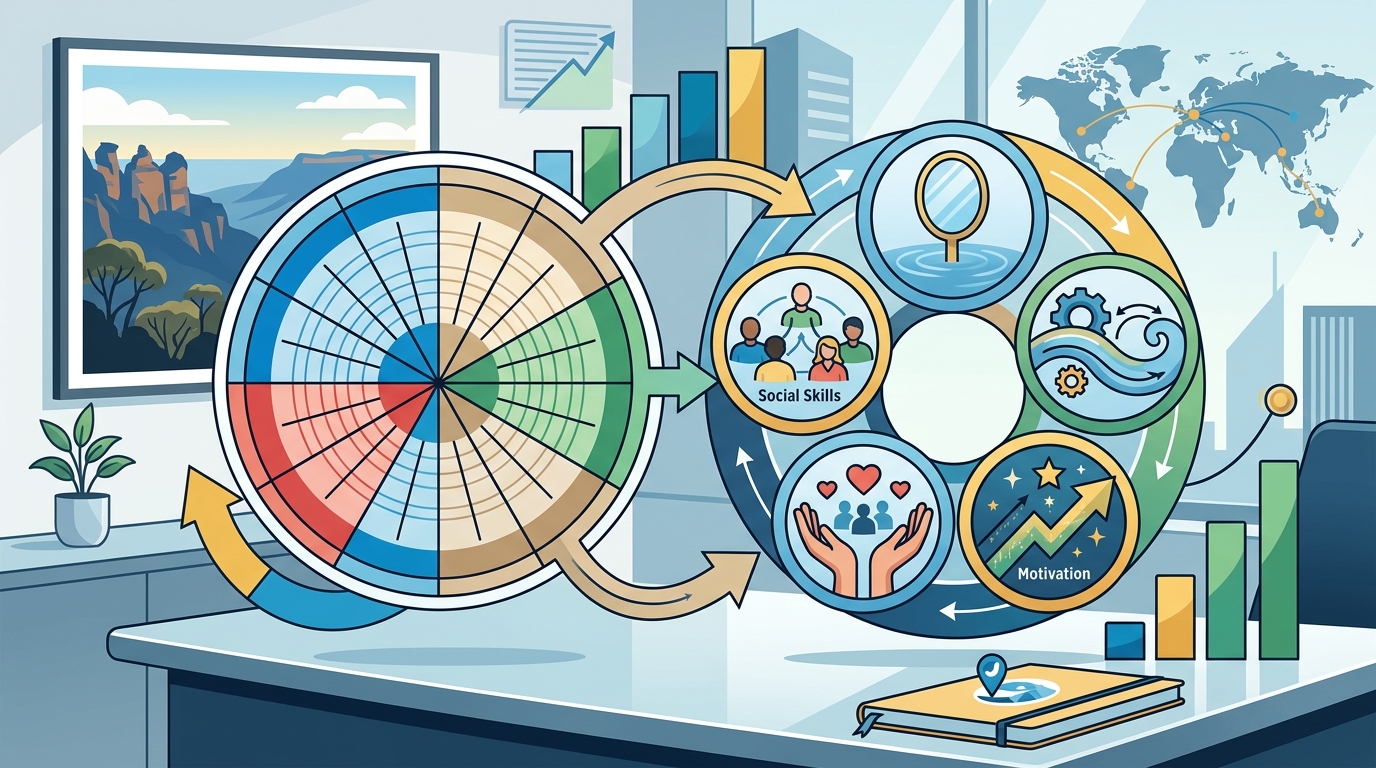
Daniel Goleman's framework, first published in 1995, outlines five core components of emotional intelligence. Understanding each one is the first step toward applying EI in your leadership practice.
| Component | Definition | Leadership Application |
|---|---|---|
| Self-Awareness | Recognising your own emotions, strengths, and triggers | Making values-driven decisions and understanding your impact on others |
| Self-Regulation | Controlling impulses and managing emotional reactions | Staying composed under pressure and responding rather than reacting |
| Motivation | Being driven by purpose beyond external rewards | Setting ambitious goals and sustaining team energy through setbacks |
| Empathy | Understanding and responding to the emotions of others | Reading team dynamics and providing tailored support |
| Social Skills | Managing relationships and building networks effectively | Influencing, coaching, and resolving conflicts constructively |
Goleman asserts that these domains represent learned capabilities, not inborn traits, meaning every leader can develop them with deliberate practice. Our article on the power of self-awareness explores one of these pillars in greater depth.
Why Emotional Intelligence Matters for Team Performance
The evidence linking emotional intelligence to team outcomes is substantial. A hybrid literature review published in Heliyon (2023) analysing 104 peer-reviewed articles found that emotionally intelligent leaders improve both behaviours and business results and have a direct impact on work team performance.
More recently, a 2026 meta-analysis published in Administrative Sciences confirmed positive and significant relationships between emotional intelligence, transformational leadership, and team effectiveness. In practical terms, leaders who invest in EI create environments where people feel psychologically safe, engaged, and accountable.
The Business Case in Numbers
According to Harvard Business School Online, 71 percent of employers value emotional intelligence more than technical skills when evaluating candidates. This underscores why organisations increasingly prioritise EI development as part of their leadership development programs.
Practical Steps to Lead With Emotional Intelligence
1. Build Self-Awareness Through Feedback
Start by understanding your own thinking and behaviour styles. Tools such as the Human Synergistics Life Styles Inventory (LSI) provide data-driven insights into how your leadership style is perceived by others. Self-awareness is the conscious knowledge of one's own character, feelings, and impact, and it forms the bedrock of every other EI competency.
2. Practise Emotional Regulation Daily
When a situation triggers a strong reaction, pause before responding. The Center for Creative Leadership describes these triggers as "hot buttons" that can provoke destructive responses. Effective leaders recognise those moments and choose deliberate, constructive actions instead. This practice builds trust and models the behaviour you expect from your team.
3. Lead With Empathy, Not Just Authority
Empathy does not mean avoiding difficult conversations. It means understanding the emotional landscape before, during, and after those conversations. Read our perspective on the empathy trap to learn how to balance compassion with accountability. Global leadership development firm DDI ranks empathy as the number one leadership skill today.
Emotional Intelligence vs. Technical Skills: What Matters More?
Technical skills and cognitive intelligence remain important. They are the entry-level requirements for leadership roles. However, as Goleman highlighted in the Harvard Business Review, the most effective leaders share one crucial trait: a high degree of emotional intelligence.
| Factor | Technical Skills (IQ) | Emotional Intelligence (EQ) |
|---|---|---|
| Role in Leadership | Baseline competency for the role | Differentiator for leadership effectiveness |
| Developability | Often peaks early in career | Can be developed throughout life |
| Impact on Teams | Drives task quality | Drives engagement, trust, and retention |
| Employer Priority | Expected | Valued above IQ by 71% of employers |
The takeaway is clear: you need both. But if you want to move from a competent individual contributor to a leader who shapes culture and performance, EI is the lever. Our leadership masterclasses are designed to develop exactly these capabilities.
Key Takeaways
- Emotional intelligence is a learned capability, not a fixed trait, and it can be developed at any career stage.
- Goleman's five components (self-awareness, self-regulation, motivation, empathy, social skills) provide a practical framework for growth.
- Research from over 100 peer-reviewed studies confirms that emotionally intelligent leaders improve team performance and business results.
- 71% of employers now value EQ over technical skills when assessing candidates for leadership roles.
- Self-awareness is the foundational EI skill. Tools like the Human Synergistics LSI can accelerate development.
- Empathy and social skills reduce team conflict and build the psychological safety needed for high performance.
- Investing in EI-focused leadership development delivers measurable returns in engagement, retention, and culture.
Frequently Asked Questions
What is emotional intelligence in leadership?
Emotional intelligence in leadership is the ability to understand and manage your own emotions while recognising and influencing the emotions of your team. It enables leaders to build trust, resolve conflict, and inspire commitment.
Can emotional intelligence be learned?
Yes. Daniel Goleman's research confirms that emotional intelligence competencies are learned capabilities, not inborn traits. Targeted coaching, feedback tools, and deliberate practice all accelerate EI development.
Why is emotional intelligence more important than IQ for leaders?
While IQ and technical skills are necessary, they serve as baseline requirements. Emotional intelligence differentiates effective leaders by enabling them to manage relationships, navigate change, and engage teams at a deeper level.
What are the five components of emotional intelligence?
The five components, as defined by Daniel Goleman, are self-awareness, self-regulation, motivation, empathy, and social skills. Each plays a distinct role in leadership effectiveness.
How does emotional intelligence improve team performance?
Emotionally intelligent leaders create psychologically safe environments where team members feel valued and accountable. Research shows this leads to higher engagement, reduced conflict, and stronger organisational outcomes.
What tools can help measure emotional intelligence?
The Human Synergistics Life Styles Inventory (LSI) is one widely used tool that measures thinking and behaviour styles linked to leadership effectiveness. Other validated instruments include the EQ-i 2.0 and the Trait Emotional Intelligence Questionnaire (TEIQue).
How long does it take to develop emotional intelligence?
EI development is ongoing. Many leaders see noticeable shifts in self-awareness and interpersonal effectiveness within three to six months of structured coaching and feedback, though mastery deepens over years of consistent practice.
Where can I get professional support for EI-based leadership development?
Organisations like Uncapped Potential specialise in emotionally intelligent leadership development. Their programs combine the Human Synergistics LSI with practical masterclasses tailored to your organisation's context.
Start Leading With Greater Emotional Intelligence
Developing emotional intelligence is not a one-off workshop. It requires structured support, honest feedback, and ongoing practice. If you are ready to elevate your leadership impact, book a consultation with Uncapped Potential to explore how our emotionally intelligent leadership programs can help you and your team perform at your best.