

How Emotional Intelligence Drives Organizational Performance
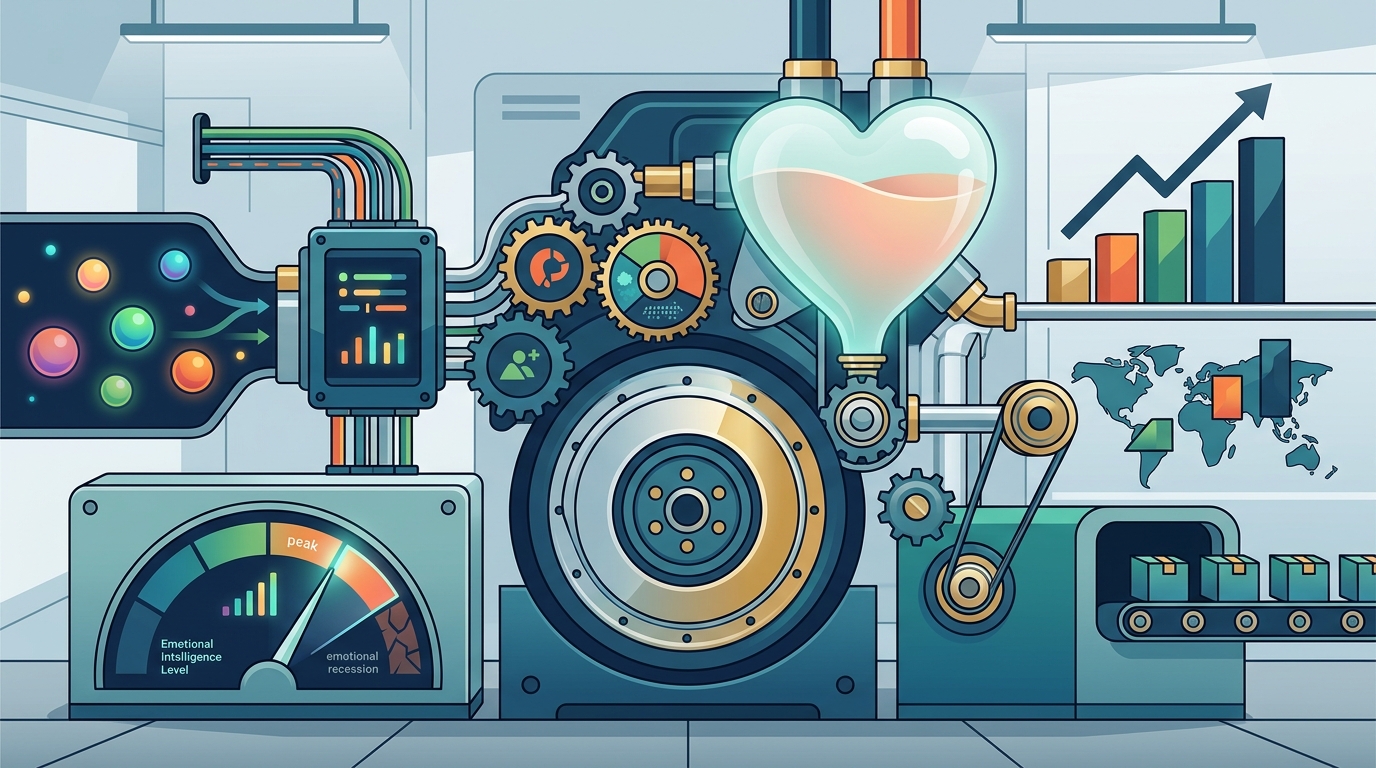
Emotional intelligence is the ability to recognise, understand, manage, and effectively use emotions in yourself and others. For organisations seeking sustainable growth, it has become one of the most consequential leadership capabilities of the decade. Research from Frontiers in Psychology (2025) reveals a growing "Emotional Recession" in workplaces globally, making the case for intentional EQ development more urgent than ever. This guide explores the evidence, the mechanisms, and the practical steps leaders can take to harness emotional intelligence for measurable business impact.
What Is Emotional Intelligence in a Business Context?
Emotional intelligence (EI or EQ) is the capacity to be aware of, control, and express one's emotions and to handle interpersonal relationships judiciously and empathetically. In a business context, it encompasses how leaders read a room, navigate conflict, and create psychological safety for their teams.
Unlike technical skills that can be taught in a single workshop, emotional intelligence is developed through sustained practice and honest self-awareness. Organisations that treat it as a core leadership competency rather than a "soft skill" see compounding returns over time.
The Evidence: EQ and Performance Outcomes
The link between emotional intelligence and organisational results is no longer theoretical. A 2025 McKinsey Health Institute report estimates that structuring workplaces to support holistic employee health could unlock up to US $11.7 trillion in value globally. Large-scale evidence shows that firms with higher workplace wellbeing earn greater firm valuations, higher returns on assets, and stronger stock-market performance.
Organisations that invest in EQ competencies among their people gain a competitive advantage by enhancing collaboration, engagement, and overall job performance. Conversely, teams with lower emotional intelligence consistently struggle to manage conflict and adapt under pressure.
Performance Data at a Glance
| Metric | High-EQ Leadership | Low-EQ Leadership |
|---|---|---|
| Employee turnover rate | Up to 40% lower | Baseline or higher |
| Employee satisfaction | Significantly higher | Below average |
| Team conflict resolution | Effective and timely | Prolonged and damaging |
| Productivity scores | Above peer benchmarks | At or below benchmarks |
| Psychological safety | Strong foundation | Undermined by low awareness |
The Five Dimensions That Matter Most
Emotional intelligence is typically understood through five core dimensions: self-awareness, self-regulation, motivation, empathy, and social skills. Each plays a distinct role in how leaders influence performance outcomes.
Self-Awareness and Self-Regulation
Self-awareness is the foundation of emotional intelligence. It is the ability to accurately perceive your own emotions and understand how they affect your thinking and behaviour. Self-regulation builds on this by enabling leaders to manage impulsive reactions, maintain composure under pressure, and model the behaviour they expect from their teams. Our deep dive into the power of self-awareness in leadership explores why this single competency unlocks every other.
Empathy and Social Skills
Empathy is the ability to understand and share the feelings of another person. In leadership, it translates into better listening, more inclusive decision-making, and stronger team loyalty. However, empathy must be balanced. Unchecked empathy can lead to burnout and blurred boundaries, a dynamic we explore in our article on the empathy trap.
How Emotionally Intelligent Leaders Shape Culture
Research confirms that emotionally intelligent leaders are better equipped to navigate complex organisational dynamics, foster trust, and resolve conflicts effectively. They inspire commitment, drive team cohesion, and improve organisational performance through emotionally attuned interactions.
Culture is not shaped by posters on a wall. It is shaped by the repeated behaviours of leaders under pressure. When leaders demonstrate trust-building and empathy consistently, the ripple effect reaches every layer of the organisation. Tools like the Human Synergistics LSI provide a data-driven lens into the thinking and behavioural styles that either reinforce or erode constructive cultures.
For organisations questioning whether their culture initiatives are truly working, the critical examination of culture surveys and their hidden costs offers a candid perspective on what conventional measurement tools miss.
EQ, Retention, and the Cost of Getting It Wrong
Retention is one of the clearest financial indicators of emotional intelligence in leadership. A 2025 study by Zenger Folkman found that leaders who regularly demonstrate trust- and empathy-building behaviours experience turnover rates 40% lower than their peers, alongside higher productivity and satisfaction scores.
Organisations that neglect emotional intelligence face higher turnover, burnout, and erosion of trust in leadership. In periods of economic uncertainty, the relational strengths that EQ provides help preserve connection and cohesion across teams. The demand for EQ skills is projected to increase sixfold in the next three to five years as AI automates routine tasks, making emotional competence the critical differentiator for human-centric roles.
Building Emotional Intelligence Across Your Organisation
Developing EQ is not a one-off event. It requires a structured approach that connects individual development to team culture and organisational strategy. Here is where most typical leadership training falls short: it treats leadership as a curriculum rather than a practice.
Start With Assessment
Use validated tools such as the Human Synergistics Life Styles Inventory (LSI) to establish a baseline of thinking and behavioural patterns. This creates a shared language for development and removes guesswork from the conversation.
Embed EQ Into Leadership Systems
Emotional intelligence should be woven into performance conversations, leadership selection criteria, and team operating rhythms. It is not enough to train leaders; you must create environments that reward emotionally intelligent behaviour and make defensive behaviour visible.
Sustain Through Coaching and Accountability
Ongoing coaching relationships, peer learning groups, and structured reflection practices keep EQ development alive. Masterclasses and immersive programs provide the structured intensity needed to shift deeply ingrained habits.
Key Takeaways
- Emotional intelligence is a measurable leadership competency that directly impacts retention, engagement, and financial performance.
- Leaders with high EQ experience up to 40% lower turnover and stronger team productivity.
- Workplace wellbeing, driven by emotionally intelligent leadership, could unlock up to US $11.7 trillion in global value.
- The five EQ dimensions (self-awareness, self-regulation, motivation, empathy, social skills) each serve a distinct role in performance.
- Culture is shaped by repeated leadership behaviour, not by policy documents or annual surveys.
- AI-driven automation will make emotional intelligence the defining human skill in the years ahead.
- Sustained development through assessment, coaching, and systemic embedding delivers the strongest results.
Frequently Asked Questions
What is emotional intelligence in leadership?
Emotional intelligence in leadership is the ability to recognise, understand, and manage your own emotions while effectively navigating the emotions of others. It encompasses self-awareness, empathy, self-regulation, motivation, and social skills, all of which influence how leaders make decisions, resolve conflict, and build trust.
How does emotional intelligence improve organisational performance?
Emotionally intelligent leaders create psychologically safe environments where teams collaborate more effectively, resolve conflict faster, and sustain higher engagement. Research shows this translates to measurable gains in productivity, retention, and financial performance.
Can emotional intelligence be developed or is it innate?
While some people may have a natural predisposition, emotional intelligence can absolutely be developed through deliberate practice, coaching, and structured programs. Tools like the Human Synergistics LSI help individuals identify their current patterns and target specific areas for growth.
What is the relationship between EQ and employee retention?
Leaders who consistently demonstrate empathy and trust-building behaviours see turnover rates up to 40% lower than peers who do not. Employees stay longer when they feel understood, psychologically safe, and led by someone who regulates their own emotions well.
How is emotional intelligence different from IQ?
IQ measures cognitive ability such as reasoning, problem-solving, and analytical thinking. Emotional intelligence measures interpersonal and intrapersonal capabilities such as empathy, emotional regulation, and social awareness. Both matter, but EQ is a stronger predictor of leadership effectiveness.
Why is emotional intelligence more important now than in the past?
The rise of AI and automation is shifting workplace value toward uniquely human skills. Emotional intelligence is projected to grow sixfold in demand as routine cognitive tasks become automated, making empathy, collaboration, and emotional agility the core differentiators for leaders.
How do you measure emotional intelligence in an organisation?
Validated psychometric tools such as the Human Synergistics Life Styles Inventory (LSI), the EQ-i 2.0, and 360-degree feedback instruments provide reliable measurement. These assessments establish baselines, track development over time, and create accountability for behavioural change.
What role does emotional intelligence play in psychosocial safety?
Emotional intelligence underpins psychosocial safety by equipping leaders to recognise stressors, respond with empathy, and create environments where people feel safe to speak up. When emotional awareness and regulation are low, psychological safety is undermined.
Take the Next Step
If you are ready to build emotionally intelligent leadership capability that delivers measurable performance outcomes, book a consultation with Uncapped Potential to explore how our advisory solutions can accelerate your organisation's growth.