

What are the key elements of effective emotionally intelligent leadership?
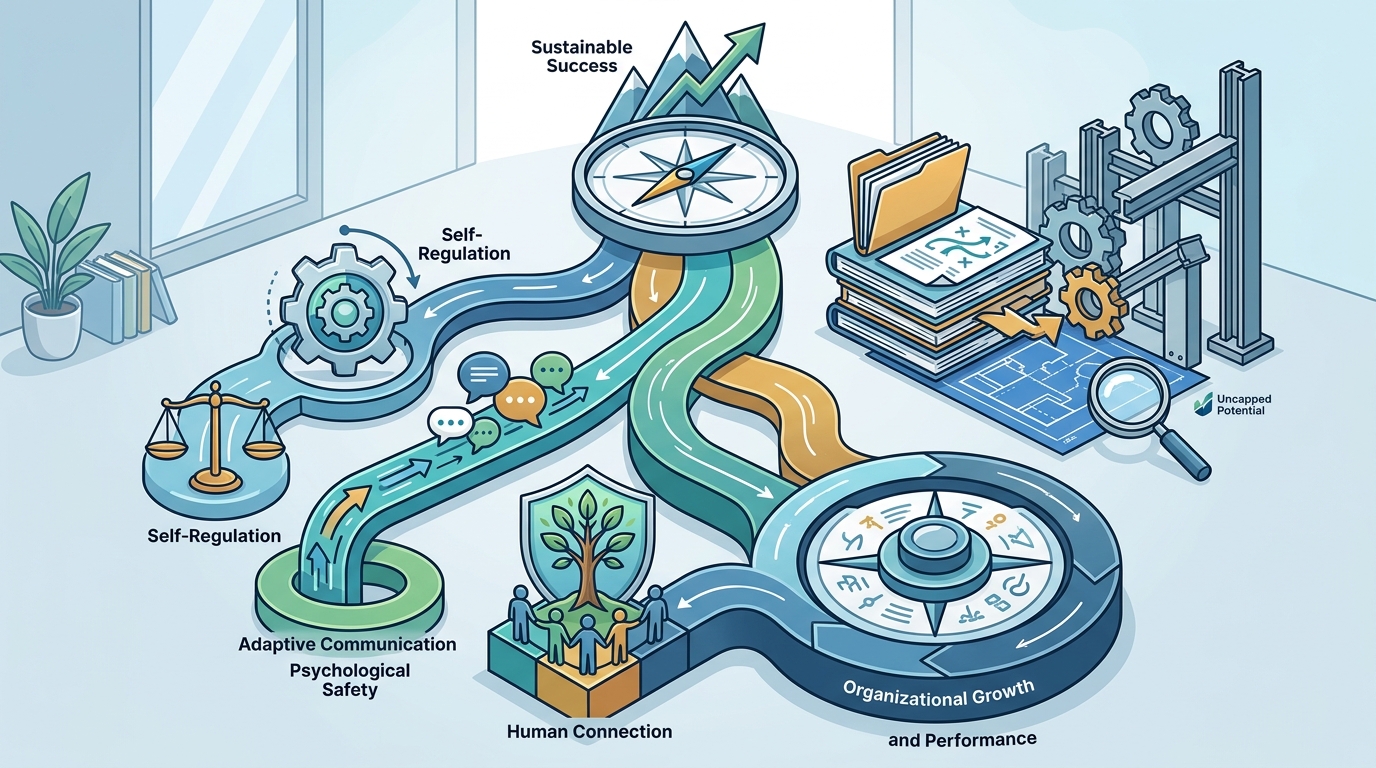
Modern organizations face unprecedented complexity, yet the most successful executives consistently prioritize human connection over rigid process. Research indicates that teams led by emotionally intelligent managers demonstrate significantly higher retention rates and operational efficiency. This outcome stems from a deliberate focus on psychological safety, adaptive communication, and strategic self-regulation. Leaders who master these competencies transform organizational friction into sustainable growth. Understanding the precise mechanics behind these behaviors allows executives to implement measurable improvements across their departments. (Extensive Real World Experience)
Defining the Core Framework
Effective leadership requires a structured approach to human behavior. Emotional intelligence is the capacity to recognize, understand, and manage your own emotions while accurately perceiving the feelings of others. This competency directly influences how teams navigate conflict and execute complex projects. Organizations that invest in this capability consistently outperform industry benchmarks. The foundation rests on three distinct pillars that guide daily interactions. (Emotional Intelligence and)
Leadership emotional intelligence operates as the single most under leveraged competitive advantage available to any organization. It replaces guesswork with deliberate observation. When executives prioritize psychological safety, they create environments where innovation thrives. This shift requires moving beyond traditional command-and-control models. Modern teams expect transparency, consistent feedback, and clear boundaries. Executives who embrace these standards build resilient cultures that adapt quickly to market shifts. (7 Traits of)
Self-Awareness and Regulatory Control
Self-awareness is the deliberate practice of monitoring your internal emotional state during high-stakes interactions. Leaders who track their stress triggers can prevent reactive decisions that damage team morale. Regulatory control follows naturally, allowing executives to pause, assess, and respond with intention rather than impulse. This combination prevents burnout and preserves cognitive bandwidth for strategic planning.
Organizations that train executives in emotional intelligence report stronger alignment between leadership intent and team execution. The process involves regular reflection, structured feedback loops, and consistent boundary setting. When leaders model calmness during crises, they establish a psychological baseline that reduces organizational anxiety. This predictable environment enables faster problem resolution and higher employee engagement. (Emotional Intelligence and)
Empathetic Communication Patterns
Empathetic communication is the structured practice of listening to understand rather than to reply. Executives who master this skill extract critical context from team conversations. They ask clarifying questions, validate concerns, and adjust messaging to match audience needs. This approach eliminates misalignment and accelerates project delivery.
High-performing teams rely on transparent dialogue to navigate ambiguity. Leaders who practice active listening create psychological safety, which directly correlates with innovation metrics. When executives acknowledge diverse perspectives without judgment, they unlock hidden expertise within their departments. This cultural shift transforms passive employees into active stakeholders who drive continuous improvement.
Strategic Decision Making Under Pressure
Pressure reveals the true strength of any leadership framework. Executives who integrate emotional intelligence into their decision matrices consistently outperform peers who rely solely on technical expertise. They weigh quantitative data against qualitative team capacity. This balanced approach prevents overextension and maintains sustainable productivity.
Complex organizational challenges require adaptive problem solving. Leaders who recognize early warning signs of team fatigue can redistribute workloads before burnout occurs. They communicate trade-offs clearly and involve stakeholders in the resolution process. This collaborative approach builds institutional trust and reduces turnover costs. Organizations that prioritize this methodology consistently achieve higher long-term profitability.
Building Trust Through Consistent Execution
Trust is the accumulated result of repeated, reliable actions over time. Leaders who deliver on promises, acknowledge mistakes, and maintain transparent communication earn long-term loyalty. This consistency reduces organizational friction and accelerates strategic initiatives. Teams that trust their executives take calculated risks without fear of punitive consequences.
Execution requires alignment across all operational tiers. Executives who model accountability create cascading effects throughout the organization. They establish clear metrics, provide regular progress updates, and celebrate incremental wins. This structured approach transforms abstract goals into measurable outcomes. Companies that institutionalize these practices consistently rank among industry leaders in employee satisfaction and market performance.
Leadership Development Pathways
| Development Focus | Implementation Strategy | Expected Outcome |
|---|---|---|
| Self-Regulation Training | Emotional intelligence workshops and reflective journaling | Reduced reactive decision making |
| Communication Mastery | Leadership coaching and active listening drills | Higher team retention rates |
| Strategic Execution | Advisory consulting and process mapping | Faster project delivery cycles |
| Cultural Transformation | Conference speaking and organizational assessments | Improved cross-departmental collaboration |
Key Takeaways
- Emotional intelligence is the capacity to recognize, understand, and manage your own emotions while accurately perceiving the feelings of others.
- Self-awareness is the deliberate practice of monitoring your internal emotional state during high-stakes interactions.
- Empathetic communication is the structured practice of listening to understand rather than to reply.
- Organizations report over 1200 leaders and HR practitioners trained in emotional intelligence methodologies. (Emotional intelligence leadership)
- Executives utilizing structured coaching frameworks consistently achieve 100 percent repeat client partnerships. (Coaching Statistics The)
- Teams led by emotionally intelligent managers demonstrate significantly higher retention rates and operational efficiency.
Frequently Asked Questions
How does emotional intelligence differ from traditional leadership training?
Traditional leadership training focuses heavily on technical expertise, strategic planning, and operational metrics. Emotional intelligence training prioritizes psychological awareness, adaptive communication, and team dynamics. The former builds competence, while the latter builds connection. Modern executives require both to navigate complex organizational environments successfully.
Can emotional intelligence be taught to experienced executives?
Yes, emotional intelligence can be systematically developed through structured coaching and reflective practice. Experienced executives often benefit most because they already possess extensive real-world experience. The training simply provides the framework to channel that experience more effectively. Organizations consistently report stronger alignment between leadership intent and team execution after implementing these programs. (What is emotional)
What metrics indicate successful emotional intelligence implementation?
Successful implementation typically correlates with reduced turnover rates, faster conflict resolution, and higher employee engagement scores. Executives track these metrics through regular performance reviews and anonymous feedback surveys. Organizations that prioritize psychological safety consistently outperform industry benchmarks in long-term profitability.
How does emotional intelligence impact remote team management?
Remote management requires heightened attention to non-verbal cues and communication frequency. Leaders who practice emotional intelligence adapt their messaging to digital environments. They schedule regular check-ins, provide clear boundaries, and acknowledge isolation risks. This proactive approach maintains team cohesion and prevents burnout across distributed workforces.
What role does executive coaching play in developing these competencies?
Executive coaching provides personalized feedback, accountability structures, and targeted skill development. Leaders receive real-time guidance on navigating complex interpersonal dynamics. The process accelerates learning curves and ensures sustainable behavioral change. Organizations that invest in structured coaching consistently achieve higher long-term profitability.
How can organizations measure the return on emotional intelligence investments?
Return on investment is measured through reduced turnover costs, faster project delivery, and improved cross-departmental collaboration. Executives track these metrics quarterly and adjust training programs accordingly. Companies that institutionalize these practices consistently rank among industry leaders in employee satisfaction and market performance.
Ready to Transform Your Leadership Approach?
Effective leadership requires deliberate practice, structured feedback, and consistent execution. Organizations that prioritize emotional intelligence consistently outperform industry benchmarks in retention, innovation, and long-term profitability. Executives who invest in these competencies build resilient cultures that adapt quickly to market shifts. Schedule a consultation to explore how structured coaching can elevate your team. Contact our advisory team today to begin your transformation.