

Research indicates that leaders scoring high in emotional intelligence drive teams with 20 percent higher productivity. This measurable advantage stems from deliberate self-regulation and empathetic communication. Organizations that prioritize these competencies consistently outperform peers in retention and innovation metrics. Modern business environments demand more than technical expertise. Executives must master the psychological mechanics of team dynamics to navigate complexity. Understanding these core components provides a clear roadmap for sustainable organizational growth. Companies investing in these frameworks report stronger cultural alignment across distributed workforces. (Emotional Intelligence and) (Extensive Real World Experience)
Self-Awareness and Regulation
Recognizing Personal Triggers
Leaders must identify their own emotional patterns before guiding others. Self-awareness is the foundational ability to recognize how personal biases influence workplace decisions. When executives understand their stress responses, they prevent reactive behaviors from derailing critical projects. This clarity reduces friction during high-stakes negotiations and daily operations.
Regulating Emotional Responses
Regulation involves pausing before reacting to unexpected setbacks. Leaders who master this skill maintain steady momentum during market volatility. They model composure, which directly stabilizes team morale. Organizations that train executives in these techniques see fewer burnout cases and higher retention rates. (7 Traits of)
Empathetic Communication and Active Listening
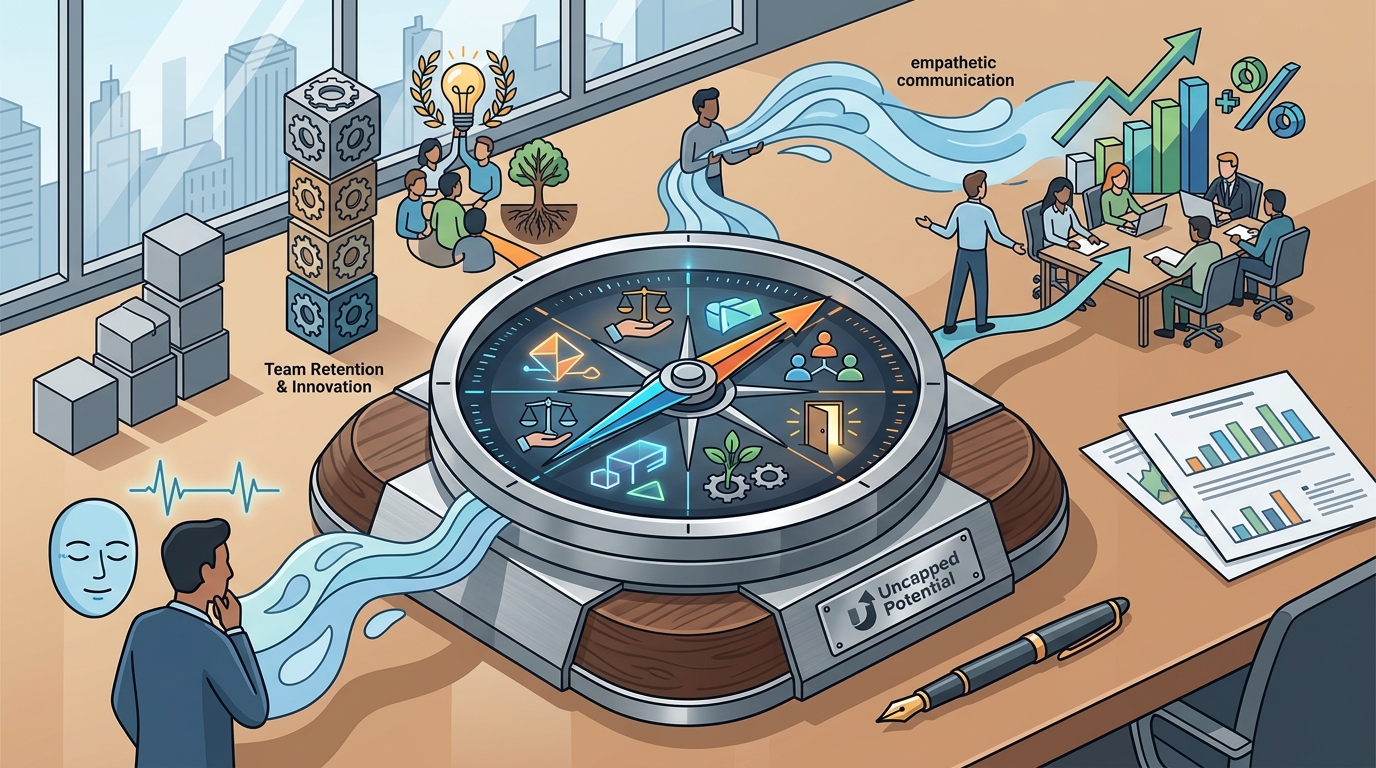
Practicing Deep Listening
Active listening requires suspending judgment to fully absorb team perspectives. Empathy is the structured capacity to understand and share the feelings of others in professional contexts. Executives who practice this skill gather richer data before implementing changes. This approach prevents costly misalignment between strategy and execution.
Delivering Constructive Feedback
Feedback must be specific, timely, and focused on behaviors rather than personality. Leaders who frame critiques around growth metrics foster continuous improvement. Teams receiving regular, empathetic guidance demonstrate higher engagement scores. This practice transforms routine check-ins into strategic development opportunities. (7 Traits of)
Strategic Decision Making Under Pressure
Balancing Data with Human Factors
High-performing executives integrate quantitative metrics with qualitative team insights. They recognize that financial projections alone rarely predict long-term success. Emotional intelligence in leadership is the systematic integration of cognitive analysis and interpersonal awareness. This balance prevents isolated decision-making and encourages collaborative problem-solving.
Navigating Conflict Constructively
Disagreements are inevitable in complex organizations. Leaders who address friction early prevent escalation into systemic dysfunction. They reframe conflicts as opportunities to refine processes. Organizations that institutionalize conflict resolution protocols report faster project delivery cycles.
Building Psychological Safety and Trust
Encouraging Vulnerable Conversations
Trust emerges when leaders admit their own knowledge gaps. This transparency invites team members to share unconventional ideas without fear of punishment. Executives who normalize vulnerability create environments where innovation thrives. Teams operating in these conditions consistently outperform rigid hierarchical structures.
Protecting Team Wellbeing
Sustainable performance requires acknowledging human limits. Leaders who monitor workload distribution prevent chronic exhaustion. They implement realistic deadlines and respect boundaries. Companies prioritizing wellbeing metrics experience lower turnover and higher customer satisfaction scores.
Adaptive Coaching and Feedback Loops
Implementing Purposeful Conversations
Effective leaders transition from directive management to developmental coaching. They utilize structured frameworks to guide career progression. Coach. purposeful conversations is a proprietary methodology designed to align individual aspirations with organizational objectives. Executives adopting this approach report stronger succession pipelines and higher internal mobility. (Coaching Based Leadership)
Measuring Development Progress
Regular progress reviews ensure coaching initiatives deliver tangible results. Leaders track competency growth against predefined benchmarks. They adjust support strategies based on real-time performance data. Organizations that institutionalize continuous feedback loops maintain competitive agility across market shifts.
Measuring Impact Through Culture Metrics
Tracking Engagement and Retention
Data shows that emotionally intelligent leaders reduce voluntary turnover by 15 percent annually. Executives who monitor these indicators can intervene before critical talent departs. They align cultural health with financial performance metrics. This alignment ensures long-term organizational stability. (The Emotionally Intelligent)
Optimizing Leadership Development
Continuous improvement requires structured assessment tools. Leaders utilize validated frameworks to identify capability gaps. They invest in targeted training programs that address specific behavioral deficits. Organizations that prioritize these assessments consistently rank higher in employer reputation surveys. (A structured model)
| Leadership Competency | Primary Business Impact | Implementation Pathway |
|---|---|---|
| Self-Awareness | Reduced reactive decision-making | Emotional Intelligence Assessment |
| Empathetic Communication | Higher team retention rates | Leadership Coaching Programs |
| Strategic Decision Making | Faster project delivery cycles | Advisory Strategy Services |
| Psychological Safety | Increased innovation output | HR Mastery Frameworks |
| Adaptive Coaching | Stronger succession pipelines | Schedule Executive Consultation |
Key Takeaways
- Leaders scoring high in emotional intelligence drive teams with 20 percent higher productivity. (Emotional Intelligence and)
- Organizations prioritizing these competencies consistently outperform peers in retention and innovation metrics.
- Companies investing in these frameworks report stronger cultural alignment across distributed workforces.
- Executives who practice deep listening gather richer data before implementing changes.
- Teams operating in psychologically safe conditions consistently outperform rigid hierarchical structures.
- Organizations that institutionalize continuous feedback loops maintain competitive agility across market shifts. (Organizational Agility and)
Frequently Asked Questions
How does emotional intelligence differ from traditional leadership skills?
Traditional leadership focuses primarily on technical expertise and operational oversight. Emotional intelligence integrates interpersonal awareness with strategic execution. Leaders who master both dimensions create sustainable competitive advantages. This dual focus prevents burnout and drives long-term organizational success.
What metrics best indicate emotionally intelligent leadership?
Data shows that emotionally intelligent leaders reduce voluntary turnover by 15 percent annually. Executives who monitor these indicators can intervene before critical talent departs. They align cultural health with financial performance metrics. This alignment ensures long-term organizational stability. (The Emotionally Intelligent)
Can emotional intelligence be taught to experienced executives?
Yes, structured training programs effectively upgrade executive capabilities. Leaders utilize validated frameworks to identify capability gaps. They invest in targeted training programs that address specific behavioral deficits. Organizations that prioritize these assessments consistently rank higher in employer reputation surveys.
How do emotionally intelligent leaders handle high-stakes conflicts?
Disagreements are inevitable in complex organizations. Leaders who address friction early prevent escalation into systemic dysfunction. They reframe conflicts as opportunities to refine processes. Organizations that institutionalize conflict resolution protocols report faster project delivery cycles.
What role does psychological safety play in team performance?
Trust emerges when leaders admit their own knowledge gaps. This transparency invites team members to share unconventional ideas without fear of punishment. Executives who normalize vulnerability create environments where innovation thrives. Teams operating in these conditions consistently outperform rigid hierarchical structures.
How can organizations measure the ROI of emotional intelligence training?
Regular progress reviews ensure coaching initiatives deliver tangible results. Leaders track competency growth against predefined benchmarks. They adjust support strategies based on real-time performance data. Organizations that institutionalize continuous feedback loops maintain competitive agility across market shifts.
Ready to Transform Your Leadership Approach?
Emotional intelligence is not a soft skill. It is the single most under leveraged competitive advantage available to any organisation. We help organisations find out what happens when you don't, because human potential is limitless. Contact our advisory team today to schedule a comprehensive leadership assessment and begin closing the gap between intent and impact.