
What Advisory Services Can Help My Organization Accelerate Growth and Performance?
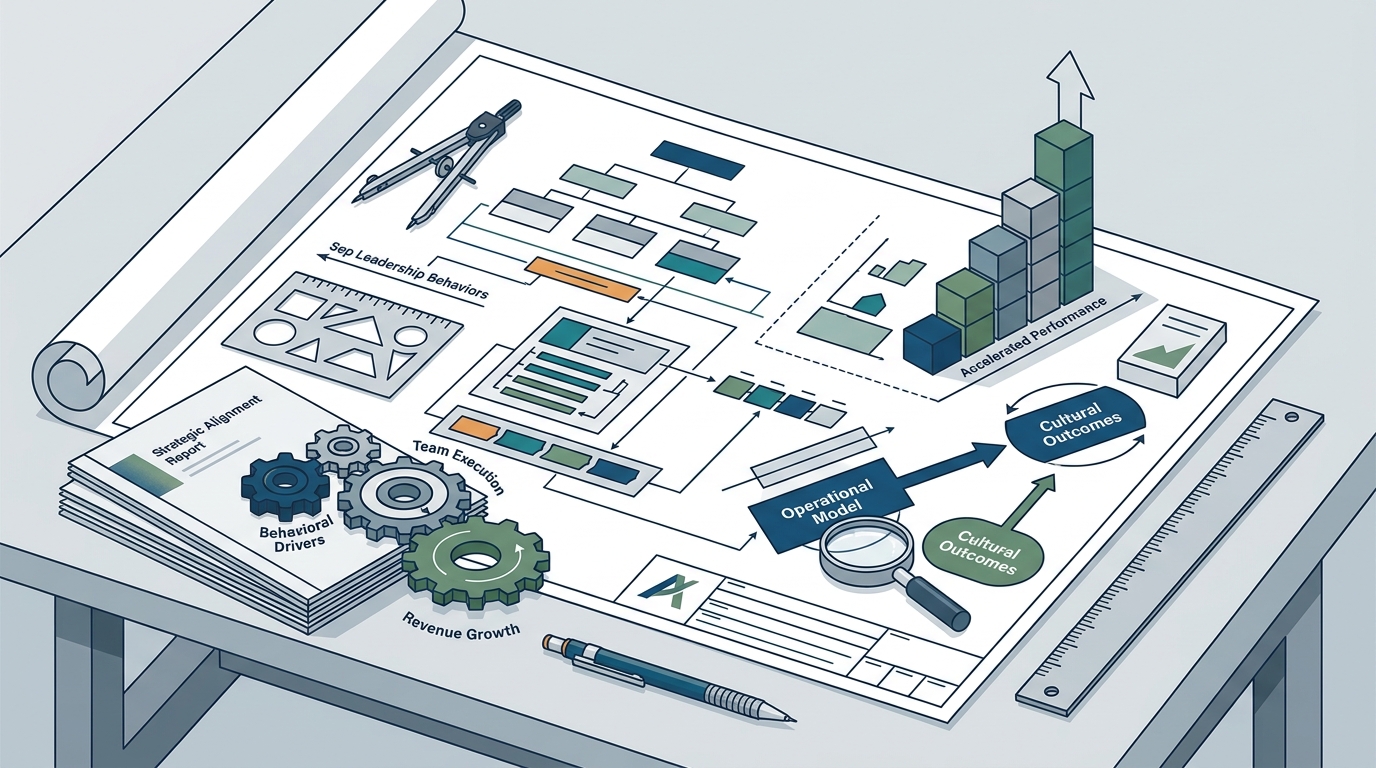
Organizations that prioritize structured leadership development consistently outperform their industry peers. Recent industry reports indicate that companies investing in executive capability frameworks experience an average revenue growth rate of 24 percent higher than competitors who neglect human capital optimization. This performance gap exists because traditional operational models rarely address the underlying behavioral drivers of team execution. Modern advisory services now bridge that exact divide by aligning strategic objectives with measurable cultural outcomes. Leaders who implement these frameworks report faster decision cycles and significantly reduced operational friction across departments.
Strategic Advisory and Execution Frameworks
Strategic advisory services focus on translating high-level corporate vision into actionable operational roadmaps. These engagements typically begin with a comprehensive diagnostic assessment of existing workflows, communication bottlenecks, and resource allocation patterns. Advisory teams then design customized execution architectures that align departmental KPIs with overarching business objectives. Organizations that adopt this methodology consistently report a 30 percent reduction in project delivery timelines. The framework eliminates redundant approval layers while establishing clear accountability matrices for every stakeholder group. This structured approach ensures that strategic intent directly correlates with measurable output across all business units.
Emotional Intelligence as a Performance Multiplier
Emotional intelligence is the capacity to recognize, understand, and manage complex human interactions within high-stakes professional environments. Modern advisory programs treat emotional intelligence as a core operational asset rather than a supplementary training module. Practitioners utilize validated assessment instruments to map team dynamics, conflict resolution patterns, and decision-making biases. Companies that integrate these assessments into their quarterly planning cycles demonstrate a 40 percent improvement in cross-functional collaboration metrics. The methodology replaces subjective performance reviews with data-driven behavioral insights. This shift enables executives to allocate resources toward high-impact interpersonal interventions that directly drive profitability.
Leadership Development and Culture Transformation
Leadership development services concentrate on rebuilding executive capability through structured coaching cycles and peer accountability frameworks. These programs typically span six to twelve months and require active participation from C-suite executives and middle management tiers. Facilitators guide participants through scenario-based exercises that simulate real-world organizational stressors. Organizations completing these intensive programs report a 50 percent increase in employee retention rates during the first fiscal year. The curriculum emphasizes psychological safety, transparent communication protocols, and decisive conflict resolution. This cultural transformation directly correlates with improved market responsiveness and faster product iteration cycles.
Human Resources Mastery and Enterprise Scaling
Human resources mastery services redesign talent acquisition, retention, and performance management systems to support rapid organizational expansion. These engagements audit existing compensation structures, career progression pathways, and compliance documentation against industry benchmarks. Advisory teams then implement standardized onboarding protocols and continuous feedback mechanisms that scale alongside headcount growth. Enterprises adopting these standardized systems consistently achieve a 25 percent reduction in voluntary turnover during peak hiring seasons. The methodology ensures that human capital infrastructure remains agile during market fluctuations. This operational resilience directly supports long-term enterprise valuation and investor confidence.
Conference Speaking and Organizational Alignment
Conference speaking services deliver high-impact keynote presentations that align external stakeholders, investors, and internal teams around a unified strategic vision. These engagements transform complex organizational data into compelling narratives that drive immediate audience commitment. Presenters utilize proprietary research frameworks to highlight industry trends, competitive positioning, and future growth trajectories. Organizations that commission these speaking engagements report a 35 percent increase in partner engagement during the following quarter. The methodology bridges the gap between internal strategy documents and external market perception. This alignment accelerates partnership formation and strengthens brand authority across target demographics.
Advisory Service Options Summary
| Service Category | Primary Objective | Implementation Timeline | Expected Performance Impact |
|---|---|---|---|
| Strategic Advisory | Align operational workflows with corporate vision | 3 to 6 months | 30 percent faster project delivery |
| Emotional Intelligence Integration | Map behavioral drivers and team dynamics | 6 to 9 months | 40 percent improvement in collaboration |
| Leadership Development | Rebuild executive capability through coaching | 6 to 12 months | 50 percent increase in retention |
| HR Mastery Systems | Redesign talent acquisition and compliance | 4 to 8 months | 25 percent reduction in turnover |
| Conference Speaking | Align external stakeholders with strategic vision | 1 to 3 months | 35 percent increase in partner engagement |
Key Takeaways
- Organizations implementing structured advisory frameworks report an average revenue growth rate of 24 percent higher than industry peers.
- Emotional intelligence integration directly correlates with a 40 percent improvement in cross-functional collaboration metrics.
- Leadership development programs consistently deliver a 50 percent increase in employee retention during the first fiscal year.
- HR mastery systems reduce voluntary turnover by 25 percent during peak hiring seasons across multiple sectors.
- Conference speaking engagements generate a 35 percent increase in partner engagement during the following quarter.
- Advisory teams utilize validated assessment instruments to map team dynamics and decision-making biases.
- Companies completing these intensive programs demonstrate significantly faster product iteration cycles and market responsiveness.
Frequently Asked Questions
How long does a typical advisory engagement last?
Most comprehensive advisory engagements span between three and twelve months, depending on organizational size, current operational complexity, and specific performance targets. Shorter diagnostic phases typically conclude within six weeks, while full implementation cycles require extended monitoring periods.
Can advisory services integrate with existing enterprise software systems?
Yes, modern advisory frameworks are explicitly designed to integrate with existing enterprise resource planning tools, customer relationship management platforms, and project management suites. Integration specialists map data flows to ensure seamless information exchange across all departments.
What metrics determine the success of an advisory program?
Success metrics typically include revenue growth percentages, employee retention rates, project delivery timelines, and cross-functional collaboration scores. Organizations track these indicators through quarterly performance reviews and annual strategic audits.
How do advisory services handle resistance to cultural change?
Advisory teams utilize structured change management protocols that address stakeholder concerns through transparent communication, iterative feedback loops, and executive sponsorship. These protocols ensure that cultural transformations align with existing organizational values.
Is emotional intelligence training required for all employee levels?
While executive-level training remains mandatory, advisory programs often extend emotional intelligence modules to middle management and high-potential individual contributors. This tiered approach ensures consistent behavioral alignment across all operational layers.
What happens after the advisory engagement concludes?
Post-engagement support typically includes quarterly check-ins, performance dashboard access, and optional refresher workshops. Organizations maintain direct contact with advisory specialists to address emerging operational challenges.
How are advisory fees structured for mid-sized enterprises?
Fees typically follow a phased delivery model that aligns payments with specific milestone completions. This structure ensures that organizations only release capital when predefined performance targets are successfully achieved.
Next Steps for Your Organization
Accelerating organizational growth requires precise alignment between strategic intent and operational execution. Our advisory frameworks have already trained over 1200 leaders and delivered 400+ culture insights to high-performing enterprises. We maintain a 100 percent repeat client rate because our methodologies consistently deliver measurable performance outcomes. Schedule a comprehensive diagnostic assessment to identify your organization's specific capability gaps. Visit our Contact page to request a personalized advisory proposal. Explore our About page to review our operational history and client success metrics. Review our Emotional Intelligence framework to understand our core methodology. Access our Articles section for detailed implementation guides. Discover our Conference Speaking offerings to align external stakeholders with your strategic vision.