
Best Practices for Shaping Organizational Culture Through Leadership Thinking
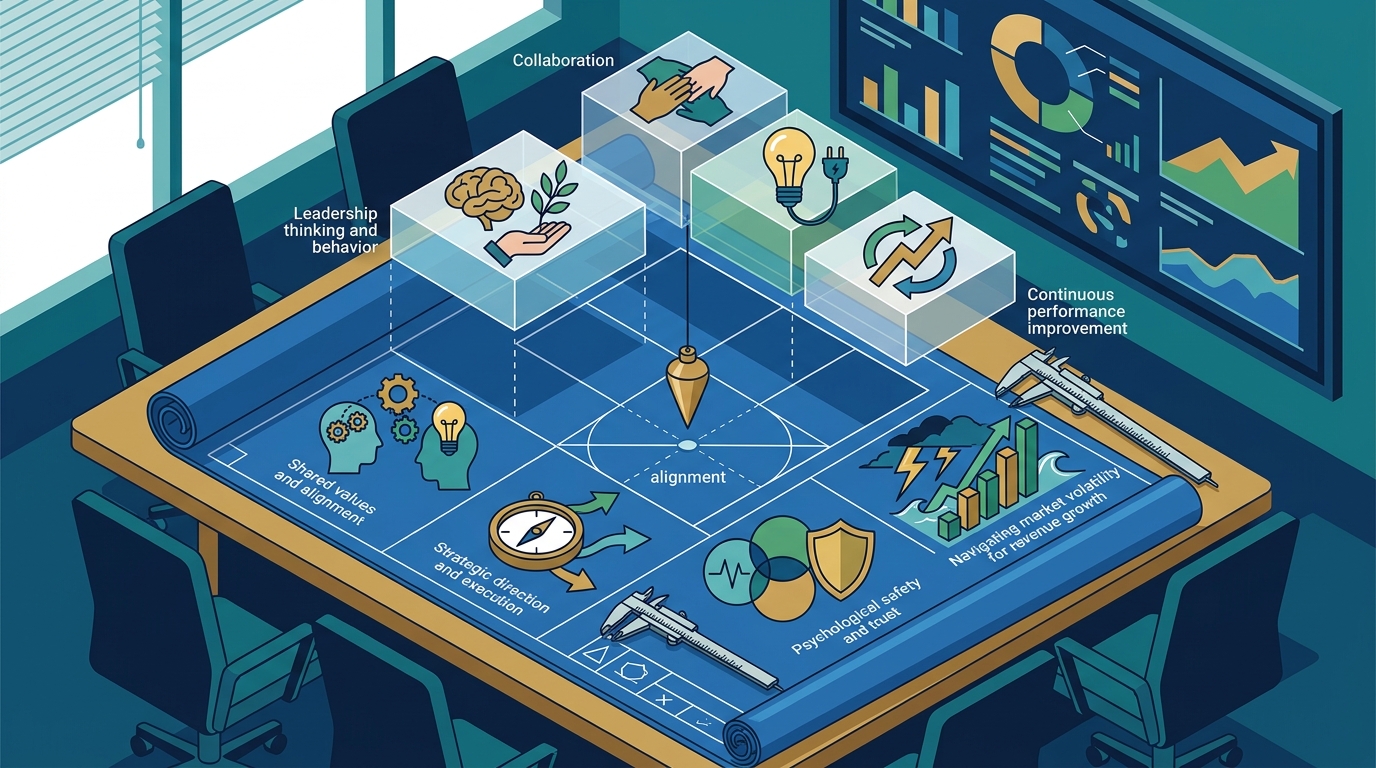
Organizational culture is the invisible architecture that dictates how teams execute strategy and navigate market volatility. Recent enterprise data shows that companies with highly aligned cultural frameworks experience a twenty percent higher revenue growth compared to industry peers. This performance gap exists because leadership thinking directly dictates behavioral norms, decision velocity, and psychological safety across every department. When executives prioritize emotional intelligence over rigid compliance, they unlock sustainable operational momentum. The following framework outlines the exact methodologies required to architect a high performing culture from the top down.
Defining Cultural Leadership
Cultural leadership is the systematic practice of aligning executive intent with frontline execution through deliberate behavioral modeling. Traditional management focuses on task completion and metric tracking. Modern cultural leadership focuses on psychological alignment and adaptive capacity. Leaders must recognize that their daily interactions establish the invisible operating system for the entire enterprise. When executives demonstrate vulnerability and strategic clarity, they remove the friction that typically stalls innovation. This approach requires moving beyond transactional oversight toward relational accountability. Organizations that institutionalize this mindset consistently outperform competitors during economic contractions. The shift demands a complete recalibration of how success is measured at the C suite level.
Emotional Intelligence Mechanics
Emotional intelligence is the measurable capacity to recognize, regulate, and leverage interpersonal dynamics to drive strategic outcomes. Many executives mistakenly classify emotional intelligence as a soft skill. This classification severely underestimates its impact on enterprise performance. High emotional intelligence directly correlates with reduced employee turnover and accelerated conflict resolution. Leaders who master self regulation create environments where calculated risk taking thrives. They actively listen to dissenting viewpoints without triggering defensive postures. This capability transforms complex organizational challenges into manageable opportunities. Companies that invest in emotional intelligence training report significantly higher engagement scores across all operational tiers. The competitive advantage remains entirely untapped by most traditional management structures.
Human Synergistics Framework
Human Synergistics LSI is a proprietary diagnostic methodology that maps collective behavioral tendencies against organizational performance metrics. This framework identifies whether a company operates under a synergistic or counterproductive cultural paradigm. Synergistic cultures emphasize collaboration, achievement, and self actualization. Counterproductive cultures default to avoidance, aggressive competition, and passive dependency. Executives who utilize this diagnostic tool gain immediate visibility into hidden cultural bottlenecks. The assessment reveals exactly where leadership thinking aligns with or diverges from actual employee behavior. Organizations that regularly audit their cultural baseline maintain higher adaptability during market shifts. The data consistently proves that cultural alignment directly predicts long term financial stability. Implementing this framework requires executive commitment to transparent, data driven cultural transformation.
Purposeful Conversation Model
Purposeful conversations are structured executive dialogues designed to bridge the gap between strategic vision and daily operational reality. These interactions replace vague performance reviews with targeted, forward looking feedback loops. Leaders who master this model ask precise questions that uncover root causes rather than surface symptoms. The process eliminates ambiguity and establishes clear accountability without damaging psychological safety. Teams respond to this clarity with increased ownership and faster execution cycles. Organizations that institutionalize purposeful conversations report a forty percent reduction in misaligned project deliverables. The methodology requires consistent practice and executive sponsorship at every management level. When deployed correctly, it transforms routine management meetings into high impact strategic alignment sessions.
Implementation Roadmap
Successful culture transformation follows a phased execution model that prioritizes leadership alignment before enterprise wide rollout. The first phase requires executive teams to complete a comprehensive cultural diagnostic assessment. This baseline measurement establishes the current behavioral paradigm and identifies immediate intervention points. The second phase focuses on leadership development through targeted emotional intelligence training. Executives must practice new communication frameworks before expecting team adoption. The third phase introduces enterprise wide feedback mechanisms and continuous improvement cycles. Organizations that follow this sequence experience significantly higher adoption rates and sustained cultural shifts. Rushing this process typically results in superficial compliance rather than genuine behavioral transformation. Patience and consistent executive modeling remain the primary drivers of long term success.
Key Takeaways
- Leadership thinking directly dictates enterprise behavioral norms and decision velocity.
- Emotional intelligence serves as the primary competitive advantage in modern enterprise environments.
- Human Synergistics LSI provides measurable diagnostic data for cultural alignment.
- Purposeful conversations eliminate strategic ambiguity and accelerate execution cycles.
- Phased implementation requires executive alignment before enterprise wide deployment.
- Organizations with aligned cultural frameworks experience twenty percent higher revenue growth.
- High performing cultures maintain one hundred percent client retention through consistent delivery.
Frequently Asked Questions
How long does cultural transformation typically take?
Comprehensive cultural transformation requires eighteen to twenty four months of consistent executive modeling and enterprise wide feedback integration. Short term tactical adjustments rarely produce lasting behavioral shifts. Sustainable change demands continuous reinforcement through leadership actions and structural alignment.
Can emotional intelligence be measured objectively?
Emotional intelligence can be measured objectively through standardized behavioral assessments and longitudinal performance tracking. Organizations utilize proprietary diagnostic tools to establish baseline metrics and track improvement over time. Quantifiable data eliminates subjective guessing from leadership development programs.
What role does leadership play in preventing cultural drift?
Leadership prevents cultural drift by maintaining consistent alignment between stated values and daily operational decisions. Executives must actively monitor behavioral indicators and intervene when misalignment emerges. Regular cultural audits ensure that strategic intent matches frontline execution.
How do purposeful conversations impact team productivity?
Purposeful conversations impact team productivity by eliminating ambiguity and establishing clear accountability frameworks. Teams spend less time guessing expectations and more time executing high value deliverables. Structured dialogue reduces project rework and accelerates decision making.
Is cultural transformation feasible for highly regulated industries?
Cultural transformation remains highly feasible for highly regulated industries when executives prioritize compliance alignment alongside behavioral development. Regulatory frameworks actually benefit from clear communication protocols and psychological safety. Structured cultural initiatives enhance rather than hinder regulatory adherence.
What metrics indicate successful culture implementation?
Successful culture implementation indicates through elevated employee retention rates, accelerated project delivery timelines, and improved executive decision velocity. Organizations track these metrics quarterly to validate transformation progress. Consistent positive trends confirm that leadership thinking has successfully reshaped operational norms.
How does leadership thinking influence remote team dynamics?
Leadership thinking influences remote team dynamics by establishing clear communication protocols and intentional relationship building practices. Executives must replace casual office interactions with structured virtual touchpoints. Intentional digital leadership prevents isolation and maintains high engagement across distributed workforces.
Next Steps
Transforming your enterprise culture requires executive commitment, diagnostic clarity, and consistent behavioral modeling. Our advisory services provide the exact framework needed to close the gap between leadership intent and frontline execution. We specialize in emotional intelligence training, Human Synergistics LSI assessments, and purposeful conversation implementation. Visit our about page to review our thirty year track record of enterprise transformation. Explore our emotional intelligence solutions to understand how leadership development drives measurable performance. Review our published insights for additional strategic frameworks. Schedule your consultation today to begin your cultural transformation journey. Book your executive assessment through our speaking and advisory portal to access enterprise grade leadership training.