

How Emotionally Intelligent Leadership Improves Organizational Performance in Australian Companies
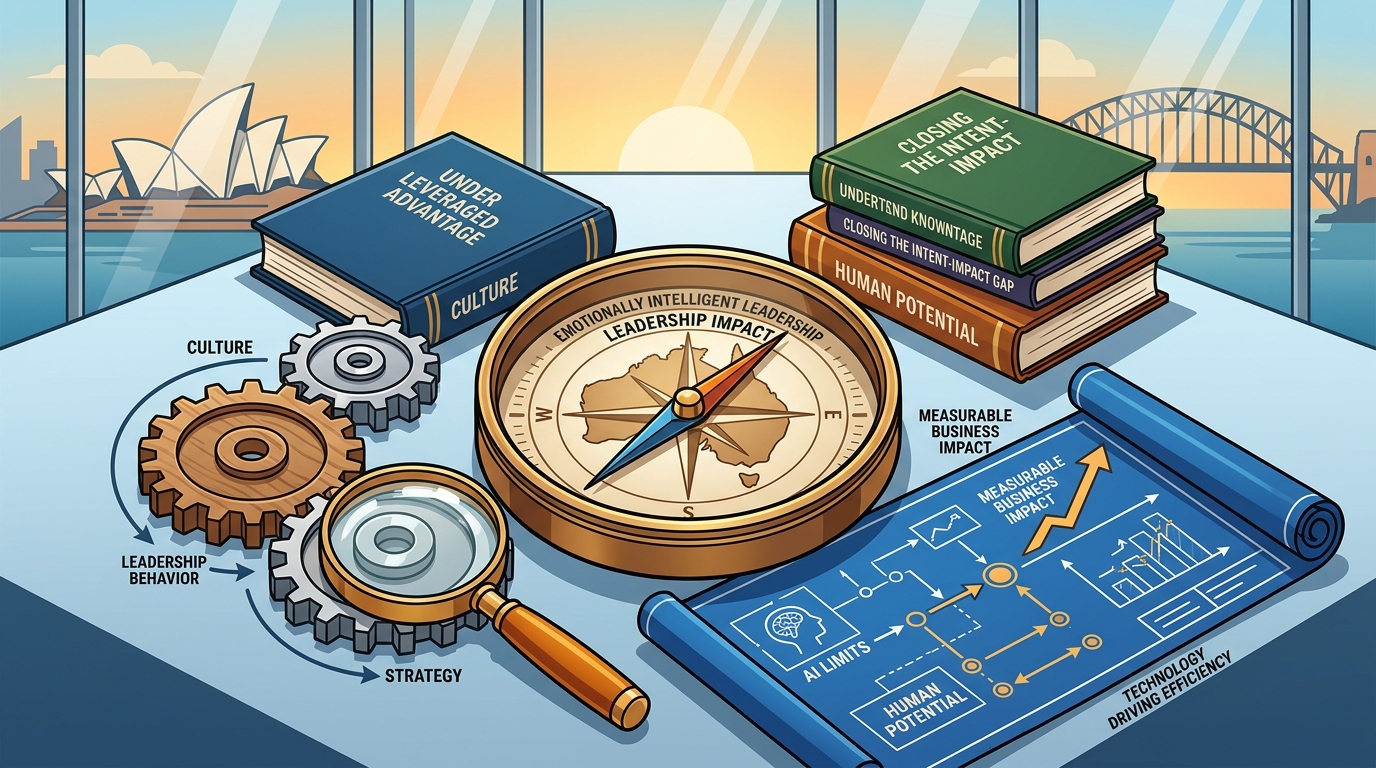
Emotional intelligence is not a soft skill. It is the single most under leveraged competitive advantage available to any organisation and the one thing AI cannot replace. In the high-stakes environment of modern Australian business, leaders who master this capability close the gap between intent and impact. While technology drives efficiency, human potential drives growth. Most organisations operate well within their limits, but those that unlock their full capacity see transformative results in culture and performance. (Leadership Emotional Intelligence Uncapped)
Defining Emotional Intelligence in Leadership
To understand performance improvement, we must first establish a clear operational definition. Emotional intelligence is the ability to recognize, understand, and manage our own emotions and the emotions of others. This definition moves beyond vague concepts of "being nice" to a measurable skill set that drives business outcomes.
In the Australian corporate landscape, this skill set is critical for navigating complex stakeholder relationships. Leaders who possess high emotional intelligence demonstrate self-awareness, which is the skill most people think they have but don’t. This awareness allows them to navigate the challenges, the politics, and the pressure of executive roles with clarity. Without it, decisions are often reactive rather than strategic.
Self-awareness is the foundation of effective leadership. It enables leaders to understand how their behavior impacts their team. When leaders are aware of their triggers, they can prevent escalation and maintain a stable environment. This stability is not just a comfort for employees; it is a prerequisite for high-level cognitive work and innovation.
Psychosocial Safety and Risk Mitigation
One of the most significant drivers of organizational performance is psychosocial safety. Psychosocial safety is the shared perception of policies, practices, and procedures for the protection of worker's psychological health and safety. When this safety is present, employees feel secure enough to take risks, share ideas, and admit mistakes without fear of retribution.
Leadership capability is a critical risk control as psychosocial claims rise and people management fundamentals continue to erode. In Australia, the legal and ethical landscape regarding workplace mental health is becoming increasingly stringent. Organizations that fail to prioritize psychosocial safety face not only reputational damage but also significant financial liability. Emotionally intelligent leaders proactively cultivate this safety by fostering open dialogue and accountability.
Preventing psychosocial safety issues is about unlocking performance potential. When leaders address the root causes of stress and disengagement, they reduce absenteeism and turnover. This proactive approach transforms HR from a compliance function into a strategic partner. It ensures that the workforce is resilient and capable of adapting to market changes.
Closing the Intent vs. Impact Gap
Many leaders have good intentions but poor execution. This disconnect is known as the intent versus impact gap. Most organisations operate well within their limits because they fail to address this gap. Emotionally intelligent leaders bridge this divide by seeking feedback and adjusting their behavior to align with desired outcomes.
We work with ambitious leaders to close the gap between intent and impact. This process involves rigorous self-reflection and the use of tools like Human Synergistics Leader and Organisation Culture Insights. These insights provide data-driven feedback on how a leader is perceived by their team. This external perspective is crucial for identifying blind spots that self-assessment often misses.
The Empathy Trap is a common pitfall where leaders confuse being kind with being honest. This confusion comes at a cost to performance. True emotional intelligence requires the courage to have difficult conversations. It involves providing constructive feedback with care and clarity. This approach builds trust and respect, which are essential for high-performing teams.
The Human Edge in an AI World
As artificial intelligence becomes more prevalent in the workplace, the value of human-centric skills increases. Emotional intelligence is the one thing AI cannot replace. While AI can process data and automate tasks, it cannot replicate the nuance of human connection, empathy, and ethical judgment.
Organizations that leverage this human advantage will outperform those that rely solely on technological efficiency. The future of work belongs to leaders who can inspire and motivate their teams in ways that algorithms cannot. This requires a deep understanding of human behavior and motivation.
By focusing on emotional intelligence, companies can create a culture of innovation and engagement. Employees who feel understood and valued are more likely to contribute their best work. This creates a virtuous cycle of performance and growth. The boardroom blindspot is often the failure to recognize that leaders are the biggest risk to organizational stability.
HR Mastery and Strategic Execution
Emotional intelligence is not just for CEOs. It is essential for HR leaders who drive strategy and enterprise performance. HR Mastery involves guiding practitioners to move beyond administration and into strategic influence. This shift requires HR professionals to possess high levels of emotional intelligence themselves.
HR leaders using our emotional intelligence model in HR strategy and practice can better support organizational change. They can navigate the complexities of talent management, conflict resolution, and cultural transformation. This support is vital for maintaining momentum during periods of disruption.
The most expensive, least effective, HR process you still run is often the formal performance review. Emotionally intelligent leaders replace these rigid structures with continuous, purposeful conversations. This approach provides real-time feedback and development opportunities. It aligns individual goals with organizational objectives more effectively than annual reviews.
Comparing Traditional vs. Emotionally Intelligent Leadership
| Feature | Traditional Leadership | Emotionally Intelligent Leadership |
|---|---|---|
| Feedback Mechanism | Annual formal reviews | Continuous purposeful conversations |
| Risk Management | Reactive compliance | Proactive psychosocial safety |
| Decision Making | Data-driven only | Data plus human context |
| Team Dynamics | Task-focused | Trust and authenticity focused |
| Change Management | Top-down directive | Collaborative and empathetic |
Key Takeaways
- Emotional intelligence is a competitive advantage that AI cannot replicate.
- Psychosocial safety is a critical risk control for Australian organizations.
- Leaders must close the gap between their intent and their impact.
- Self-awareness is the foundational skill for effective leadership.
- HR must shift from compliance to strategic partnership.
- Continuous feedback replaces the ineffective formal performance review.
- Uncapped Potential has trained over 1200 leaders and HR practitioners.
Frequently Asked Questions
What is the primary benefit of emotional intelligence in leadership?
The primary benefit is the ability to close the gap between leadership intent and actual organizational impact. This leads to higher performance and better cultural outcomes.
How does emotional intelligence relate to psychosocial safety?
Emotionally intelligent leaders proactively create environments where employees feel safe to express themselves. This reduces risk and enhances innovation.
Why is self-awareness considered a critical skill?
Self-awareness is the skill most people think they have but don’t. It allows leaders to understand their own biases and triggers, preventing negative impacts on their team.
What is the role of HR in promoting emotional intelligence?
HR leaders use emotional intelligence models to drive strategy and support enterprise performance. They help embed these skills into the organizational culture.
How does Uncapped Potential help organizations?
Uncapped Potential works with ambitious leaders to turn complexity into opportunity. They provide advisory services, leadership solutions, and HR mastery guidance.
Is emotional intelligence a soft skill?
No, emotional intelligence is not a soft skill. It is a hard skill that drives tangible business results and competitive advantage.
What is the "Empathy Trap"?
The Empathy Trap is when leaders confuse being kind with being honest. This leads to avoided difficult conversations and poor performance outcomes.
Next Steps for Your Organisation
Most organisations operate well within their limits. We help organisations find out what happens when you don't, because human potential is limitless. If you are ready to transform your leadership culture and drive performance, contact Uncapped Potential today. Visit our contact page to schedule a consultation. Explore our solutions to see how we can support your specific needs. Learn more about our approach and case studies to see real-world results.