

Emotionally intelligent leadership is no longer a nice-to-have skill. It is the defining capability that separates high-performing leaders from those who simply manage tasks. Research consistently shows that leaders with higher emotional intelligence drive stronger team performance, navigate conflict more effectively, and build cultures of trust. In this guide, we break down the key elements of emotionally intelligent leadership, why each one matters, and how you can develop them to create lasting organisational impact.
What Is Emotional Intelligence in Leadership?
Emotional intelligence (EI) is the ability to recognise, understand, and manage your own emotions while also recognising and influencing the emotions of others. The term was first coined in 1990 by researchers John Mayer and Peter Salovey, and later popularised by psychologist Daniel Goleman through Harvard Business School. Goleman identified five core elements: self-awareness, self-regulation, motivation, empathy, and social skills.
In the context of leadership, EI is what powers better decisions, stronger relationships, and cultures where teams thrive. As Uncapped Potential's emotional intelligence programs highlight, emotional intelligence is the real competitive advantage, and the one thing AI cannot replace.
Self-Awareness: The Foundation of Everything
Self-awareness is a leader's capacity to accurately identify their emotions, strengths, weaknesses, and the impact their behaviour has on others. It sounds simple, but organisational psychologist Tasha Eurich found that only 10 to 15 percent of people are truly self-aware, even though 95 percent believe they are.
Why Self-Awareness Matters for Leaders
Without self-awareness, leaders operate on autopilot. They repeat ineffective behaviours and struggle to understand why their teams disengage. According to the Center for Creative Leadership, leader effectiveness is either constrained or amplified based on how well leaders understand themselves and how others perceive them.
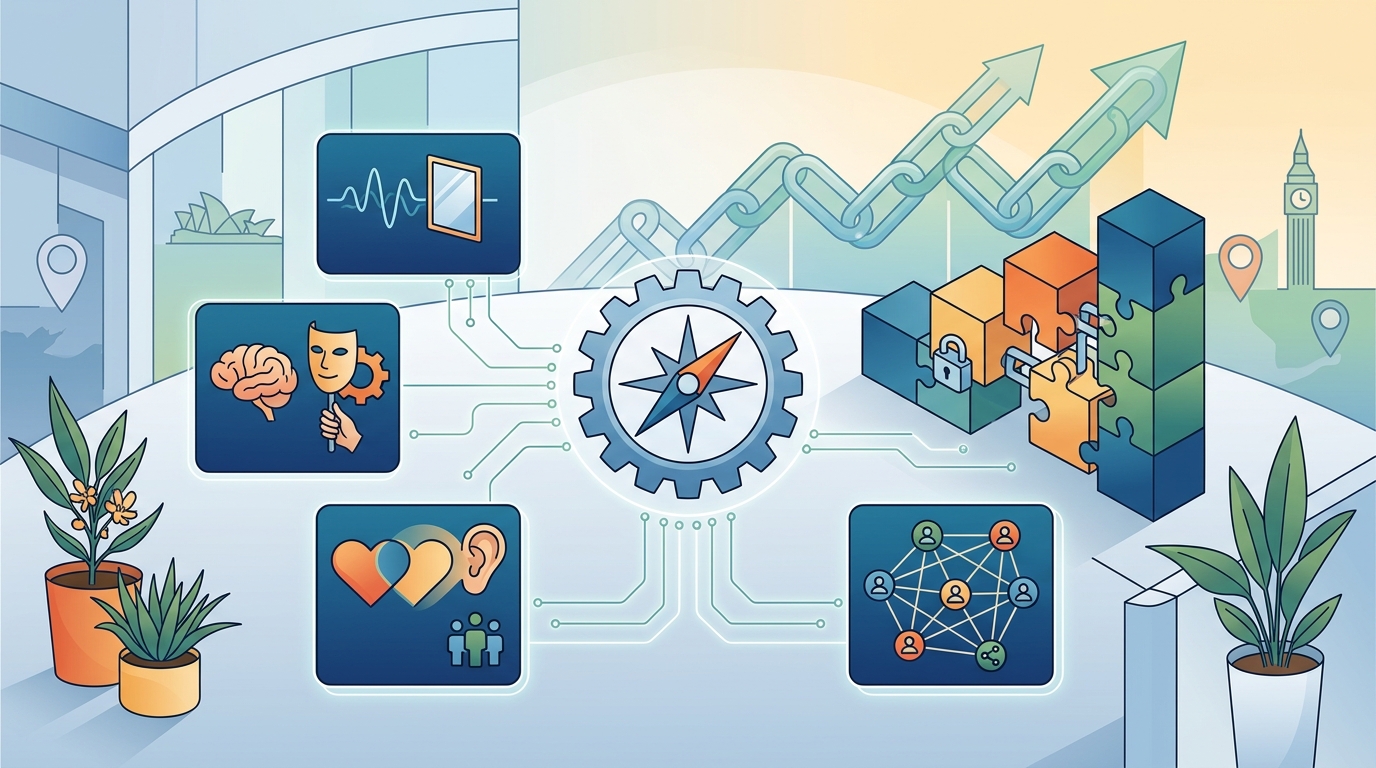
How to Build Self-Awareness
Practical steps include regular self-reflection, seeking honest feedback, and using validated diagnostic tools. The Human Synergistics LSI assessment offered by Uncapped Potential is one such tool that provides deep insight into thinking and behavioural styles, helping leaders see the gap between intention and impact.
Self-Regulation and Emotional Control
Self-regulation is the ability to manage disruptive emotions and impulses rather than being controlled by them. Leaders with strong self-regulation remain composed under pressure, respond thoughtfully instead of reacting, and model the emotional tone they want to see in their teams.
The Business Case for Composure
A 2025 study published in Quality & Quantity found that emotional intelligence significantly enhances leadership effectiveness by improving communication, decision-making, and conflict resolution. Leaders who cannot self-regulate often escalate conflict, erode trust, and create psychologically unsafe environments.
Understanding the link between leadership behaviour and psychosocial safety is critical. Emotionally intelligent leadership creates the trust and behavioural norms that keep people safe and performing at their best.
Empathy as a Strategic Leadership Skill
Empathy is the ability to understand and share the feelings of another person. Far from being a soft skill, empathy is now recognised as one of the most commercially valuable leadership capabilities.
Empathy Drives Measurable Performance
Global leadership firm DDI ranks empathy as the number one leadership skill, reporting that leaders who master it perform more than 40 percent higher in coaching, engaging others, and decision-making. A separate study by the Center for Creative Leadership found that managers showing greater empathy are viewed as better performers by their own leaders.
This is why Uncapped Potential's leadership development programs place empathy at the centre of leader capability. Effective leadership is not about technical capability alone; it is about emotional intelligence applied in real situations with real people.
Social Skills and Relationship Management
Social skills in the EI framework refer to a leader's proficiency in managing relationships, building networks, and navigating social complexity. This includes clear communication, collaboration, conflict management, and the ability to inspire and influence others.
Communication That Connects
Leaders who communicate with clarity and emotional awareness reduce ambiguity and build alignment. Trust and confidence become cornerstones of culture when leaders invest in purposeful, transparent conversations rather than relying on hierarchy alone.
Conflict as a Leadership Opportunity
Research from Harvard Business Review suggests that every unaddressed workplace conflict can waste approximately eight hours of company time in gossip and unproductive activity. Emotionally intelligent leaders treat conflict as a signal, not a threat, and address it early with directness and care.
Intrinsic Motivation and Purpose
Intrinsic motivation is the inner drive to pursue goals for reasons beyond money or status. Leaders with high intrinsic motivation are resilient, optimistic, and committed to continuous improvement. They set the tone for a culture of performance and accountability.
Organisations face a fundamental challenge: leadership and management capability has not kept pace with the need for greater impact and effectiveness. When leaders lead with purpose and emotional conviction, they close that gap and inspire their teams to do the same. This is why developing a strong personal leadership brand is a foundational step in the Uncapped Potential approach.
EI Elements Compared: Impact on Leadership Outcomes
| EI Element | Definition | Key Leadership Impact | Development Method |
|---|---|---|---|
| Self-Awareness | Recognising your emotions, strengths, and blind spots | Better decision-making, authentic leadership | 360 feedback, LSI diagnostics, journaling |
| Self-Regulation | Managing impulses and emotional reactions | Composure under pressure, psychological safety | Mindfulness, reframing, coaching |
| Empathy | Understanding and sharing others' feelings | 40%+ higher performance in coaching and engagement | Active listening, perspective-taking exercises |
| Social Skills | Managing relationships and social dynamics | Reduced conflict, stronger team cohesion | Communication training, purposeful conversations |
| Intrinsic Motivation | Inner drive beyond external rewards | Resilience, sustained performance, cultural alignment | Values alignment, purpose-driven goal setting |
Key Takeaways
- Emotional intelligence is the strongest differentiator for modern leadership effectiveness, surpassing technical skills alone.
- Self-awareness is the foundation, yet fewer than 15 percent of leaders are truly self-aware.
- Empathy is the number one ranked leadership skill, driving over 40 percent higher performance in key areas.
- Self-regulation directly influences psychosocial safety and team trust.
- Social skills reduce wasted time from unresolved conflict and build alignment across teams.
- Intrinsic motivation helps leaders sustain energy and model the culture they want to create.
- EI is not fixed. It can be developed through structured programs, diagnostic tools like the Human Synergistics LSI, and deliberate practice.
Frequently Asked Questions
What is emotionally intelligent leadership?
Emotionally intelligent leadership is the practice of leading others by leveraging self-awareness, empathy, self-regulation, social skills, and intrinsic motivation. It focuses on understanding and managing emotions to drive better decisions and build high-performing cultures.
Why is emotional intelligence more important than IQ for leaders?
Daniel Goleman's research found that the most effective leaders share a high degree of emotional intelligence, while IQ and technical skills serve as entry-level requirements. EI determines how leaders handle relationships, stress, and complex interpersonal dynamics.
Can emotional intelligence be learned?
Yes. While some aspects of EI are innate, all five elements can be developed through coaching, feedback, validated assessments, and deliberate practice. Programs like those offered through leadership development at Uncapped Potential are designed for exactly this purpose.
How does self-awareness improve leadership?
Self-awareness helps leaders understand their triggers, recognise behavioural patterns, and see how their actions affect others. This awareness enables more intentional and effective leadership behaviour.
What role does empathy play in team performance?
Empathy enables leaders to connect with team members, understand their perspectives, and respond with appropriate support. DDI research shows empathetic leaders perform over 40 percent higher in coaching and decision-making.
How does emotional intelligence affect organisational culture?
Leaders shape culture through their behaviour. Emotionally intelligent leaders model trust, transparency, and accountability, which cascades through teams and creates psychologically safe, high-performing environments.
What tools measure emotional intelligence in leaders?
Common tools include the Human Synergistics Life Styles Inventory (LSI), the EQ-i 2.0, and various 360-degree feedback instruments. The Human Synergistics LSI is particularly effective at revealing thinking and behavioural styles that drive or limit leadership effectiveness.
How long does it take to develop emotional intelligence?
Meaningful improvement can begin within weeks of focused effort, but lasting behavioural change typically requires three to six months of consistent practice, coaching, and reinforcement within real leadership contexts.
Ready to Develop Emotionally Intelligent Leaders?
If your organisation is ready to move beyond generic training and invest in leadership capability that actually shifts behaviour and culture, book a consultation with Uncapped Potential. With over 30 years of lived leadership experience and certified expertise in emotional intelligence and Human Synergistics diagnostics, we deliver tailored programs that create measurable, lasting impact.