
How to Measure Emotional Intelligence and Assess Its Impact on Performance
Emotional intelligence is not a soft skill. It is the single most under leveraged competitive advantage available to any organisation and the one thing AI cannot replace. In a business landscape where technical proficiency is often assumed, the differentiator between average and exceptional leadership lies in the ability to navigate complex human dynamics. Recent industry analyses indicate that leaders with high emotional intelligence drive significantly higher team retention and project success rates compared to their counterparts who rely solely on technical expertise. This guide explores the rigorous methodologies used to quantify this intangible asset and translate it into measurable business outcomes.
Defining Emotional Intelligence in a Business Context
Before measuring emotional intelligence, we must establish what it actually is. Emotional intelligence is the capacity to recognize, understand, and manage our own emotions while simultaneously recognizing, understanding, and influencing the emotions of others. In a corporate setting, this translates to specific behavioral competencies such as self-regulation, empathy, and social skill.
Leadership emotional intelligence is the application of these competencies to drive strategic outcomes. It involves the ability to remain calm under pressure, to navigate office politics with integrity, and to foster a culture of psychological safety. Without a clear definition, measurement becomes subjective and unreliable. We need standardized frameworks that convert behavioral tendencies into quantifiable data points.
Core Methodologies for Measuring EI
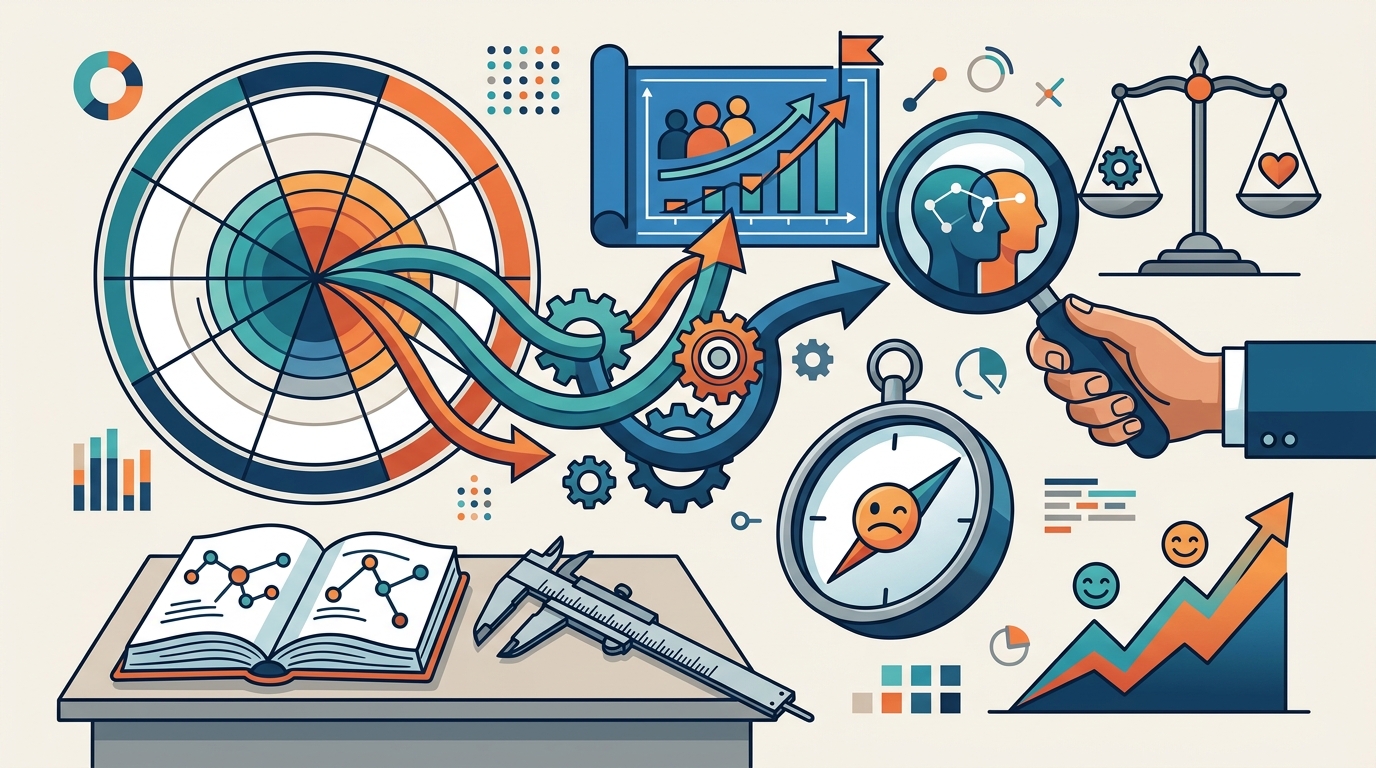
Assessing emotional intelligence requires moving beyond self-reported surveys, which are prone to bias. High-fidelity measurement relies on a combination of self-assessment, 360-degree feedback, and behavioral observation. The goal is to capture the gap between intent and impact, a metric that reveals where leaders are falling short of their own potential.
Self-Assessment Inventories
Self-assessment tools provide a baseline for self-awareness. These instruments ask leaders to rate their own behaviors against established emotional intelligence competencies. While useful for initiating reflection, self-assessments often suffer from the Dunning-Kruger effect, where individuals with lower competence overestimate their abilities. Therefore, they must always be triangulated with external data.
360-Degree Feedback
360-degree feedback is the gold standard for validating self-perception. By collecting data from peers, direct reports, and superiors, organizations gain a holistic view of a leader's emotional impact. This method highlights blind spots, such as a leader who believes they are approachable but is perceived as intimidating by their team. The disparity between self-rating and peer-rating is often the most critical data point for development.
Behavioral Observation
Advanced measurement includes observing leaders in real-time scenarios. This can be done through role-playing exercises, case study analyses, or live coaching sessions. Observers look for specific indicators of emotional regulation, such as how a leader responds to unexpected setbacks or how they deliver critical feedback. This qualitative data provides context to the quantitative scores.
The Human Synergistics LSI® Framework
One of the most robust frameworks for measuring the cultural and individual impact of emotional intelligence is the Human Synergistics Leader and Organisation Culture Insights (LSI®). This tool moves beyond individual traits to assess the cultural context in which leaders operate. It identifies whether an organization's culture is constructive, passive-defensive, or aggressive-defensive, and how individual leadership styles interact with that culture.
Using the LSI® framework allows organizations to see how emotional intelligence influences organizational culture. Leaders with high emotional intelligence tend to foster constructive cultures characterized by achievement, self-actualization, and harmonious relationships. Conversely, low emotional intelligence often reinforces passive-defensive cultures focused on conformity or aggressive-defensive cultures focused on power and competition. Understanding this dynamic is crucial for targeted intervention.
Our approach at Uncapped Potential leverages these insights to help ambitious leaders close the gap between intent and impact. We work with organizations to identify where human potential is being stifled by cultural constraints and how emotional intelligence can unlock new levels of performance. For more on our methodology, visit our Solutions page.
Linking EI Metrics to Organizational Performance
Measuring emotional intelligence is only valuable if it correlates with tangible business results. Research consistently shows that emotional intelligence is a predictor of leadership effectiveness and organizational success. Leaders who score high in EI metrics tend to have teams with higher engagement, lower turnover, and better financial performance.
Employee Retention and Engagement
Employees leave managers, not companies. Leaders with high emotional intelligence create environments where employees feel valued and understood. This reduces turnover costs and preserves institutional knowledge. Data shows that teams led by emotionally intelligent managers report higher levels of trust and psychological safety, which are precursors to innovation.
Decision-Making Quality
Emotional intelligence enhances decision-making by allowing leaders to separate their ego from the data. Leaders who can manage their emotions are less likely to make impulsive decisions driven by fear or anger. They are better at considering diverse perspectives and anticipating the human impact of strategic choices. This leads to more sustainable and widely accepted outcomes.
Conflict Resolution
Conflict is inevitable in any organization. Leaders with high emotional intelligence can de-escalate tensions and facilitate constructive dialogue. They view conflict as an opportunity for growth rather than a threat. This ability to navigate complexity turns potential disruptions into catalysts for improvement.
To explore how we help organizations turn complexity into opportunity, read our Case Studies.
Comparing EI Assessment Tools
Selecting the right measurement tool depends on your specific goals, whether you are assessing individual leaders or organizational culture. The table below compares common approaches.
| Assessment Type | Primary Focus | Best For | Limitations |
|---|---|---|---|
| Human Synergistics LSI® | Cultural & Leadership Style | Organizational transformation | Requires expert interpretation |
| EQ-i 2.0 | Individual Emotional Competencies | Personal development plans | Relies on self-reporting |
| MSCEIT | Emotional Ability (Performance) | Validating emotional skills | Complex scoring methodology |
| 360-Degree Feedback | Behavioral Impact on Others | Leadership coaching | Subject to rater bias |
Key Takeaways
- Emotional intelligence is a measurable competitive advantage that drives performance beyond technical skills.
- Accurate measurement requires triangulating self-assessments with 360-degree feedback and behavioral observation.
- The Human Synergistics LSI® framework provides deep insights into the interplay between leadership style and organizational culture.
- Leaders with high emotional intelligence correlate with higher employee retention, better decision-making, and effective conflict resolution.
- Uncapped Potential has trained over 1,200 leaders and HR practitioners in emotional intelligence, demonstrating a proven track record of capability building.
- Organizations leveraging emotional intelligence see a significant gap between intent and impact closed, leading to higher repeat client partnerships.
- Emotional intelligence is not replaceable by AI, making it a critical future-proof skill for leaders.
Frequently Asked Questions
How is emotional intelligence different from IQ?
IQ measures cognitive abilities such as logic, reasoning, and problem-solving. Emotional intelligence measures the ability to perceive, use, understand, and manage emotions. While IQ is largely static, emotional intelligence can be developed and improved through practice and feedback.
Can emotional intelligence be accurately measured?
Yes, but it requires a multi-method approach. No single tool is perfect. Combining self-assessments, 360-degree feedback, and behavioral frameworks like LSI® provides a comprehensive and accurate picture of a leader's emotional capabilities.
Why is emotional intelligence important for leadership?
Leadership is fundamentally about influencing people. Emotional intelligence provides the tools to understand and motivate others, navigate complex social dynamics, and make balanced decisions. It is the foundation of effective influence.
How does emotional intelligence impact organizational culture?
Leaders set the tone for culture. Leaders with high emotional intelligence foster constructive cultures based on trust and collaboration. Those with low emotional intelligence may inadvertently reinforce defensive cultures focused on fear or conformity.
What is the ROI of emotional intelligence training?
The ROI is seen in reduced turnover, higher engagement, and improved performance. Organizations that invest in emotional intelligence training often see a significant return through increased productivity and reduced conflict-related costs.
How long does it take to improve emotional intelligence?
Improvement is a continuous process. While basic awareness can be gained quickly, deep behavioral change typically takes months to years of consistent practice, coaching, and feedback. Our Insights section offers more on this journey.
What role does HR play in measuring emotional intelligence?
HR leaders are crucial in implementing fair and effective measurement systems. They ensure that data is used for development rather than punishment, fostering a culture of growth. HR Mastery solutions can guide this process.
Next Steps for Your Organization
Most organisations operate well within their limits. We help organisations find out what happens when you don't, because human potential is limitless. If you are ready to close the gap between intent and impact, we invite you to explore our advisory services. Contact us today to schedule a consultation and discover how emotional intelligence can transform your leadership and culture.
Visit our Contact page to start the conversation.