

Emotional Intelligence in Organizations: Driving Performance & Culture
Emotional intelligence is the capacity to recognize, understand, and manage one's own emotions and those of others. In the modern corporate landscape, this capability has shifted from a peripheral "soft skill" to a critical driver of enterprise success. Recent industry analyses indicate that organizations with high emotional intelligence outperform their peers by significant margins in both revenue growth and employee retention. This guide explores how leveraging emotional intelligence transforms organizational performance, culture, and strategic execution. (Extensive Real World Experience)
Defining Emotional Intelligence in Business
To understand its impact, we must first establish a precise definition. Emotional intelligence is the ability to perceive, control, and evaluate emotions in oneself and others. Unlike technical skills, which are often static, emotional intelligence is dynamic and deeply tied to interpersonal effectiveness.
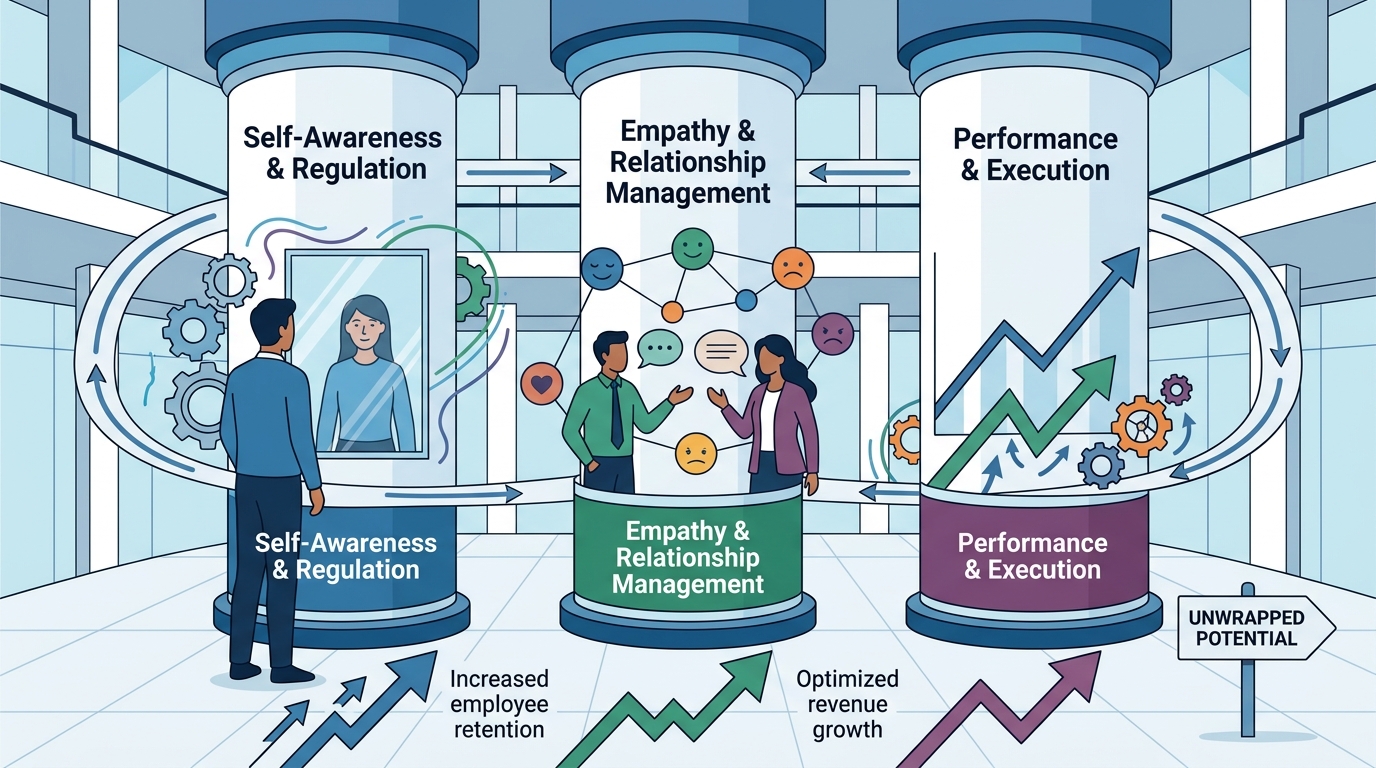
Human Synergistics Leader and Organisation Culture Insights provide a framework for understanding how these traits manifest in professional settings. The framework identifies specific behavioral patterns that correlate with high performance. These patterns include self-awareness, self-regulation, motivation, empathy, and social skill. When leaders exhibit these traits, they create an environment where trust and clarity thrive.
According to data from the Harvard Business Review, employees with high emotional intelligence are more likely to receive promotions and lead successful teams. This is because they can navigate complex social dynamics with greater ease. They do not merely react to stress; they respond with strategic intent. This distinction is vital for organizational resilience.
The Leadership Connection
Leadership is the primary lever for embedding emotional intelligence into an organization. Ambitious leaders who close the gap between intent and impact are those who prioritize human potential. Most organizations operate well within their limits, but high-performing ones push beyond these boundaries by leveraging the full capacity of their workforce.
Effective leaders use emotional intelligence to drive performance and turn complexity into opportunity. They do this by fostering purposeful conversations. These conversations are not casual check-ins but structured dialogues aimed at clarity and alignment. Leaders who engage in such dialogues report higher levels of team engagement and lower rates of burnout.
The impact of leadership emotional intelligence is measurable. Organizations that invest in training for their leaders see a direct correlation with improved employee satisfaction scores. This is because employees feel heard and valued. When leaders demonstrate empathy, they build psychological safety. Psychological safety is a prerequisite for innovation. Without it, employees withhold ideas due to fear of judgment.
For more on how leadership styles influence culture, explore our Leadership Solutions.
Culture and Performance Metrics
Organizational culture is the collective behavior of its people. It is shaped by the values, assumptions, and emotions that drive daily interactions. Emotional intelligence acts as the glue that holds this culture together. It ensures that diversity of thought is respected and that conflict is resolved constructively.
Research shows that companies with strong emotional intelligence cultures have lower turnover rates. High turnover is expensive. It costs organizations approximately 1.5 to 2 times the employee's annual salary to replace them. By fostering a culture of trust and authenticity, leaders can retain top talent. This retention stabilizes institutional knowledge and reduces recruitment costs.
Furthermore, emotional intelligence enhances decision-making. Leaders who understand their own biases and emotional triggers make more objective decisions. They are less likely to make impulsive choices driven by stress or ego. This leads to more sustainable business outcomes. According to a study by TalentSmart, 90% of top performers have high emotional intelligence. This statistic highlights the competitive advantage of EI in the workplace.
For insights on how we help organizations transform their culture, visit our Case Studies page.
Emotional Intelligence vs. AI
In an era of rapid technological advancement, some question the relevance of human-centric skills. However, emotional intelligence is the one thing AI cannot replace. Artificial intelligence excels at processing data and identifying patterns. It lacks the capacity for genuine empathy, moral reasoning, and nuanced social interaction.
Emotional intelligence is not a soft skill. It is the single most under leveraged competitive advantage available to any organization. As AI handles more routine tasks, the value of human connection increases. Leaders who can inspire, motivate, and connect with their teams will remain indispensable. This is not a theoretical concept. It is a practical reality of the modern workforce.
Organizations that integrate AI with high emotional intelligence leadership see the best results. AI provides the data; humans provide the context. This synergy allows for more informed and compassionate decision-making. For a deeper dive into this topic, read our Articles on the intersection of technology and leadership.
Strategic Implementation
Implementing emotional intelligence strategies requires a systematic approach. It is not enough to offer a one-time workshop. Organizations must embed EI into their hiring, training, and performance management processes.
Here is a comparison of common approaches to developing emotional intelligence:
| Approach | Description | Impact on Performance |
|---|---|---|
| Advisory Services | Strategic guidance for culture transformation | High |
| Leadership Training | Direct skill development for executives | Very High |
| HR Mastery Programs | Empowering HR to drive EI initiatives | Medium |
| Conference Speaking | Inspiring keynotes for broad audiences | Low to Medium |
Advisory services across strategy, execution, and transformation make capability and culture the engine of performance. This holistic approach ensures that emotional intelligence is not an isolated initiative but a core business driver. We work with HR leaders and practitioners to drive strategy and enterprise performance. By aligning HR practices with EI principles, organizations create a sustainable competitive advantage.
To learn more about our advisory services, explore our solutions.
Key Takeaways
- Emotional intelligence is a critical driver of organizational performance, linked to higher revenue and retention.
- Leaders who practice emotional intelligence close the gap between intent and impact, fostering trust and clarity.
- Human Synergistics Leader and Organisation Culture Insights provide a validated framework for measuring EI in the workplace.
- Emotional intelligence is the single most under leveraged competitive advantage available to any organization.
- Organizations with high EI cultures have lower turnover rates, saving significant recruitment costs.
- AI cannot replace the nuanced social interactions and empathy provided by emotionally intelligent leaders.
- Strategic implementation requires embedding EI into hiring, training, and performance management.
Frequently Asked Questions
How does emotional intelligence affect team productivity?
Emotional intelligence improves team productivity by reducing interpersonal conflict and enhancing communication. Teams with high EI collaborate more effectively, leading to faster decision-making and higher quality outputs.
Can emotional intelligence be taught to leaders?
Yes, emotional intelligence can be developed through targeted training and coaching. Programs like those offered by Uncapped Potential help leaders build self-awareness and social skills.
What is the difference between emotional intelligence and IQ?
IQ measures cognitive abilities such as logic and problem-solving. Emotional intelligence measures the ability to manage emotions and relationships. Both are important, but EI is often a better predictor of leadership success.
How does emotional intelligence impact customer satisfaction?
Employees with high emotional intelligence are better at understanding and meeting customer needs. This leads to higher customer satisfaction scores and increased loyalty.
Why is emotional intelligence important for change management?
Change management often triggers fear and resistance. Leaders with high EI can navigate these emotions, providing clarity and support to help employees adapt to new processes.
What role does empathy play in organizational performance?
Empathy fosters trust and psychological safety. When employees feel understood, they are more engaged and willing to go above and beyond for the organization.
How can organizations measure the ROI of emotional intelligence initiatives?
ROI can be measured through metrics such as employee retention rates, engagement scores, and productivity levels. Organizations often see a positive return within 12 to 24 months of implementation.
Next Steps
Unlock the full potential of your organization by prioritizing emotional intelligence. At Uncapped Potential, we help ambitious leaders close the gap between intent and impact. Our proven methodologies and extensive real-world experience make us the ideal partner for your journey.
Contact us today to schedule a consultation and discover how we can help your organization thrive. Visit our Contact page to get started.