
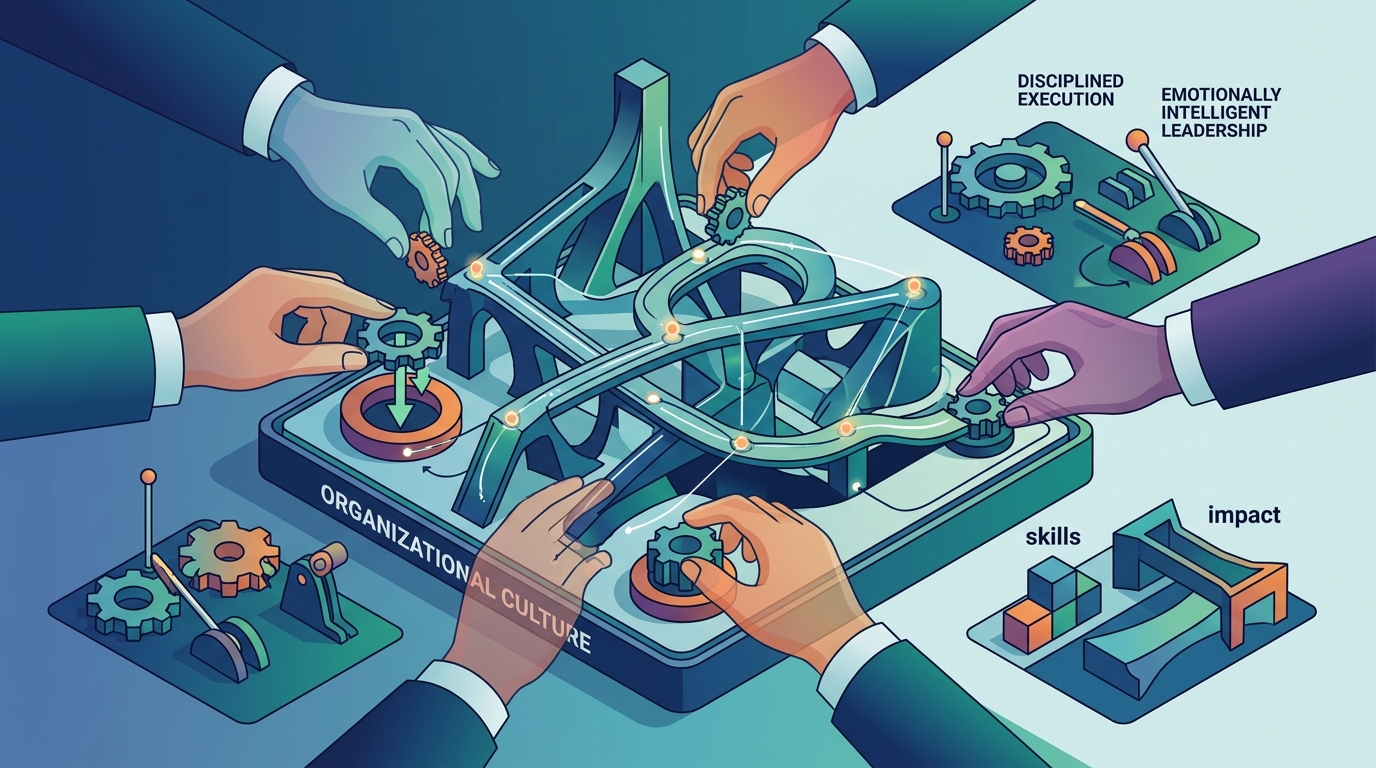
Organizational culture is not a static artifact of office decor or casual Friday policies. It is the dynamic, invisible architecture of decision-making that dictates how work actually gets done. Recent insights from Uncapped Potential highlight that most organizations operate well within their limits, leaving immense performance potential untapped. The gap between intent and impact is rarely a skills deficit. It is a leadership thinking deficit. When leaders shift their cognitive framework from compliance to capability, culture transforms from a constraint into an engine of growth.
The Foundation of Psychosocial Safety
Psychosocial safety is the shared perception among employees that their psychological well-being is valued by the organization. It is not merely about preventing harm. It is about actively cultivating an environment where risk, complexity, and competition are navigated with clarity and courage. According to a 2025 analysis on psychosocial safety, leaders who prioritize this dimension see a direct correlation with employee retention and strategic agility.
When leaders think in terms of safety, they stop viewing vulnerability as a weakness. They recognize that admitting uncertainty allows teams to innovate without fear of retribution. This shift requires a fundamental change in how authority is exercised. It moves from command-and-control to inquiry and support. Leaders must ask, "What do you need to succeed?" rather than "Why haven't you succeeded?" This simple linguistic shift alters the entire power dynamic of the workplace.
Uncapped Potential emphasizes that emotional intelligence is the single most underleveraged competitive advantage available to any organization. It is the one thing artificial intelligence cannot replace. While AI can process data, it cannot navigate the nuanced human behaviors that define culture. Leaders must leverage their own emotional intelligence to read the room, manage their own reactions, and empathize with the pressures their teams face.
Emotional Intelligence as a Competitive Advantage
Emotional intelligence is the ability to recognize, understand, and manage our own emotions and those of the people around us. It is often mischaracterized as a "soft skill." This is a dangerous misconception. In high-stakes environments, emotional intelligence is a hard skill that drives commercial outcomes. Leaders with high emotional intelligence can de-escalate conflict, inspire loyalty, and make better decisions under pressure.
The framework used by Uncapped Potential draws heavily on Human Synergistics Leader and Organisation Culture Insights. This model provides a data-driven approach to understanding how leadership styles influence organizational culture. By utilizing these insights, leaders can identify blind spots in their thinking. For example, a leader who appears confident may actually be operating from a "Compassionate" style that avoids necessary conflict. Recognizing this pattern allows for targeted intervention and growth.
Furthermore, the integration of Coach. purposeful conversations provides a structured method for leaders to engage in meaningful dialogue. These conversations are not performance reviews. They are strategic alignments that clarify expectations, address barriers, and reinforce positive behaviors. When leaders consistently use this framework, they create a culture of accountability and continuous improvement.
Closing the Gap Between Intent and Impact
Most leaders have good intentions. They want their teams to succeed. They want to foster innovation. However, their actions often produce the opposite result. This discrepancy is known as the intent-impact gap. It occurs when leaders fail to consider how their behavior is perceived by others. According to recent thought leadership, closing this gap is the primary responsibility of senior executives.
To close the gap, leaders must adopt a mindset of radical self-awareness. They must seek feedback not just on their results, but on their methods. This requires creating psychological safety for upward feedback. Employees must feel safe enough to tell their leaders when their thinking is flawed or their behavior is counterproductive. Without this feedback loop, leaders remain blind to their own limitations.
Uncapped Human Resources offers advisory services that help organizations bridge this gap. By focusing on strategy, execution, and transformation, they ensure that capability and culture become the engine of performance. This approach moves beyond theoretical discussions and into practical application. Leaders learn how to translate their strategic intent into tangible cultural shifts.
The Boardroom Blindspot and Leadership Risk
Leaders are often viewed as the solution to organizational problems. However, they can also be the biggest risk. This concept, explored in Uncapped Potential's 2026 insights, highlights the danger of unchecked leadership thinking. When leaders operate without self-awareness, they create toxic cultures that drive away top talent and stifle innovation.
The boardroom blindspot refers to the tendency of leaders to overestimate their own competence and underestimate the complexity of their challenges. This overconfidence leads to poor decision-making and a lack of contingency planning. Leaders must recognize that their perspective is limited. They need diverse viewpoints to challenge their assumptions and broaden their understanding.
Addressing this risk requires a cultural shift towards humility and curiosity. Leaders must be willing to admit when they are wrong. They must actively seek out dissenting opinions and value them as sources of insight. This creates a culture of intellectual honesty where the best ideas win, regardless of their source. It also reduces the likelihood of groupthink, which is a common precursor to organizational failure.
Building Culture, Not a Cult
There is a fine line between building a strong culture and creating a cult. A strong culture is built on shared values, trust, and purpose. A cult is built on conformity, fear, and the suppression of individuality. According to Uncapped Potential's analysis, many organizations accidentally drift towards cult-like behaviors by prioritizing alignment over authenticity.
To avoid this trap, leaders must encourage diversity of thought. They must celebrate differences in perspective and background. They must create spaces where employees can bring their whole selves to work. This includes their doubts, their questions, and their unique contributions. When leaders prioritize authenticity, they build a culture that is resilient and adaptable.
Furthermore, leaders must be vigilant against toxic positivity. This is the belief that employees should always be happy and optimistic, regardless of the circumstances. Toxic positivity gaslights employees by invalidating their legitimate concerns and frustrations. It creates a culture of silence where problems are hidden rather than solved. Leaders must create space for difficult conversations and acknowledge the reality of challenges.
Leadership Thinking Models Compared
Understanding different leadership thinking models is crucial for shaping organizational culture. Below is a comparison of common approaches and their cultural impacts.
| Leadership Model | Core Focus | Cultural Impact | Best For |
|---|---|---|---|
| Command and Control | Compliance and hierarchy | Low trust, high turnover | Crisis management only |
| Transformational | Inspiration and vision | High engagement, potential burnout | Change initiatives |
| Emotional Intelligence | Self-awareness and empathy | Psychosocial safety, trust | Sustainable performance |
| Coach. Purposeful | Development and alignment | Accountability, growth | Team development |
As shown in the table, the Emotional Intelligence and Coach. Purposeful models align most closely with the principles advocated by Uncapped Potential. These models prioritize the human element of leadership, recognizing that people are the primary drivers of organizational success.
Key Takeaways
- Emotional intelligence is a hard skill that drives commercial outcomes and cannot be replicated by AI.
- Psychosocial safety is the foundation of a high-performing culture, requiring leaders to value psychological well-being.
- The intent-impact gap is a common leadership failure that can be closed through radical self-awareness and feedback.
- Leaders are the biggest risk to organizational culture when they operate without humility and curiosity.
- Toxic positivity gaslights employees and must be replaced with authentic, difficult conversations.
- Uncapped Potential has trained over 1,200 leaders and HR practitioners in emotional intelligence frameworks.
- Human Synergistics insights provide a data-driven approach to understanding leadership styles and cultural impact.
Frequently Asked Questions
How does emotional intelligence impact organizational culture?
Emotional intelligence creates a culture of trust and psychological safety. Leaders who understand their own emotions and empathize with others can navigate complexity with clarity, reducing conflict and increasing collaboration.
What is the difference between building culture and creating a cult?
Building culture involves fostering shared values and authenticity. Creating a cult involves enforcing conformity and suppressing individuality. Leaders must encourage diversity of thought to avoid the latter.
Why is psychosocial safety important for performance?
Psychosocial safety allows employees to take risks and innovate without fear of retribution. According to research, this leads to higher engagement and better strategic outcomes.
How can leaders close the gap between intent and impact?
Leaders must seek upward feedback and practice radical self-awareness. They need to understand how their behavior is perceived by others and adjust accordingly.
What role does Human Synergistics play in leadership development?
Human Synergistics provides insights into how leadership styles influence culture. Uncapped Potential uses these insights to help leaders identify blind spots and develop more effective approaches.
What is Coach. purposeful conversations?
It is a structured framework for leaders to engage in meaningful dialogue with their teams. It focuses on alignment, accountability, and development rather than traditional performance reviews.
How does Uncapped Potential help organizations?
Uncapped Potential offers advisory services, leadership coaching, and HR mastery guidance. They help organizations shift from compliance to strategic influence, leveraging emotional intelligence to drive performance.
Transform Your Leadership Approach
Shaping organizational culture through leadership thinking is not a one-time event. It is a continuous journey of self-discovery and adaptation. Leaders who embrace this journey will find that their teams are more engaged, their decisions are better, and their organizations are more resilient. If you are ready to close the gap between intent and impact, consider exploring the advisory services offered by Uncapped Potential. Their expertise in emotional intelligence and cultural transformation can help you unlock the limitless potential of your organization. Visit the contact page to start the conversation today.