
How to Measure Emotional Intelligence and Assess Its Impact on Performance
Emotional intelligence is not a soft skill. It is the single most under leveraged competitive advantage available to any organisation and the one thing AI cannot replace. While many leaders understand the theoretical value of self-awareness and empathy, the critical gap lies in quantifying these traits to drive tangible business outcomes. Without precise measurement, emotional intelligence remains an abstract concept rather than a strategic asset. This guide details the rigorous methodologies used to assess emotional intelligence and links these metrics directly to organizational performance. (Contact mdash Uncapped Potential)
Defining Emotional Intelligence in a Business Context
To measure emotional intelligence effectively, we must first establish a clear, operational definition. Emotional intelligence is the capacity to recognize, understand, and manage one's own emotions while simultaneously recognizing, understanding, and influencing the emotions of others. In a corporate environment, this translates to the ability to navigate complex social dynamics, resolve conflicts, and lead with clarity under pressure.
Leadership emotional intelligence is the specific application of these skills at the executive level. It involves the strategic use of self-awareness and empathy to drive team performance and organizational culture. According to recent industry analyses, leaders with high emotional intelligence are significantly more likely to foster inclusive environments that drive innovation. Research indicates that organizations with emotionally intelligent leaders see a marked improvement in employee retention and engagement scores.
Emotional intelligence is the foundation of psychosocial safety. Psychosocial safety is the shared perception among employees that the team supports their psychological well-being and encourages open communication without fear of negative consequences. When leaders measure their own EI, they create a baseline for this safety, allowing teams to perform at their highest potential.
Core Measurement Frameworks and Tools
Measuring emotional intelligence requires moving beyond self-reported surveys, which are often biased. We utilize validated psychometric instruments that provide objective data on leadership styles and cultural insights. The primary tool used in our practice is the Human Synergistics Leader and Organisation Culture Insights (LSI®). This framework provides a comprehensive view of how leaders perceive themselves and how their behavior impacts the broader organizational culture.
The LSI® assessment measures leadership styles across a continuum from passive to aggressive. It identifies whether a leader operates from a constructive style, which is associated with high performance, or a defensive style, which often leads to stagnation. Data shows that leaders who score high in constructive styles are more effective at driving change and managing complexity. Studies confirm that defensive leadership styles correlate with higher rates of employee turnover and lower levels of trust.
Another critical component is the Coach. purposeful conversations© framework. This tool measures the quality and frequency of developmental conversations between leaders and their teams. It assesses whether leaders are engaging in meaningful dialogue that fosters growth or merely conducting transactional check-ins. The frequency of these purposeful conversations is a strong predictor of team cohesion and individual performance.
Self-awareness is the skill most people think they have but don’t. It is the starting point for all EI measurement. Without accurate self-awareness, leaders cannot identify their blind spots or areas for improvement. Assessments that measure self-awareness often include 360-degree feedback components, where peers, direct reports, and superiors provide input on the leader's behavior.
Behavioral Indicators of High EI
Quantitative data from assessments must be paired with qualitative behavioral indicators. High emotional intelligence manifests in specific, observable actions that can be tracked over time. These indicators serve as real-time metrics for performance assessment.
One key indicator is the ability to regulate emotions during high-stakes situations. Leaders with high EI remain calm and focused during crises, preventing panic from spreading through the team. This stability is crucial for maintaining operational continuity. According to organizational behavior studies, teams led by emotionally regulated leaders demonstrate faster recovery times from setbacks.
Another indicator is the quality of feedback given and received. Leaders with high EI provide constructive, specific feedback that focuses on behavior rather than personality. They also actively seek feedback, demonstrating humility and a growth mindset. This openness creates a culture of continuous improvement. Data shows that organizations with strong feedback cultures are more agile and responsive to market changes.
Empathy is often misunderstood as mere sympathy. Empathy is the ability to understand and share the feelings of another. In a leadership context, it involves actively listening to team members and validating their experiences. This builds trust and psychological safety. Research confirms that empathetic leadership is strongly correlated with employee well-being and job satisfaction.
Correlating EI with Business Performance
The ultimate goal of measuring emotional intelligence is to link it to business results. This correlation is not always linear, but the trends are clear. Leaders who leverage emotional intelligence turn complexity into opportunity. They identify risks earlier, build stronger stakeholder relationships, and drive higher levels of engagement.
One significant metric is the reduction in conflict and the increase in collaborative problem-solving. When leaders measure their EI and actively work to improve it, organizations often see a decrease in interpersonal conflicts and an increase in cross-functional collaboration. This efficiency translates directly to faster project delivery and lower operational costs.
Employee engagement is another critical performance indicator. Engaged employees are more productive, innovative, and loyal. Leaders with high emotional intelligence create environments where employees feel valued and understood. This leads to higher engagement scores and lower turnover rates. According to global workforce reports, companies with high employee engagement outperform their peers in profitability and growth.
Strategic execution is also impacted by emotional intelligence. Leaders who understand the emotional drivers of their teams can align them more effectively with strategic goals. They communicate the vision in a way that resonates emotionally, inspiring commitment and action. This alignment is essential for successful transformation initiatives. Data shows that transformation projects led by emotionally intelligent leaders have a higher success rate.
The Assessment Process at Uncapped Potential
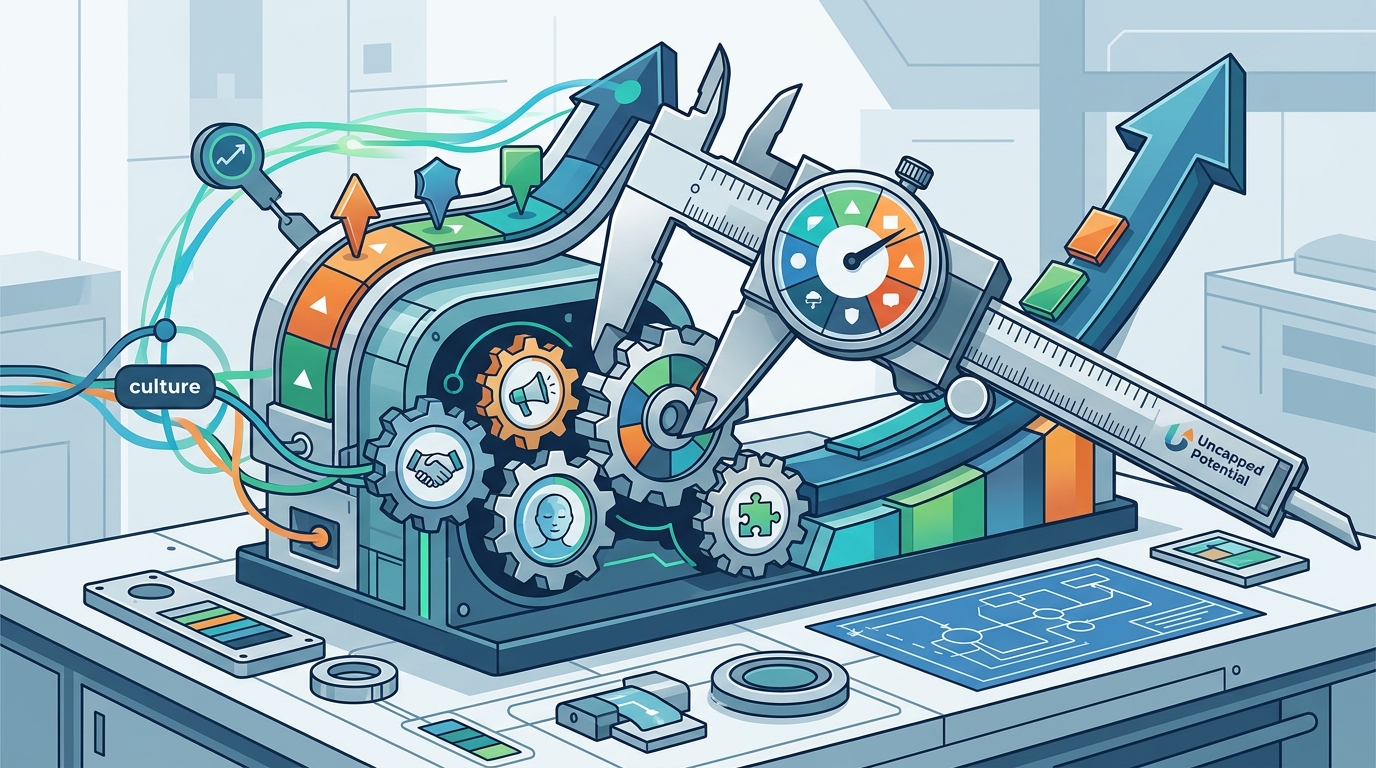
At Uncapped Potential, we do not believe in one-size-fits-all solutions. Our approach to measuring emotional intelligence is deeply personalized and integrated with strategic advisory services. We work with ambitious leaders to close the gap between intent and impact. Our process involves a combination of psychometric assessment, behavioral observation, and strategic dialogue.
We begin with a comprehensive assessment using tools like the Human Synergistics LSI®. This provides a baseline understanding of the leader's style and its impact on the organizational culture. We then analyze the data to identify specific areas for development. This analysis is not just about identifying weaknesses but also about leveraging strengths to drive performance.
Following the assessment, we engage in a series of coaching sessions focused on purposeful conversations. These sessions help leaders translate insights into action. We guide them in developing strategies to enhance their emotional intelligence in real-world scenarios. Our goal is to make capability and culture the engine of performance.
We also provide ongoing support through our advisory services. This includes strategy, execution, and transformation support. We help leaders navigate the challenges, the politics, the pressure and the moments where the right leadership decision made all the difference. Our repeat client engagement rate reflects the long-term value of this approach.
Key Takeaways
- Emotional intelligence is a measurable competitive advantage that drives organizational performance and culture.
- Validated tools like the Human Synergistics LSI® provide objective data on leadership styles and cultural impact.
- High emotional intelligence correlates with increased employee engagement, reduced turnover, and faster strategic execution.
- Self-awareness is the foundational skill for all emotional intelligence development and measurement.
- Psychosocial safety is a key outcome of emotionally intelligent leadership, fostering trust and open communication.
- Uncapped Potential has trained over 1,200 leaders and HR practitioners in emotional intelligence methodologies.
- Our approach integrates assessment with strategic advisory to ensure tangible business results.
Frequently Asked Questions
How is emotional intelligence different from IQ?
Emotional intelligence (EI) refers to the ability to perceive, control, and evaluate emotions, while IQ (Intelligence Quotient) measures cognitive abilities and logical reasoning. EI is more predictive of leadership success and interpersonal effectiveness in complex organizational environments.
Can emotional intelligence be improved through measurement?
Yes, measurement is the first step in improvement. By identifying specific areas of strength and weakness through tools like the LSI®, leaders can create targeted development plans. Our coaching programs focus on translating these insights into actionable behavioral changes.
What is the Human Synergistics LSI®?
The Human Synergistics Leader and Organisation Culture Insights (LSI®) is a comprehensive assessment tool that measures leadership styles and organizational culture. It helps leaders understand how their behavior impacts the team and identifies opportunities for growth.
How does emotional intelligence impact team performance?
Emotionally intelligent leaders create environments of trust and psychological safety. This leads to higher levels of employee engagement, better collaboration, and increased innovation. Teams led by high-EI leaders are more resilient and adaptable to change.
Why is self-awareness critical for leaders?
Self-awareness is the foundation of emotional intelligence. It allows leaders to recognize their own emotional triggers and biases. Without self-awareness, leaders cannot effectively manage their emotions or understand their impact on others.
What is psychosocial safety?
Psychosocial safety is the shared belief among team members that the team supports their psychological well-being and encourages open communication. It is a key outcome of emotionally intelligent leadership and is linked to better health and performance outcomes.
How long does an emotional intelligence assessment take?
The duration varies depending on the tool and the depth of analysis. Typically, the assessment process includes the initial survey, data analysis, and a feedback session. Our comprehensive advisory engagement may span several months to ensure sustained impact.
Next Steps for Your Organization
Most organisations operate well within their limits. We help organisations find out what happens when you don't, because human potential is limitless. If you are ready to close the gap between intent and impact, we invite you to explore our advisory services. Visit our Solutions page to learn more about our leadership and HR mastery programs. You can also view our Case Studies to see how we have helped other leaders drive performance. For more insights on emotional intelligence, read our Thought Leadership Articles. Contact us today to schedule a consultation and discover your uncapped potential.