
Interpreting Human Synergistics LSI Results for Emotional Intelligence
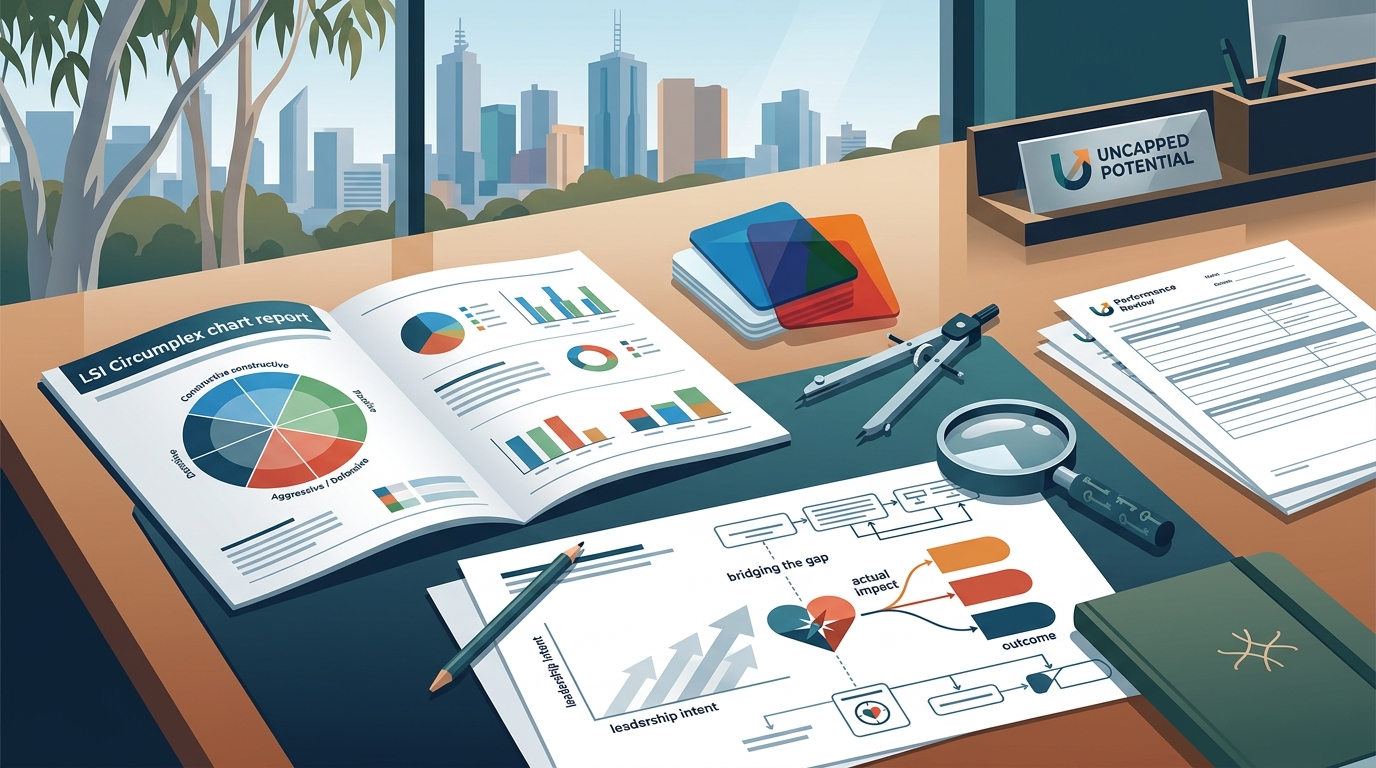
Leadership capability is a critical risk control as psychosocial claims rise and people management fundamentals continue to erode. In the high-stakes environment of modern Australian business, the gap between leadership intent and actual impact often determines organizational success or failure. Human Synergistics Leader and Organisation Culture Insights (LSI) provides the diagnostic data necessary to bridge this gap, but raw data without expert interpretation is merely noise. At Uncapped Potential, we specialize in translating these complex psychometric profiles into actionable strategies for emotionally intelligent leadership. (Extensive Real World Experience)
Why Expert Interpretation is Critical
Most organisations operate well within their limits. We help organisations find out what happens when you don't, because human potential is limitless. However, unlocking that potential requires more than just administering a survey. The LSI tool generates a detailed profile of a leader's self-concept, interpersonal style, and decision-making patterns. Without context, these results can be misread, leading to flawed development plans.
Emotional intelligence is not a soft skill. It is the single most under leveraged competitive advantage available to any organisation and the one thing AI cannot replace. Interpreting LSI results requires a nuanced understanding of how a leader's self-concept influences their ability to manage stress, build trust, and drive performance. Our approach ensures that the data serves the leader, not the other way around.
We have been harnessing the power of emotional intelligence and sculpting high performing cultures built on trust, authenticity and purpose, for more than 30 years. This longevity allows us to see patterns that others miss, connecting individual leadership styles to broader organizational culture dynamics.
Understanding the Human Synergistics LSI Framework
The Leader and Organisation Culture Insights (LSI) is a comprehensive assessment that measures a leader's self-concept and interpersonal style. It is grounded in the theory that leadership effectiveness is closely tied to how leaders perceive themselves and how they interact with others. The framework categorizes leadership styles into three main groups: Passive-Dependent, Avoidant, and Active-Independent.
Each category contains specific styles that reflect different approaches to problem-solving and relationship management. For example, an Active-Independent leader might exhibit "Achievement" or "Self-Achieving" styles, focusing on personal competence and autonomy. In contrast, a Passive-Dependent leader might lean towards "Approval" or "Conformity," seeking validation and adherence to rules.
Understanding these categories is the first step in development. However, the true power of LSI lies in identifying the "blind spots" and "strengths" within these styles. This is where the concept of psychosocial safety becomes paramount. A leader who lacks awareness of their tendency to avoid conflict may inadvertently create an environment where team members feel unsafe to speak up.
Our advisory services across strategy, execution and transformation, making capability and culture the engine of performance, rely on this deep diagnostic understanding. We do not just report scores; we contextualize them within the leader's specific business challenges.
The Link Between LSI and Emotional Intelligence
Emotional Intelligence (EI) is the ability to recognize, understand, and manage our own emotions and the emotions of others. The LSI framework provides a structural map for developing EI. By analyzing the gaps between a leader's preferred style and the demands of their role, we can identify specific EI competencies that need strengthening.
For instance, a leader with a strong "Self-Achieving" style may excel at task completion but struggle with "Collaboration" or "Empowerment." This imbalance can lead to burnout within the team and a lack of psychological safety. Our work with leaders focuses on expanding their repertoire of behaviors, moving them from rigid, single-style approaches to more flexible, emotionally intelligent responses.
We’re confusing being kind with being honest, and its coming at a cost. True emotional intelligence requires the courage to have difficult conversations while maintaining respect and empathy. The LSI results highlight where a leader might be avoiding these conversations due to fear of conflict or desire for approval.
By leveraging emotional intelligence, leaders can turn complexity into opportunity. This involves shifting from a mindset of control to one of influence, from judgment to curiosity, and from isolation to connection. Our leadership solutions are designed to facilitate this shift, ensuring that leaders are not just technically competent but emotionally resilient.
Our Interpretation Process
At Uncapped Potential, our interpretation process is collaborative and iterative. We do not believe in one-size-fits-all solutions. Instead, we tailor our approach to the unique needs of each leader and organization. Our process typically involves three key phases: assessment, interpretation, and action planning.
During the assessment phase, leaders complete the LSI survey, providing a snapshot of their current leadership style. This data is then analyzed in conjunction with other relevant metrics, such as 360-degree feedback and organizational culture surveys. This holistic view ensures that we are interpreting the data in the correct context.
The interpretation phase is where the magic happens. We sit down with leaders to walk through their results, challenging assumptions and uncovering hidden biases. We use our extensive real world experience to help leaders see their behavior through the eyes of their peers and direct reports. This stage is often uncomfortable but essential for growth.
Finally, we develop a personalized action plan. This plan includes specific goals, resources, and support mechanisms to help the leader implement the changes identified in the interpretation phase. We provide ongoing coaching and support to ensure that the new behaviors are sustained over time. Our goal is to help leaders build dynamic performance environments where emotional intelligence, accountability, and performance coexist.
LSI vs Other Leadership Assessments
While there are many leadership assessments available, the LSI stands out for its focus on self-concept and its integration with organizational culture. Unlike tools that focus solely on personality traits, LSI examines how leaders perceive themselves in relation to their work and their teams. This makes it particularly useful for diagnosing the root causes of leadership challenges.
| Assessment Tool | Primary Focus | Best For | Limitations |
|---|---|---|---|
| Human Synergistics LSI | Self-concept and interpersonal style | Leadership development and culture change | Requires expert interpretation |
| MBTI | Personality preferences | Team building and communication styles | Does not measure behavior or effectiveness |
| 360-Degree Feedback | Perceived behavior by others | Identifying blind spots | Lacks theoretical framework for change |
| DISC | Behavioral styles | Communication and sales techniques | Superficial understanding of leadership |
As career leaders, not career consultants, we know how to drive change - we’ve done the job! This perspective allows us to select the right tools for the right situation, ensuring that the assessment leads to tangible results rather than just more data.
Key Takeaways
- Expert Interpretation is Key: Raw LSI data can be misleading without the context provided by experienced practitioners.
- Emotional Intelligence is a Competitive Advantage: Developing EI through LSI interpretation directly impacts organizational performance and psychosocial safety.
- LSI Measures Self-Concept: Unlike personality tests, LSI focuses on how leaders perceive themselves, which drives their behavior.
- Uncapped Potential's Track Record: We have trained over 1200 leaders and HR practitioners in emotional intelligence and leadership development.
- Long-Term Partnership: We maintain 100% repeat client relationships, indicating the sustained value of our interpretation services.
- Integrated Approach: We combine LSI with other diagnostic tools to provide a holistic view of leadership effectiveness.
- Action-Oriented: Our interpretation always leads to a concrete action plan, not just a report.
Frequently Asked Questions
What is the Human Synergistics LSI?
The Leader and Organisation Culture Insights (LSI) is a psychometric assessment that measures a leader's self-concept and interpersonal style, providing insights into their leadership effectiveness and potential areas for development.
Why is expert interpretation of LSI results necessary?
Expert interpretation is necessary because LSI results are complex and can be easily misread. An experienced practitioner can contextualize the data, identify blind spots, and connect the results to specific business challenges, ensuring actionable outcomes.
How does LSI relate to emotional intelligence?
LSI provides a structural map for developing emotional intelligence by highlighting gaps between a leader's preferred style and the demands of their role. This helps identify specific EI competencies, such as empathy and self-regulation, that need strengthening.
What is the difference between LSI and MBTI?
While MBTI focuses on personality preferences and how individuals process information, LSI focuses on self-concept and interpersonal style in a leadership context. LSI is more directly applicable to leadership development and organizational culture change.
How long does the interpretation process take?
The interpretation process typically involves a one-on-one session lasting 1-2 hours, followed by the development of a personalized action plan. Ongoing coaching and support may extend the engagement over several months.
Can LSI be used for team development?
Yes, LSI can be used for team development by analyzing the collective self-concept of a team. This helps identify cultural dynamics, communication patterns, and potential areas of conflict or synergy within the group.
What industries benefit most from LSI interpretation?
LSI interpretation benefits any industry where leadership effectiveness and organizational culture are critical to success. This includes healthcare, finance, technology, and professional services, where high-stakes decision-making and team collaboration are essential.
Start Your Leadership Journey
Are you ready to close the gap between intent and impact? Our team of experienced leaders and HR practitioners is here to help you interpret your Human Synergistics LSI results and develop emotionally intelligent leadership capabilities. We offer tailored advisory services, leadership coaching, and HR mastery programs designed to drive performance and transform culture.
Don't let your leadership potential remain uncapped. Contact us today to schedule a consultation and discover how we can help your organization thrive. Visit our Contact page to get started.