
Essential Criteria for Evaluating Leadership Development Program Quality
Most organisations operate well within their limits, but the gap between leadership intent and actual impact is where performance dies. According to recent industry analysis, over 70% of leadership development initiatives fail to deliver measurable business results because they lack rigorous evaluation criteria. This statistic highlights a critical failure in how companies select and assess their talent strategies. Emotional intelligence is not a soft skill. It is the single most under leveraged competitive advantage available to any organisation and the one thing AI cannot replace. Therefore, evaluating a program requires looking beyond surface-level engagement metrics to deep behavioral change. (Contact mdash Uncapped Potential)
Why Traditional Evaluation Fails
Many companies rely on satisfaction surveys, often called "happy sheets," to judge the success of their leadership programs. This approach is fundamentally flawed because it measures enjoyment, not effectiveness. A leader may enjoy a workshop but leave with no new skills or behavioral shifts. The problem is that most organisations do not have a clear framework for what "quality" actually looks like in a development context. (Extensive Real World Experience)
Without a structured evaluation matrix, companies risk investing heavily in programs that look good on paper but fail to address the root causes of leadership gaps. This is where the distinction between training and development becomes vital. Training is about imparting knowledge, while development is about changing behavior and mindset. Evaluating the latter requires a much more sophisticated approach. (Leadership Emotional Intelligence Uncapped)
Leadership capability is a critical risk control as psychosocial claims rise and people management fundamentals continue to erode. When leaders lack the right skills, the cost is not just lost revenue. It is also increased turnover, lower employee engagement, and potential legal liabilities. Therefore, the criteria for evaluating a program must be tied directly to these high-stakes outcomes.
Core Criteria for Quality Assessment
To determine if a leadership development program is truly high-quality, you must assess it against several non-negotiable criteria. These criteria ensure that the program is not just a theoretical exercise but a practical driver of organizational performance.
1. Alignment with Strategic Business Goals
A high-quality program does not exist in a vacuum. It must be directly aligned with the organization's current strategic challenges. If the company is undergoing a digital transformation, the leadership program must focus on change management and agile decision-making. If the focus is on market expansion, the criteria should include cross-cultural competence and global mindset. The program content must mirror the real-world problems leaders face daily.
2. Evidence-Based Methodology
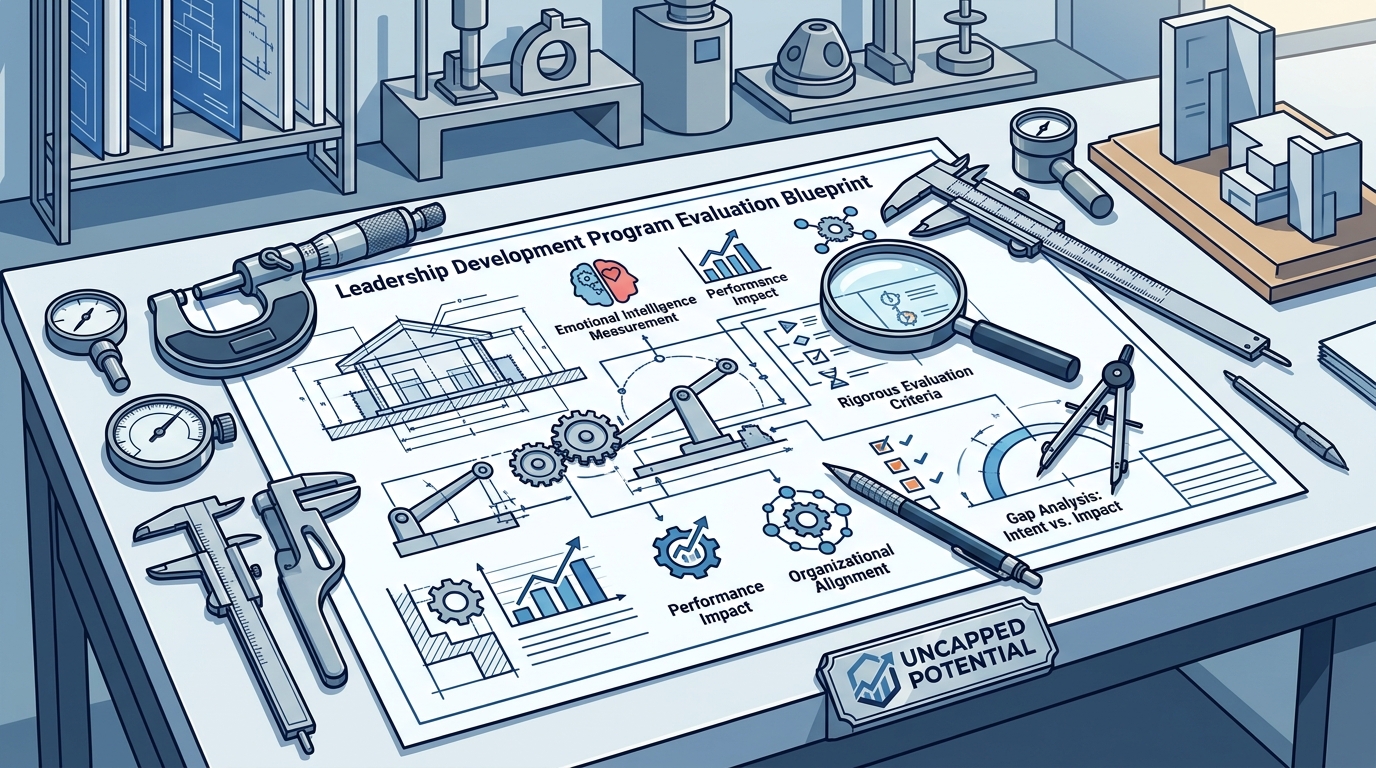
Quality is defined by the rigor of the underlying methodology. Does the program rely on outdated management theories, or is it grounded in current organizational psychology and neuroscience? Look for programs that use validated psychometric tools and behavioral science principles. For instance, programs that utilize Human Synergistics LSI® provide deep insights into organizational culture and leadership styles, offering a data-driven foundation for development.
3. Customization and Contextual Relevance
Off-the-shelf programs often fail because they ignore the unique culture and context of the organization. A quality provider will conduct a thorough needs analysis before designing the curriculum. They will tailor the content to address specific pain points, such as siloed departments or lack of accountability. This customization ensures that the learning is immediately applicable and relevant to the participants.
4. Focus on Behavioral Change
The ultimate goal of any leadership program is to change how leaders behave. Therefore, the evaluation criteria must include mechanisms for tracking behavioral shifts. This includes pre- and post-assessments, 360-degree feedback, and follow-up coaching sessions. Programs that focus solely on knowledge transfer without addressing behavior are unlikely to produce lasting results.
The Emotional Intelligence Factor
In the modern landscape, emotional intelligence (EI) is the primary differentiator between good leaders and great leaders. When evaluating a program, you must assess its depth in developing EI competencies. This includes self-awareness, self-regulation, motivation, empathy, and social skills.
Emotional intelligence is the ability to recognize, understand, and manage our own emotions and the emotions of others. Leaders with high EI are better equipped to navigate complex interpersonal dynamics, resolve conflicts, and inspire their teams. Programs that neglect EI are missing a critical component of effective leadership.
At Uncapped Potential, we believe that emotional intelligence is the engine of performance. Our approach integrates EI into every aspect of leadership development, ensuring that leaders can turn complexity into opportunity. This is not just about being "nice." It is about being effective in a human-centric way.
The Empathy Trap
It is important to distinguish between genuine empathy and the "empathy trap." Many leaders confuse being kind with being honest, and its coming at a cost. A high-quality program will teach leaders how to balance empathy with accountability. It will show them how to have difficult conversations with compassion and clarity, rather than avoiding them to maintain harmony.
Measurement Tools and Methodologies
To evaluate a program objectively, you need robust measurement tools. Relying on subjective opinions is insufficient. Here are the key tools and methodologies that should be part of the evaluation framework.
| Measurement Tool | Purpose | Key Metric |
|---|---|---|
| Human Synergistics LSI® | Assess organizational culture and leadership style | Cultural congruence and leadership effectiveness |
| 360-Degree Feedback | Gather multi-source feedback on leader behavior | Perception gaps and behavioral trends |
| Coach. Purposeful Conversations | Facilitate ongoing development and accountability | Goal achievement and communication quality |
| Pre/Post Assessments | Measure knowledge and skill acquisition | Score improvement and competency gain |
These tools provide a holistic view of the program's impact. For example, Human Synergistics LSI® offers a comprehensive view of how leadership behaviors impact organizational culture. By using this tool, companies can identify specific areas for improvement and track progress over time.
The Role of Coaching
Coaching is an essential component of any high-quality leadership program. It provides the support and accountability needed to sustain behavioral change. Programs that include ongoing coaching, such as Coach. purposeful conversations, are more likely to deliver long-term results. Coaching helps leaders apply what they have learned in real-time, addressing challenges as they arise.
Calculating Return on Investment
While measuring the ROI of leadership development can be challenging, it is essential for justifying the investment. The ROI calculation should include both tangible and intangible benefits. Tangible benefits might include increased revenue, reduced turnover, and improved productivity. Intangible benefits might include enhanced employee engagement, better decision-making, and stronger team cohesion.
One effective way to calculate ROI is to use the Phillips ROI Methodology. This method involves isolating the effects of the program, converting the effects to monetary values, and calculating the ROI. It provides a clear financial picture of the program's impact.
Additionally, consider the cost of inaction. What is the financial impact of poor leadership? This might include lost opportunities, high turnover costs, and decreased morale. By comparing the cost of the program to the cost of inaction, you can make a compelling case for the investment.
Key Takeaways
- Strategic Alignment: Ensure the program addresses specific business challenges and goals.
- Evidence-Based: Look for programs grounded in organizational psychology and validated tools.
- Behavioral Focus: Prioritize programs that drive measurable behavioral change, not just knowledge transfer.
- Emotional Intelligence: Evaluate the depth of EI development, including the balance of empathy and accountability.
- Robust Measurement: Use tools like Human Synergistics LSI® and 360-degree feedback for objective assessment.
- Ongoing Coaching: Include continuous coaching to sustain long-term results.
- Clear ROI: Calculate both tangible and intangible returns to justify the investment.
Frequently Asked Questions
How do I know if a leadership development program is right for my organization?
Look for programs that offer a thorough needs analysis and customize their content to your specific challenges. A quality provider will ask about your strategic goals and cultural context before proposing a solution.
What is the most important metric for evaluating leadership development?
Behavioral change is the most important metric. While knowledge acquisition is useful, it is the application of new skills in real-world situations that drives performance.
How does emotional intelligence impact leadership effectiveness?
Emotional intelligence allows leaders to navigate complex interpersonal dynamics, resolve conflicts, and inspire their teams. It is a critical predictor of leadership success and organizational health.
Can I calculate the ROI of a leadership development program?
Yes, by using methodologies like the Phillips ROI Methodology. This involves isolating the program's effects, converting them to monetary values, and comparing them to the cost of the program.
Why is coaching important in leadership development?
Coaching provides the support and accountability needed to sustain behavioral change. It helps leaders apply what they have learned in real-time and address challenges as they arise.
What is Human Synergistics LSI®?
Human Synergistics LSI® is a validated psychometric tool that assesses organizational culture and leadership styles. It provides deep insights into how leadership behaviors impact organizational performance.
How often should leadership development programs be evaluated?
Evaluation should be ongoing. Use pre- and post-assessments to measure immediate gains, and follow-up assessments at 6 and 12 months to measure long-term behavioral change.
Ready to Transform Your Leadership?
Don't let your leadership development programs fall into the trap of low impact. Take the first step towards building a high-performing culture by evaluating your current approach against these essential criteria. If you are ready to close the gap between intent and impact, we invite you to explore our advisory services. Visit our home page to learn more about how we can help your organization unlock its full potential. Contact us today to schedule a consultation and discover the power of emotional intelligence in leadership.