

Essential Criteria for Emotionally Intelligent Leadership in Australian Organisations
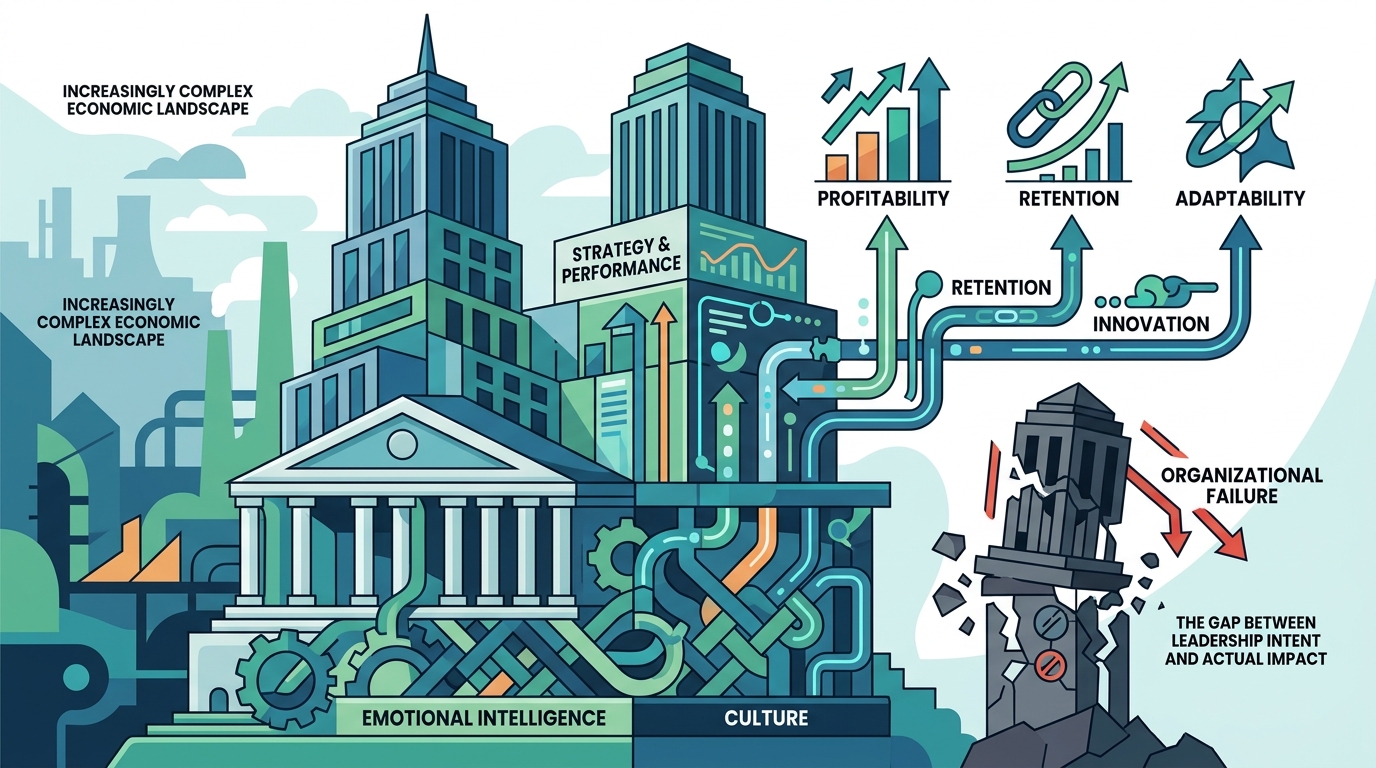
Emotional intelligence is not a soft skill. It is the single most under leveraged competitive advantage available to any organisation and the one thing AI cannot replace. As Australian businesses navigate an increasingly complex economic landscape, the gap between leadership intent and actual impact has become the primary driver of organizational failure. Recent industry analysis indicates that organizations with high emotional intelligence outperform their peers by significant margins in both retention and profitability. This guide outlines the critical criteria for cultivating this capability within Australian teams. (Contact mdash Uncapped Potential)
Defining Emotional Intelligence in the Australian Context
Emotional intelligence is the ability to recognize, understand, and manage our own emotions and those of the people around us. In the Australian corporate landscape, this definition extends beyond personal awareness. It encompasses the capacity to navigate cultural diversity, manage high-stakes decision-making under pressure, and foster a culture of trust. For decades, leadership was defined by technical expertise and hierarchical authority. Today, the most successful leaders are those who can bridge the gap between strategy and human behavior.
Uncapped Potential has observed that many organizations operate well within their limits because they fail to address the human element of performance. We help organizations find out what happens when you don't, because human potential is limitless. The criteria for emotional intelligence are not abstract concepts. They are measurable behaviors that drive tangible business outcomes.
The Five Core Criteria for EI Leaders
To determine if a leader possesses genuine emotional intelligence, we must look beyond their charisma or communication style. The following criteria serve as the benchmark for high-performing leaders in Australian organizations.
1. Radical Self-Awareness
Self-awareness is the foundational pillar of emotional intelligence. It is the skill most people think they have but don’t. Leaders must understand their own triggers, biases, and impact on others. Without this clarity, leadership decisions are often reactive rather than strategic. Our insights reveal that leaders who engage in continuous self-reflection are significantly more effective at managing team dynamics.
2. Empathy Without the Trap
Empathy is often misunderstood as agreement or kindness. The Empathy Trap occurs when leaders confuse being kind with being honest, and its coming at a cost. True empathy involves understanding the perspective of others while maintaining the courage to deliver difficult feedback. This balance is critical for maintaining high standards without eroding trust.
3. Accountability and Ownership
Emotionally intelligent leaders take ownership of outcomes, both successes and failures. They do not blame external factors or team members for setbacks. Instead, they focus on solutions and learning. This criterion is closely linked to the concept of psychosocial safety, where team members feel safe to take risks and admit mistakes without fear of retribution.
4. Strategic Communication
Effective communication in this context is not just about clarity. It is about timing, tone, and context. Leaders must adapt their communication style to the needs of their audience. This includes knowing when to have purposeful conversations and when to allow space for team autonomy. Our data shows that leaders who master this adaptability see higher levels of employee engagement.
5. Resilience and Adaptability
In a volatile market, resilience is a key differentiator. Emotionally intelligent leaders model calmness and focus during crises. They help their teams navigate uncertainty by providing clear direction and emotional support. This criterion is essential for maintaining performance during periods of significant change or disruption.
Psychosocial Safety and Leadership Risk
Psychosocial safety is a shared perception among team members that the team supports and protects them from psychological harm. It is not a compliance checkbox. It is a critical risk control as psychosocial claims rise and people management fundamentals continue to erode. Leaders who prioritize psychosocial safety create environments where innovation thrives.
According to recent studies on workplace mental health, organizations with high psychosocial safety report lower rates of burnout and higher levels of productivity. The boardroom blindspot is that leaders often underestimate their role in creating or mitigating these risks. By focusing on emotional intelligence, leaders can proactively address these issues before they become costly problems.
Why AI Cannot Replace Human Empathy
As artificial intelligence becomes more prevalent in the workplace, there is a growing fear that human roles will be diminished. However, emotional intelligence remains a uniquely human capability. AI can process data and identify patterns, but it cannot replicate the nuance of human connection, the subtlety of tone, or the depth of empathy required for effective leadership.
Emotional intelligence is the one thing AI cannot replace. It is the bridge between data-driven decisions and human implementation. Leaders who leverage AI while maintaining their emotional intelligence are better positioned to drive sustainable growth. This synergy allows organizations to optimize efficiency without losing the human touch that drives engagement.
Implementing EI Through Human Synergistics
Implementing emotional intelligence criteria requires more than training. It requires a systematic approach to understanding and developing leadership capability. Human Synergistics Leader and Organisation Culture Insights provide a robust framework for this development. These tools help leaders identify their strengths and areas for growth in a structured way.
Our approach involves a combination of advisory services, leadership coaching, and organizational culture assessment. We work with ambitious leaders to close the gap between intent and impact. By leveraging insights from Human Synergistics, leaders can gain a deeper understanding of their own behavior and its impact on their teams.
Comparison of Leadership Development Approaches
| Approach | Focus | Outcome | Limitations |
|---|---|---|---|
| Traditional Training | Theoretical knowledge | Short-term awareness | Lacks behavioral change |
| Coaching | Individual growth | Personal insight | Does not address culture |
| HR Strategy | Systemic alignment | Organizational change | Requires executive buy-in |
| Conference Speaking | Inspiration | Motivation | Low retention of content |
Key Takeaways
- Emotional intelligence is a measurable competitive advantage, not a soft skill.
- Self-awareness is the foundational criterion for all other leadership capabilities.
- Psychosocial safety is a critical risk control for modern organizations.
- AI cannot replace the nuance and depth of human empathy in leadership.
- Human Synergistics tools provide a validated framework for EI assessment.
- Leaders who balance empathy with honesty avoid the "Empathy Trap".
- Uncapped Potential has trained over 1,200 leaders and HR practitioners in these methodologies.
Frequently Asked Questions
What is the primary difference between emotional intelligence and traditional leadership skills?
Traditional leadership skills focus on technical expertise and authority. Emotional intelligence focuses on the ability to manage relationships, navigate complexity, and drive performance through human behavior.
How can organizations measure emotional intelligence in their leaders?
Organizations can use validated tools like Human Synergistics LSI® to assess leadership style and organizational culture. These tools provide data-driven insights into behavioral tendencies and their impact on performance.
Is emotional intelligence important for remote teams?
Yes, emotional intelligence is even more critical for remote teams. Without face-to-face interaction, leaders must rely on clear communication, empathy, and trust to maintain engagement and productivity.
What is the "Empathy Trap" in leadership?
The Empathy Trap occurs when leaders confuse being kind with being honest. This leads to avoided feedback and diluted performance conversations, ultimately harming both the individual and the organization.
How does Uncapped Potential support leadership development?
We provide advisory services, coaching, and cultural assessments that help leaders close the gap between intent and impact. Our approach is grounded in decades of real-world corporate experience.
Can artificial intelligence replace the need for emotional intelligence?
No. While AI can assist with data analysis and process optimization, it cannot replicate the human connection, ethical judgment, and empathetic leadership required to inspire and guide teams.
What is psychosocial safety and why is it important?
Psychosocial safety is the shared belief that the organization protects members from psychological harm. It is important because it fosters trust, encourages innovation, and reduces the risk of burnout and turnover.
Next Steps for Your Organization
Most organisations operate well within their limits. We help organisations find out what happens when you don't. If you are ready to transform your leadership capability and build a high-performing culture, we invite you to explore our solutions. Contact us today to schedule a consultation and discover how emotional intelligence can drive your organization's success.