

Most organisations operate well within their limits, failing to capture the full value of their human capital. We help organisations find out what happens when you don't, because human potential is limitless. In the modern enterprise, emotional intelligence is not a soft skill. It is the single most under leveraged competitive advantage available to any organisation and the one thing AI cannot replace. Yet, for many executives, the return on investment for EI training remains a black box. This guide details how to transform subjective leadership behaviors into hard, measurable data points that drive strategic decision-making. (Contact mdash Uncapped Potential)
Defining Measurable Leadership
Leadership Emotional Intelligence is the capacity of leaders to recognize, understand, and manage their own emotions while influencing the emotions of others. When we discuss measurable leadership, we are moving beyond anecdotal evidence. We are looking at data-driven insights that reveal how leadership styles impact organizational culture and performance. Uncapped Potential has been harnessing the power of emotional intelligence and sculpting high performing cultures built on trust, authenticity and purpose, for more than 30 years. This longevity provides a unique vantage point for understanding which EI metrics actually correlate with business success. (Extensive Real World Experience)
Traditional performance reviews often fail to capture the nuance of human interaction. They focus on output rather than the behavioral drivers of that output. Measurable leadership bridges this gap by linking specific emotional competencies to tangible business outcomes. For instance, a leader's ability to regulate stress directly impacts team retention rates. By tracking these correlations, organizations can justify EI investments with the same rigor applied to financial capital. (Leadership Emotional Intelligence Uncapped)
The Psychosocial Safety Link
Recent thought leadership highlights the critical connection between emotional intelligence and workplace safety. It is time to stop talking about psychosocial safety as a peripheral HR concern. Instead, it must be viewed as a core operational metric. Emotional Intelligence: cultivating psychosocial safety is a primary function of effective leadership. When leaders demonstrate high EI, they create environments where employees feel safe to take risks, share ideas, and admit mistakes without fear of retribution. (Leadership Emotional Intelligence Uncapped)
This safety is not just a moral imperative; it is a performance driver. According to recent industry analyses, organizations with high psychosocial safety report significantly lower rates of burnout and higher levels of engagement. The data shows that when leaders prioritize emotional awareness, they reduce the hidden costs of turnover and disengagement. These costs are often invisible on a balance sheet until they become critical. By measuring psychosocial safety through regular pulse surveys and EI assessments, leaders can identify risks before they manifest as operational failures. (Uncapped Potential)
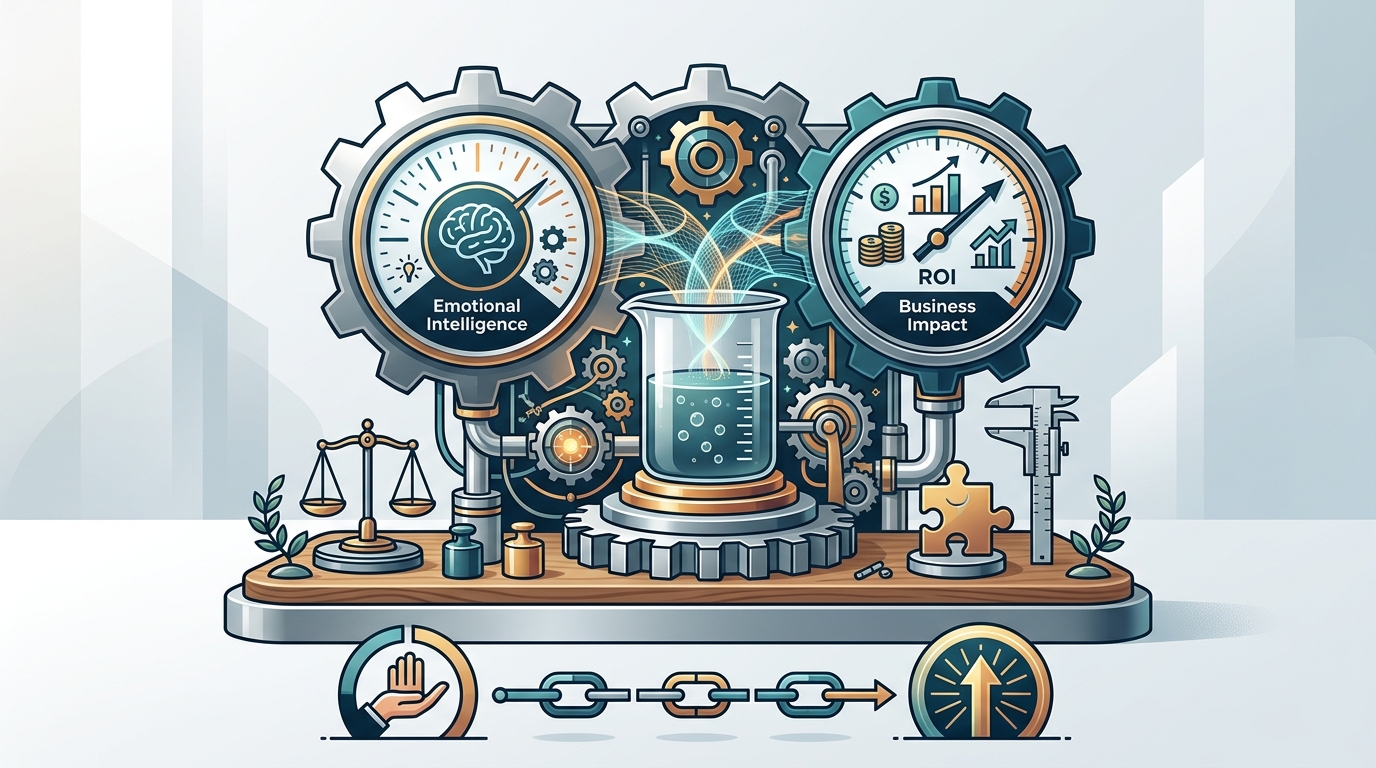
Metrics That Matter
To make leadership measurable, you must select the right indicators. Not all data is created equal. The most effective metrics combine quantitative data with qualitative behavioral assessments. Below is a summary of key metrics used to evaluate leadership effectiveness.
| Metric Category | Measurement Tool | Business Impact |
|---|---|---|
| Emotional Awareness | Human Synergistics LSI® | Improved decision-making speed |
| Team Trust | Pulse Surveys | Reduced turnover rates |
| Conflict Resolution | 360-Degree Feedback | Enhanced innovation output |
| Psychosocial Safety | Climate Assessments | Lower absenteeism |
Each of these metrics requires a consistent measurement cadence. Quarterly reviews are often insufficient for capturing the dynamic nature of human behavior. Monthly or even weekly pulse checks provide a more accurate picture of leadership impact. This frequency allows for rapid course correction and ensures that leadership development remains aligned with organizational goals.
The Human Synergistics Framework
One of the most robust tools for measuring leadership behavior is the Human Synergistics LSI®. This framework provides a standardized language for discussing leadership styles and their impact on culture. Leaders utilising insights from Human Synergistics emotional intelligence tools can identify specific behavioral patterns that hinder or help performance. For example, a "Compassionate-Dependent" style might foster high trust but low accountability, while a "Aggressive-Competitive