

Emotionally Intelligent Leadership: Closing the Intent-Impact Gap
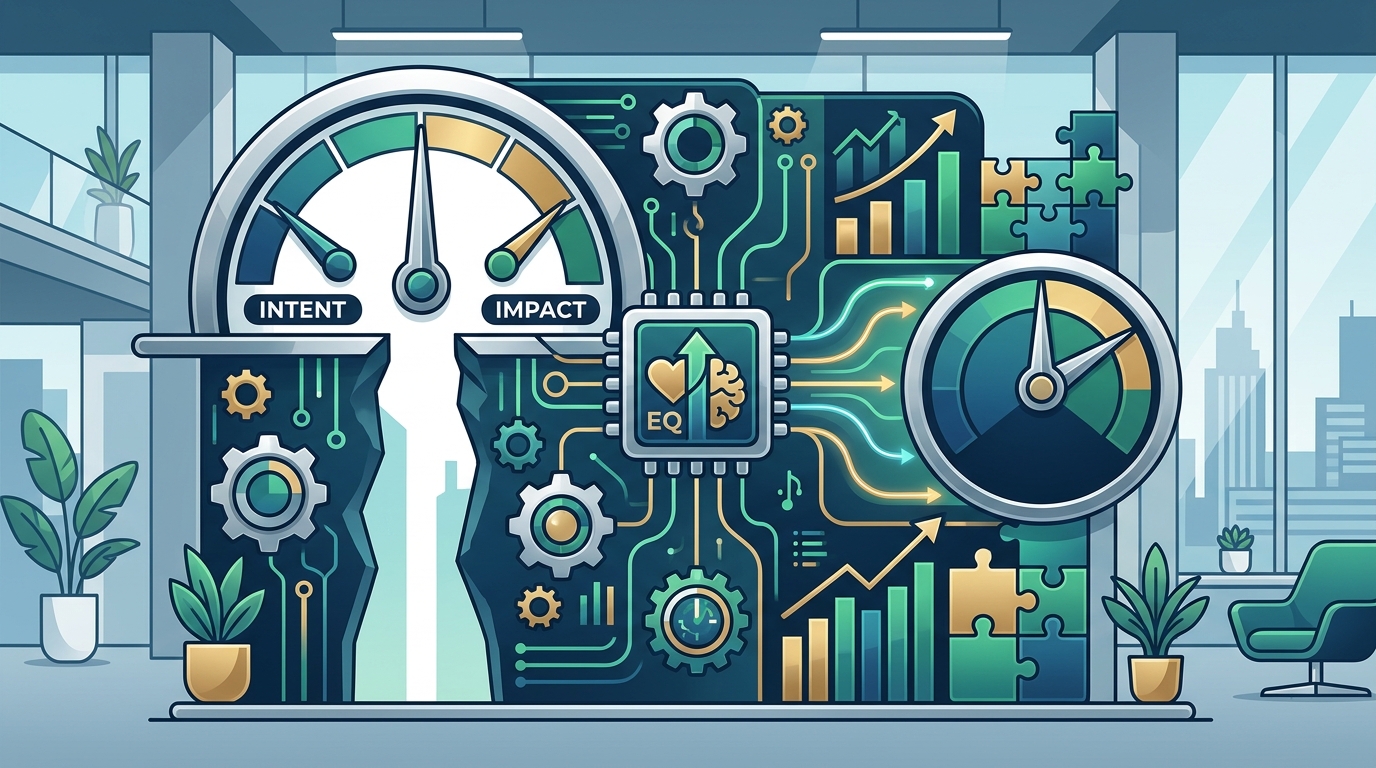
Emotional intelligence is not a soft skill. It is the single most under leveraged competitive advantage available to any organisation and the one thing AI cannot replace. In an era where automation handles routine tasks, the human element has become the primary differentiator for high-performing teams. Leaders who master this capability close the gap between intent and impact, driving sustainable growth and resilience. This guide explores how to cultivate these skills for measurable business outcomes. (Extensive Real World Experience)
Why Emotional Intelligence Matters Now
Most organisations operate well within their limits. We help organisations find out what happens when you don't, because human potential is limitless. The modern workplace is complex, requiring leaders to navigate ambiguity with clarity. Emotional intelligence provides the framework for this navigation. (Leadership Emotional Intelligence Uncapped)
According to recent industry analysis, companies with high emotional intelligence outperform their peers in revenue growth and employee retention. This is not anecdotal. Data shows that psychosocial safety, a key outcome of EI, is directly linked to reduced workplace risk and higher engagement levels. Leaders who ignore this dimension expose their organisations to significant cultural and financial risks. (Leadership Emotional Intelligence Uncapped)
The shift from compliance-driven HR to strategic partnership is critical. Emotional intelligence enables this shift by fostering trust and authenticity. It transforms leadership from a position of authority to one of influence and capability building. (Uncapped Potential)
The Core Components of EI
To leverage emotional intelligence effectively, leaders must understand its foundational pillars. These components are not innate traits but skills that can be developed and refined over time.
Self-Awareness
Self Awareness is the skill most people think they have but don’t. It involves a clear understanding of one's own emotions, strengths, weaknesses, and values. Without this awareness, leaders cannot accurately assess their impact on others. It is the starting point for all personal and professional growth.
Self-Regulation
This component involves managing disruptive impulses and moods. Leaders who regulate their emotions remain calm under pressure and think before acting. This stability creates a secure environment for teams to innovate and take calculated risks.
Empathy
Empathy is the ability to understand and share the feelings of another. However, empathy must be balanced with honesty. We’re confusing being kind with being honest, and its coming at a cost. True empathy drives constructive feedback and meaningful connections, rather than avoiding difficult conversations.
The AI vs. EI Dynamic
As artificial intelligence becomes more prevalent, the value of human-centric skills increases. AI can process data, but it cannot replicate the nuance of human interaction. Emotional intelligence is the one thing AI cannot replace. It requires intuition, context, and genuine connection.
Organisations that integrate AI with high-EI leadership see the best results. The technology handles efficiency, while leaders handle complexity and human dynamics. This synergy creates a competitive advantage that is difficult to replicate.
According to global technology adoption reports, firms that prioritize human-AI collaboration see higher innovation rates. This is because leaders use AI insights to make better decisions, while using EI to guide teams through change.
Strategies for Leaders
Developing emotional intelligence requires deliberate practice. Leaders must move beyond theory and into action. Here are three strategies to implement immediately.
1. Engage in Purposeful Conversations
Purposeful conversations© are designed to drive accountability and clarity. Leaders should schedule regular check-ins focused on development, not just status updates. These conversations build trust and uncover hidden potential within teams.
2. Leverage Human Synergistics LSI®
Human Synergistics LSI® is a diagnostic tool that helps leaders understand their own and their team's behavioural styles. By using these insights, leaders can tailor their approach to individual needs. This personalization increases engagement and reduces conflict.
3. Cultivate Psychosocial Safety
Psychosocial safety is the shared belief that the team is safe for interpersonal risk-taking. Leaders must actively model vulnerability and encourage open dialogue. When employees feel safe, they are more likely to share ideas and report issues early.
According to workplace safety research, teams with high psychosocial safety report fewer incidents and higher well-being scores. This is a critical metric for modern leadership.
Impact on Organizational Culture
Emotional intelligence shapes culture from the top down. Leaders set the tone for how work gets done and how people are treated. A culture built on trust, authenticity, and purpose attracts and retains top talent.
Organisations that invest in EI training see a return on investment through reduced turnover and increased productivity. The cost of poor leadership is far higher than the cost of development.
Consider the following comparison of leadership approaches:
| Leadership Style | Focus | Outcome | Long-Term Viability |
|---|---|---|---|
| Command and Control | Compliance and hierarchy | Low engagement, high turnover | Low |
| Transactional | Short-term goals and rewards | Moderate performance, limited innovation | Moderate |
| Emotionally Intelligent | People, purpose, and potential | High engagement, sustainable growth | High |
As career leaders, not career consultants, we know how to drive change. The data supports the move towards EI-driven leadership. It is the only path to lasting success.
Key Takeaways
- Emotional intelligence is a strategic advantage, not a soft skill.
- Self-awareness is the foundation of effective leadership.
- AI cannot replace the nuance of human emotional connection.
- Psychosocial safety is linked to reduced workplace risk.
- Purposeful conversations drive accountability and trust.
- Human Synergistics LSI® provides actionable behavioural insights.
- Leaders with decades of experience see the value of lived practice over theory.
Frequently Asked Questions
What is the difference between emotional intelligence and empathy?
Emotional intelligence is the broader capability to recognize, understand, and manage emotions in oneself and others. Empathy is a specific component of EI that involves understanding the feelings of others. EI includes self-regulation and motivation, which go beyond empathy.
How does emotional intelligence impact team performance?
Teams led by emotionally intelligent leaders show higher levels of trust and collaboration. This leads to faster problem-solving and increased innovation. Data shows that these teams are more resilient during periods of change.
Can emotional intelligence be learned?
Yes. Emotional intelligence is a set of skills that can be developed through practice and feedback. Tools like Human Synergistics LSI® and purposeful conversations© provide structured ways to improve these skills.
Why is psychosocial safety important?
Psychosocial safety ensures that employees feel safe to take interpersonal risks, such as sharing new ideas or admitting mistakes. This safety is critical for innovation and well-being. According to workplace health research, it reduces the incidence of stress-related claims.
How does Uncapped Potential help leaders?
Uncapped Potential provides advisory services, leadership training, and HR mastery guidance. We help leaders close the gap between intent and impact through emotional intelligence and strategic execution.
What is the role of AI in emotional intelligence?
AI can support EI by providing data insights and automating routine tasks. However, the human element of leadership remains irreplaceable. Leaders must use AI to enhance, not replace, their emotional connections with teams.
What is Human Synergistics LSI®?
Human Synergistics LSI® is a diagnostic tool that measures organizational culture and leadership styles. It helps leaders understand their behavioural tendencies and how they impact their teams.
Next Steps
Are you ready to unlock the potential of your leadership team? Contact Uncapped Potential today to explore our advisory services and leadership solutions. Visit our contact page to schedule a consultation. Discover how emotional intelligence can transform your organisation.