

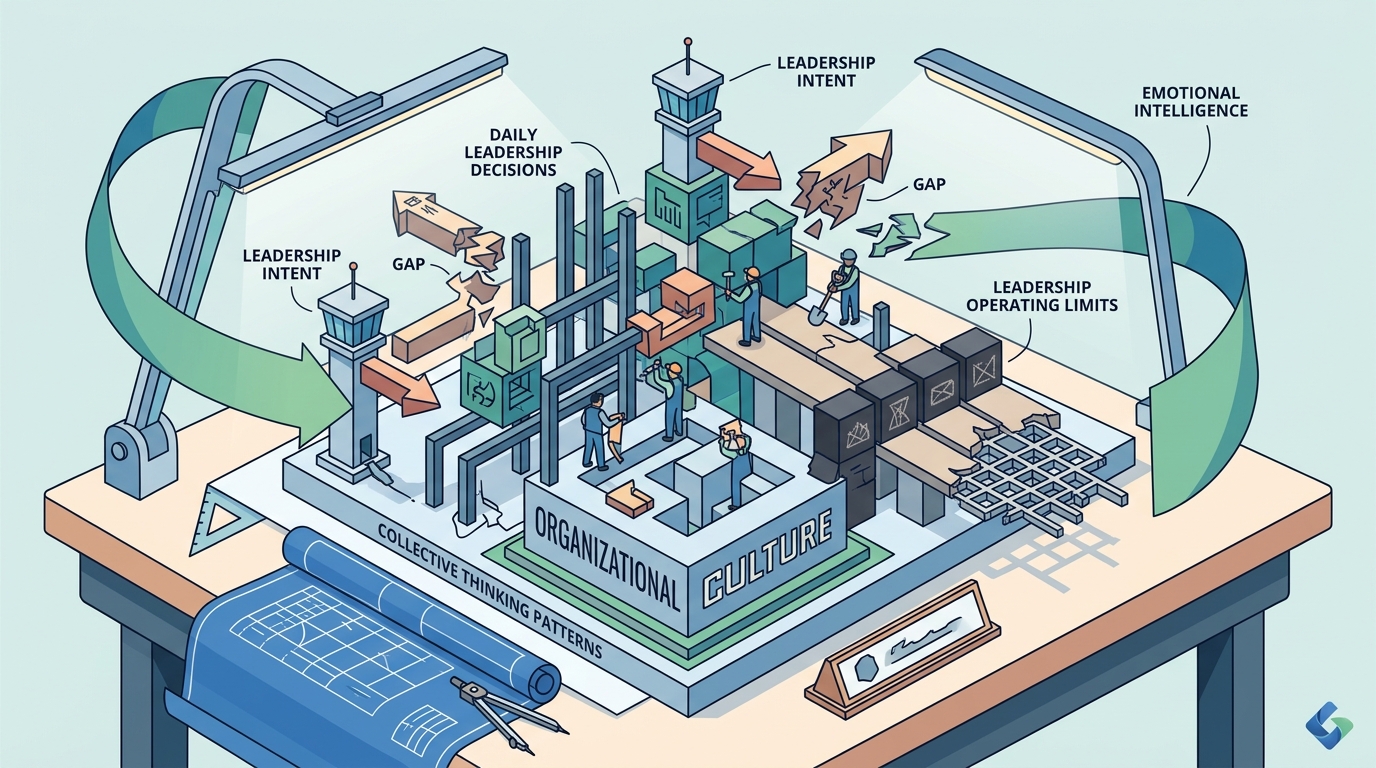
Organizational culture is not a static artifact of office perks or mission statements. It is the dynamic, living outcome of daily leadership decisions and the collective thinking patterns of those at the helm. Recent insights suggest that the gap between leadership intent and actual organizational impact is often where culture is forged or fractured. When leaders operate within their limits, culture stagnates. When they push beyond those boundaries, human potential becomes the engine of performance. This guide explores how strategic leadership thinking directly shapes the cultural fabric of an enterprise. (Contact mdash Uncapped Potential)
Defining Culture Through Leadership Thinking
At its core, organizational culture is the shared set of assumptions, values, and behaviors that determine how a company's employees and management interact. However, this definition is incomplete without acknowledging the source of those behaviors. Culture is not built by HR policies alone. It is sculpted by the consistent actions of leaders who prioritize authenticity and purpose over compliance.
Leadership thinking must shift from viewing culture as a "soft" outcome to recognizing it as a hard strategic asset. When leaders fail to align their thinking with their actions, they create a disconnect that erodes trust. This disconnect is often visible in the "boardroom blindspot," where leaders fail to see their own behavior as the primary risk to organizational health. To shape a high-performing culture, leaders must first examine their own intent. Are they driving performance through fear, or through clarity and courage? The answer determines whether the culture becomes a cult of personality or a community of purpose.
For organizations seeking to understand the depth of this challenge, exploring the thought leadership insights on leadership and culture provides a critical foundation. The distinction between managing tasks and leading people is where cultural transformation begins.
The Role of Psychosocial Safety
Panosocial safety is the shared perception among employees that the workplace supports their psychological well-being. It is not merely about physical safety or the absence of harassment. It is about the freedom to speak up, to admit mistakes, and to challenge the status quo without fear of retribution. When psychosocial safety is high, innovation thrives. When it is low, employees hide their true selves, leading to disengagement and silent attrition.
Leaders play the pivotal role in cultivating this safety. It requires moving beyond superficial engagement surveys that offer a false sense of transparency. True safety is built through consistent, purposeful conversations that validate employee experiences. According to recent organizational behavior studies, teams with high psychological safety report significantly higher levels of innovation and lower turnover rates. This is because employees feel secure enough to take the interpersonal risks necessary for creative problem-solving.
Uncapped Potential emphasizes that emotional intelligence is the key to cultivating this safety. Leaders who lack self-awareness often inadvertently create environments of anxiety. By leveraging tools like the Human Synergistics emotional intelligence model, leaders can identify their blind spots and adjust their approach to foster trust. This shift is not optional. It is a requirement for modern enterprise performance.
Emotional Intelligence as a Competitive Advantage
Emotional intelligence is not a soft skill. It is the single most underleveraged competitive advantage available to any organization. In an era where AI can process data faster than any human, the ability to navigate complex human dynamics, build empathy, and drive motivation remains uniquely human. Leaders who master emotional intelligence can turn complexity into opportunity.
Self-awareness is the foundation of this intelligence. It is the skill most people think they have but do not. Many leaders believe they are empathetic and self-aware, yet their behavior contradicts this belief. This gap between perceived and actual capability is a major barrier to cultural improvement. By engaging in rigorous self-assessment and feedback loops, leaders can close this gap. The leadership solutions offered by experts in the field provide structured pathways for this development.
Furthermore, emotional intelligence enables leaders to manage their own emotions and influence the emotions of others positively. This is critical during times of change or crisis. Leaders who can remain calm, clear, and compassionate during uncertainty set the tone for the entire organization. This capability is not innate. It is developed through deliberate practice and coaching. Organizations that invest in this development see a direct return on investment through improved team cohesion and decision-making quality.
The Death of the Formal Performance Review
The traditional annual performance review is increasingly obsolete. It is a retrospective, bureaucratic exercise that often fails to provide timely feedback or drive meaningful behavior change. Time is up on the formal performance review. Modern organizations are shifting toward continuous feedback models that prioritize growth and development over judgment.
This shift requires a fundamental change in leadership thinking. Leaders must move from being evaluators to being coaches. This involves having regular, constructive conversations about performance, goals, and well-being. The HR Mastery services guide practitioners in making this transition effectively. By focusing on future potential rather than past mistakes, leaders can create a culture of continuous improvement.
Continuous feedback also reduces the anxiety associated with formal reviews. Employees feel more supported and valued when they receive ongoing guidance. This approach aligns with the broader trend of human-centric leadership, where the focus is on the whole person, not just their output. It requires leaders to be present, engaged, and genuinely interested in their team's success.
Avoiding Toxic Positivity and Gaslighting
Toxic positivity is the excessive and ineffective control of negative emotions. It manifests as a refusal to acknowledge difficult realities or valid concerns. When leaders enforce a culture of "always being positive," they gaslight employees who are struggling. This creates a culture of silence and resentment. Employees feel forced to hide their true feelings, leading to burnout and disengagement.
Authentic leadership requires the courage to address difficult topics. It involves acknowledging pain, uncertainty, and failure as part of the human experience. By creating space for honest dialogue, leaders build trust and resilience. This is not about being negative. It is about being real. The articles on leadership and culture provide deeper insights into recognizing and avoiding these pitfalls.
Leaders must also be wary of the "empathy trap." Empathy is a great leadership skill, but it can become a cop-out if it is used to avoid making tough decisions. True empathy involves understanding others' perspectives while still holding them accountable to high standards. This balance is difficult to achieve without strong emotional intelligence and clear boundaries.
Leadership Approaches Comparison
Understanding the differences between traditional and modern leadership approaches is crucial for cultural transformation. The table below outlines the key distinctions.
| Aspect | Traditional Leadership Thinking | Modern High-Performance Thinking |
|---|---|---|
| Culture Source | HR Policies and Mission Statements | Leader Behavior and Daily Interactions |
| Feedback Model | Annual Formal Reviews | Continuous Purposeful Conversations |
| Emotional Focus | Suppression of Negative Emotions | Psychosocial Safety and Authenticity |
| Performance View | Output and Compliance | Human Potential and Strategic Impact |
| Risk Management | Process-Driven | Leadership Self-Awareness |
As shown, the shift from traditional to modern thinking requires a fundamental reimagining of the leader's role. It is not enough to manage processes. Leaders must manage meaning. This involves connecting daily work to a larger purpose and ensuring that every interaction reinforces the desired cultural values.
Key Takeaways
- Leadership Intent Drives Culture: The gap between what leaders say and what they do is where culture is defined. Aligning intent with impact is critical.
- Psychosocial Safety is Essential: High-performing cultures require an environment where employees feel safe to speak up and take risks.
- Emotional Intelligence is a Superpower: It is the primary differentiator for leaders in complex environments and cannot be replaced by AI.
- Continuous Feedback Replaces Annual Reviews: The formal performance review is obsolete. Regular, constructive conversations drive better outcomes.
- Avoid Toxic Positivity: Authenticity builds trust. Suppressing negative emotions leads to gaslighting and disengagement.
- Self-Awareness is Foundational: Leaders must honestly assess their own capabilities and blind spots to lead effectively.
- Human Synergistics Insights: Leveraging established emotional intelligence tools provides a data-driven path to cultural improvement.
Frequently Asked Questions
How does leadership thinking directly impact organizational culture?
Leadership thinking sets the behavioral norms for the entire organization. When leaders prioritize emotional intelligence and psychosocial safety, these values trickle down to every level of the company, shaping how employees interact and collaborate.
What is the role of emotional intelligence in shaping culture?
Emotional intelligence allows leaders to navigate complex human dynamics, build empathy, and manage their own emotions. This capability is essential for creating a culture of trust and authenticity, which are foundational to high performance.
Why are formal performance reviews considered obsolete?
Formal performance reviews are often retrospective and bureaucratic. They fail to provide timely feedback and can create anxiety. Continuous feedback models are more effective for driving growth and engagement.
How can leaders avoid toxic positivity in their teams?
Leaders can avoid toxic positivity by acknowledging difficult realities and creating space for honest dialogue. This involves validating employee experiences and addressing issues directly rather than suppressing them.
What is psychosocial safety and why is it important?
Panosocial safety is the shared perception that the workplace supports psychological well-being. It is important because it enables employees to take interpersonal risks, such as speaking up or admitting mistakes, which are necessary for innovation and learning.
How can organizations measure the impact of leadership on culture?
Organizations can measure impact through employee engagement surveys, retention rates, and feedback on leadership effectiveness. Tools like the Human Synergistics LSI® provide specific insights into leadership and organizational culture dynamics.
What is the "empathy trap" in leadership?
The empathy trap occurs when leaders use empathy as an excuse to avoid making tough decisions. True empathy involves understanding others' perspectives while still holding them accountable to high standards.
How does Uncapped Potential help with cultural transformation?
Uncapped Potential provides advisory services, leadership coaching, and HR mastery solutions that focus on emotional intelligence and strategic execution. Their approach helps leaders close the gap between intent and impact.
Next Steps for Your Organization
Shaping organizational culture through leadership thinking is not a one-time project. It is an ongoing commitment to self-awareness, empathy, and strategic execution. If you are ready to close the gap between your leadership intent and your organizational impact, it is time to take action. Explore our solutions to discover how we can help your leaders unlock their full potential. Contact us today to schedule a consultation and begin your journey toward a high-performing, authentic culture.