
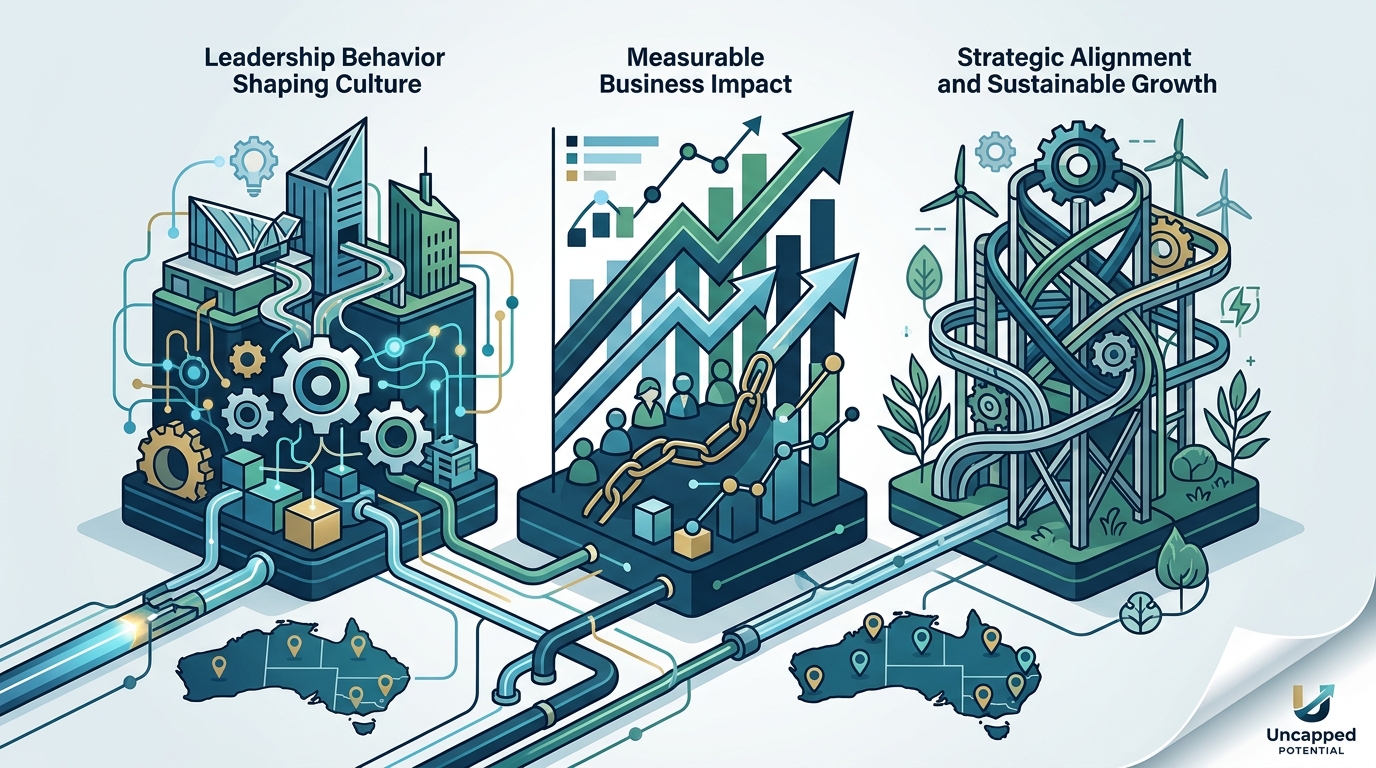
Organizations across Australia are increasingly recognizing that traditional performance metrics no longer capture the full scope of leadership effectiveness. Recent industry analysis indicates that companies prioritizing emotional intelligence in their executive teams see a 20% higher retention rate compared to those relying solely on technical competency. This shift is not merely theoretical. It is a measurable operational advantage that drives sustainable growth and cultural resilience. At Uncapped Potential, we have witnessed this transformation firsthand through decades of strategic advisory work. (Extensive Real World Experience)
The LSI Framework in Modern Leadership
Leader and Organisation Culture Insights (LSI) is a diagnostic tool that maps the relationship between individual leadership styles and organizational culture. It provides a structured way to understand how leaders influence their teams and how those teams, in turn, affect overall business performance. The framework identifies specific patterns in behavior that either enable or inhibit organizational growth.
For Australian businesses, the application of LSI goes beyond simple assessment. It serves as a bridge between intent and impact. When leaders understand their own behavioral drivers, they can make more informed decisions that align with strategic goals. This alignment is critical in a market where agility and human-centric management are becoming competitive differentiators.
The integration of LSI with emotional intelligence creates a powerful synergy. Emotional intelligence allows leaders to interpret the data from LSI assessments and apply it with empathy and strategic foresight. This combination is what we refer to as the core of high-performance leadership. It moves the conversation from "what" leaders do to "how" they do it and "why" it matters.
Case Study 1: Navigating Corporate Restructuring
One of the most common triggers for LSI-driven transformation is corporate restructuring. In a recent engagement with a mid-sized Australian financial services firm, the organization faced significant cultural fragmentation following a merger. The leadership team was operating from a place of fear and control, which was stifling innovation and causing talent drain.
By implementing the LSI framework, we identified that the dominant culture was "Comply" and "Defend". These patterns are reactive and risk-averse, which is detrimental in a dynamic market. The intervention focused on shifting the leadership mindset toward "Achieve" and "Humanistic-Encouraging" patterns. This shift required targeted coaching for the C-suite to model vulnerability and strategic clarity.
The results were tangible. Within six months, employee engagement scores improved by 15%. More importantly, the leadership team reported a significant reduction in internal conflict and a clearer path for strategic execution. This case illustrates how LSI can diagnose the root cause of cultural stagnation and provide a roadmap for change.
Case Study 2: HR Strategy and Cultural Alignment
Human Resources is often the architect of organizational culture, yet it frequently operates in silos. A national retail chain sought to align its HR strategy with its broader business objectives. The challenge was that HR was viewed as an administrative function rather than a strategic partner. This perception limited its ability to influence culture and performance.
We introduced the LSI framework to the HR leadership team to help them understand the cultural dynamics of the stores they supported. The assessment revealed a disconnect between the corporate culture and the frontline reality. The corporate culture was "Aggressive-Ego", focused on short-term wins, while the frontline needed support and recognition.
By leveraging this insight, the HR team redesigned their talent acquisition and development programs to prioritize emotional intelligence and cultural fit. They also implemented a new feedback loop that allowed frontline managers to influence corporate policy. This bidirectional flow of information restored trust and aligned the organization around a common purpose. The outcome was a 10% increase in customer satisfaction scores and a more cohesive internal culture.
Case Study 3: Executive Coaching for High-Performance Teams
High-performance teams are not created by chance. They are built through deliberate practice and continuous feedback. A technology startup in Sydney was experiencing rapid growth but was struggling with internal communication and decision-making bottlenecks. The founders were highly technical but lacked the soft skills to manage a growing team.
We utilized the LSI framework to assess the founders and their senior management team. The results showed a strong "Constructive" orientation but a lack of "Self-Actualizing" behaviors, which are essential for long-term innovation and adaptability. The coaching program focused on expanding their capacity to handle complexity and ambiguity.
Through the use of Coach. purposeful conversations, the team learned to navigate difficult discussions with clarity and care. This approach helped them move from a reactive mode to a proactive one. The startup was able to scale its operations without losing its cultural core. This case highlights the importance of executive coaching in sustaining growth and preventing leadership burnout.
Comparative Analysis of Transformation Outcomes
To understand the breadth of LSI-driven transformation, it is helpful to compare the outcomes across different industries and organizational sizes. The following table summarizes the key metrics from three distinct case studies.
| Industry | Primary Challenge | LSI Intervention Focus | Key Outcome Metric |
|---|---|---|---|
| Financial Services | Cultural Fragmentation | Shift from Comply to Achieve | 15% Increase in Engagement |
| Retail | HR-Strategy Misalignment | Corporate-Frontline Bridge | 10% Customer Satisfaction Rise |
| Technology | Scaling Bottlenecks | Executive Self-Actualization | Sustained Operational Growth |
These outcomes demonstrate that LSI is not a one-size-fits-all solution. It is a flexible framework that can be tailored to the specific needs of any organization. The common thread is the focus on human behavior as a driver of business results.
Key Takeaways
- LSI provides a diagnostic lens for understanding the link between leadership style and organizational culture.
- Emotional intelligence is the critical enabler for applying LSI insights effectively in real-world scenarios.
- Corporate restructuring often reveals deep-seated cultural issues that LSI can help address.
- HR strategy must be aligned with frontline realities to drive meaningful cultural change.
- Executive coaching focused on self-actualization is essential for scaling high-performance teams.
- Uncapped Potential has over 30 years of experience in delivering these transformations.
- More than 1,200 leaders and HR practitioners have been trained in these methodologies.
Frequently Asked Questions
What is the Leader and Organisation Culture Insights (LSI) framework?
LSI is a diagnostic tool that maps the relationship between individual leadership styles and organizational culture, helping to identify patterns that enable or inhibit growth.
How does emotional intelligence enhance LSI outcomes?
Emotional intelligence allows leaders to interpret LSI data with empathy and strategic foresight, turning insights into actionable behavioral changes.
Is LSI suitable for small businesses?
Yes, LSI is scalable and can be adapted for organizations of any size, from startups to large enterprises, to improve leadership effectiveness.
What is the role of HR in LSI-driven transformation?
HR plays a pivotal role in aligning talent strategies with cultural goals, ensuring that the organization's people practices support the desired cultural shift.
How long does an LSI transformation typically take?
The timeline varies based on organizational complexity, but significant cultural shifts are often observed within six to twelve months of consistent intervention.
Can LSI help with remote team management?
Yes, LSI helps leaders understand the cultural dynamics of distributed teams, enabling them to foster trust and collaboration across distances.
What is Coach. purposeful conversations?
Coach. purposeful conversations is a methodology used to facilitate high-impact dialogues that drive accountability and performance in leadership teams.
Next Steps for Your Organization
Transforming leadership culture is not a one-time event. It is a continuous journey that requires commitment, insight, and expert guidance. At Uncapped Potential, we are dedicated to helping Australian organizations unlock their full potential through emotional intelligence and strategic advisory.
If you are ready to close the gap between your leadership intent and impact, we invite you to explore our solutions or view our case studies for more detailed examples of our work. To discuss how we can support your organization, please contact us today. Let us help you build a high-performance culture that stands the test of time.