

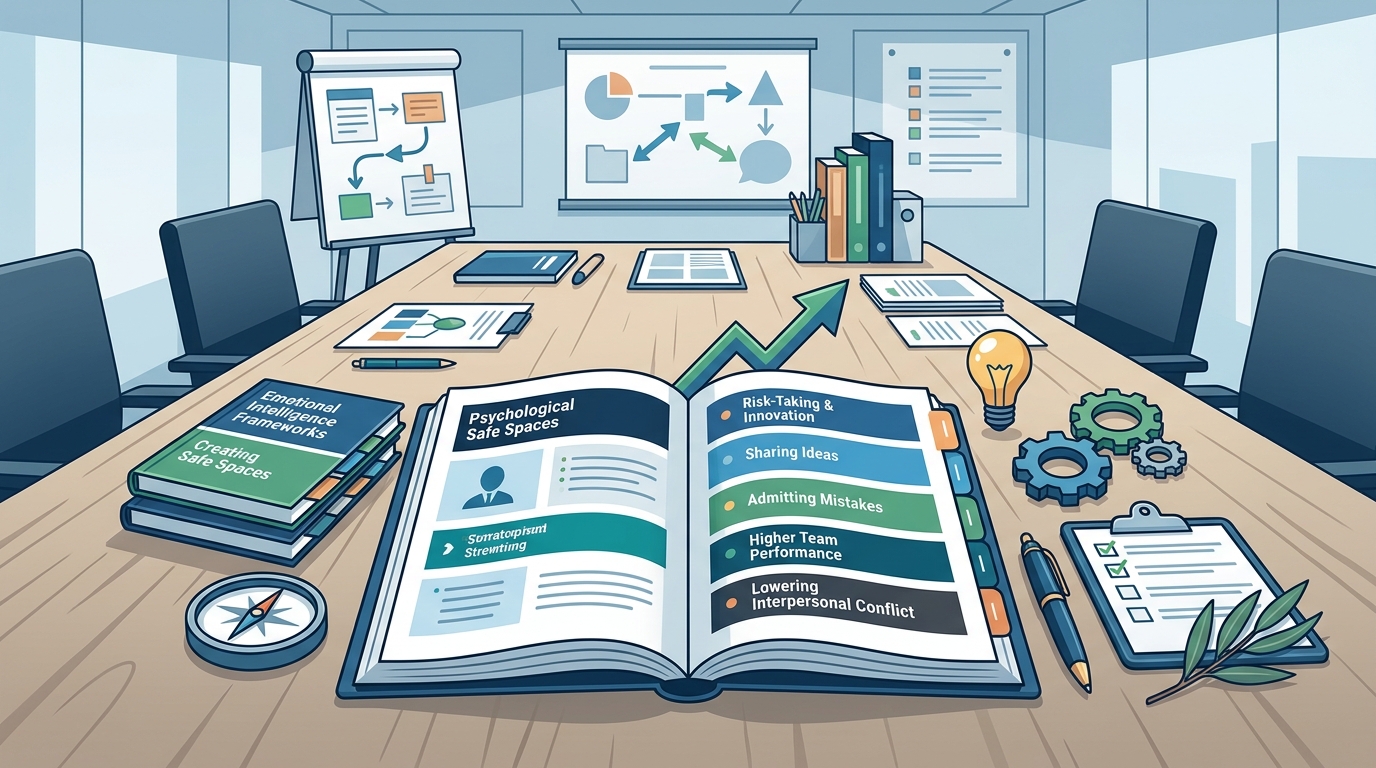
Psychological safety training is essential because it equips leaders with the emotional intelligence to create environments where teams feel safe to take risks, share ideas, and admit mistakes. This safety directly correlates with higher performance and lower interpersonal conflict. Uncapped Potential helps Australian leaders build these capabilities through targeted emotional intelligence frameworks.
Defining the Core Concept
Psychological safety is a shared belief that the team is safe for interpersonal risk-taking. It is not about being nice or avoiding conflict. It is about creating a space where people can speak up without fear of punishment or humiliation. When leaders lack this understanding, they often mistake silence for agreement or compliance.
Research from the Center for Creative Leadership found that teams with high degrees of psychological safety reported higher levels of performance and lower levels of interpersonal conflict. This data confirms that safety is a performance driver, not just a well-being metric. Leaders must understand that silence is often a sign of fear, not satisfaction.
The Role of Emotional Intelligence
Emotional intelligence is the human edge of culture and performance. It is a leadership discipline that directly shapes how organizations operate. Leaders with high emotional intelligence can read the emotional currents in a team and adjust their behavior accordingly. They understand that their reactions set the tone for the entire group.
Uncapped Potential emphasizes that emotional intelligence is not a soft skill. It is a critical competency for managing complex human dynamics. Leaders who master self-awareness and self-regulation can prevent emotional contagion, where stress spreads unchecked through a team. This prevents the erosion of trust that often follows high-pressure situations.
By embedding emotional intelligence into leadership thinking, organizations unlock energy, loyalty, and innovation. It becomes both a protective factor and a performance multiplier. Leaders who are emotionally intelligent create conditions where psychosocial risks struggle to take hold.
Impact on Team Performance
High-performing teams require knowledge-sharing, teamwork, and shared decision-making. These activities require an element of interpersonal ease. People who feel psychologically safer work better in teams because they can share information and be transparent. Without this safety, teams hoard information and avoid difficult conversations.
Organizations with high psychological safety experience 27% lower turnover and 74% less employee stress. These statistics highlight the tangible business benefits of investing in safety training. When employees feel safe, they are more likely to stay and contribute their full potential. This reduces the costs associated with recruitment and onboarding.
MIT Sloan research shows that people are far more likely to raise concerns when safety is present. This is crucial for risk management and ethical conduct. When leaders create an environment where concerns can be raised, they reduce avoidable risks and improve decision-making quality. according to Psychological Safety at
Shaping Leadership Behavior
Leadership behaviors shape psychological safety and employee voice. A qualitative study from Slovakia explored how relational dynamics influence the ability to speak up. Leaders who model vulnerability and openness encourage their teams to do the same. This creates a culture of trust and mutual respect.
Uncapped Potential works with leaders to identify and change behaviors that hinder safety. This includes addressing unconscious bias and managing workplace drama. Leaders must learn to have difficult conversations without harm. They must foster trust and create a climate where issues are addressed early and constructively.
Training leaders in these skills is not optional. It is a fundamental requirement for building high-performing teams. Leaders who fail to develop these capabilities create environments where people disengage and underperform. This has a direct impact on business outcomes and organizational health.
Implementing Effective Training
Effective training goes beyond theory. It involves practical tools and real-world case studies. Leaders need to learn how to apply emotional intelligence in their daily interactions. This includes managing stress, regulating emotions, and building empathy. These skills are essential for navigating the complexities of modern work.
Uncapped Potential offers masterclasses and 1:1 mentoring to help leaders develop these capabilities. Their approach is grounded in decades of senior leadership and executive experience. They provide tactical, real-life tools for impactful change. This ensures that leaders can apply what they learn immediately.
Training should be ongoing, not a one-off event. Leaders need continuous support to embed new behaviors. This requires a commitment from the organization to invest in its people. By prioritizing psychological safety training, organizations demonstrate their commitment to building a high-performing culture.
Key Takeaways
- Psychological safety is a shared belief that the team is safe for interpersonal risk-taking.
- Teams with high psychological safety report higher performance and lower interpersonal conflict.
- Emotional intelligence is a leadership discipline that directly shapes organizational culture.
- Organizations with high psychological safety experience 27% lower turnover and 74% less stress.
- Leaders must model vulnerability and openness to encourage their teams to speak up.
- Effective training involves practical tools and real-world case studies, not just theory.
- Uncapped Potential provides targeted emotional intelligence frameworks for Australian leaders.
Frequently Asked Questions
What is psychological safety in the workplace?
Psychological safety is a shared belief that the team is safe for interpersonal risk-taking. It allows employees to speak up, share ideas, and admit mistakes without fear of punishment.
Why is emotional intelligence important for psychological safety?
Emotional intelligence enables leaders to manage their own emotions and empathize with others. This creates a safe environment where people feel comfortable sharing their thoughts and concerns.
How does psychological safety impact team performance?
Teams with high psychological safety report higher levels of performance and lower levels of interpersonal conflict. They are more likely to share information and collaborate effectively.
What are the business benefits of psychological safety?
Organizations with high psychological safety experience 27% lower turnover and 74% less employee stress. This reduces recruitment costs and improves overall productivity.
How can leaders build psychological safety?
Leaders can build psychological safety by modeling vulnerability, having difficult conversations without harm, and fostering trust. They must create a climate where issues are addressed early and constructively.
What role does training play in building psychological safety?
Training provides leaders with the tools and frameworks to apply emotional intelligence in their daily interactions. It helps them manage stress, regulate emotions, and build empathy.
Conclusion
Psychological safety training is essential for building high-performing leadership teams. It equips leaders with the emotional intelligence to create environments where people feel safe to take risks and share ideas. This safety directly correlates with higher performance and lower interpersonal conflict. Uncapped Potential helps Australian leaders build these capabilities through targeted emotional intelligence frameworks. To plan your visit, .