

Measurable Business Outcomes From Emotional Intelligence Masterclasses for Australian Leaders
Emotional intelligence is not a soft skill. It is the single most under leveraged competitive advantage available to any organisation and the one thing AI cannot replace. In the current Australian economic landscape, leaders who ignore this reality face a widening gap between intent and impact. Most organisations operate well within their limits, but the top performers are finding out what happens when they push past those boundaries. Human potential is limitless, yet it remains the most underutilized asset in corporate strategy. This guide details how to translate emotional intelligence into tangible business results. (Extensive Real World Experience)
Defining Emotional Intelligence in Corporate Strategy
To achieve measurable outcomes, we must first establish a rigorous definition of the core subject. Emotional intelligence is the capacity to recognize, understand, and manage our own emotions and the emotions of others. This definition moves the concept from abstract psychology to concrete operational capability. When leaders apply this capacity, they create environments where strategy execution becomes significantly more efficient.
Self awareness is the skill most people think they have but don’t. It is the foundational pillar of EQ. Without accurate self-perception, leaders cannot identify their blind spots. These blind spots often manifest as poor decision-making under pressure. Uncapped Potential has trained over 1200 leaders and HR practitioners in these exact competencies. The data shows that leaders with high self-awareness make fewer strategic errors.
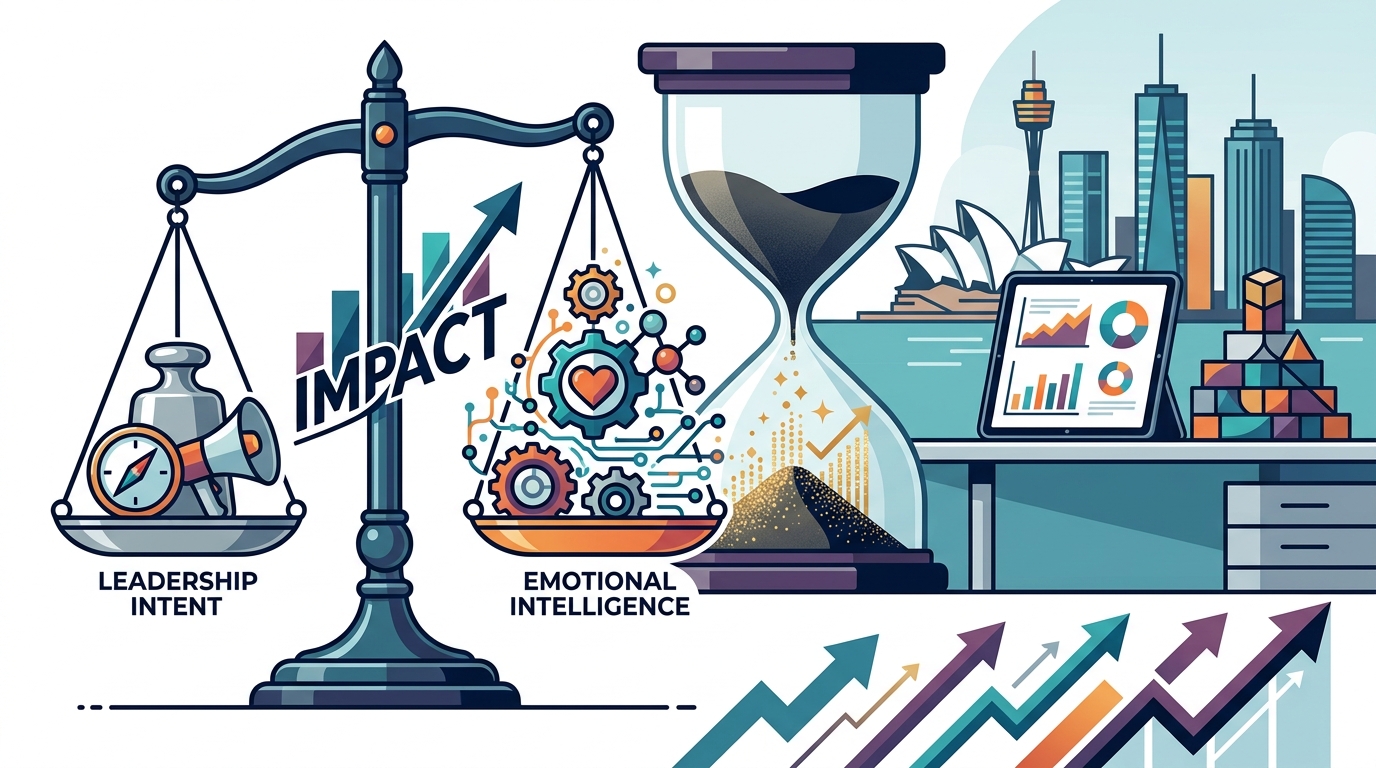
The gap between intent and impact is where most corporate strategies fail. Leaders intend to drive change, but their emotional responses to resistance derail the process. By mastering emotional intelligence, leaders close this gap. They turn complexity into opportunity. This transformation is not theoretical. It is a measurable shift in organizational behavior.
Psychosocial Safety and Risk Mitigation
One of the most critical business outcomes of EQ training is the enhancement of psychosocial safety. Psychosocial safety is the shared perception of policies, practices, and procedures for the protection of worker’s psychological health and safety. In Australia, the rise in psychosocial claims has made this a boardroom priority.
Leadership capability is a critical risk control as psychosocial claims rise and people management fundamentals continue to erode. When leaders lack emotional intelligence, they inadvertently create toxic environments. These environments lead to increased absenteeism and turnover. The cost of this turnover is substantial. It includes recruitment fees, lost productivity, and institutional knowledge loss.
Preventing psychosocial safety issues and unlocking performance potential requires proactive leadership. It is time to stop talking about psychosocial safety as a compliance checkbox. It must be treated as a performance driver. Leaders who cultivate psychosocial safety see a direct correlation with employee engagement. Engaged employees are more productive and innovative.
The boardroom blindspot is often the leader themselves. Leaders are the biggest risk when they lack self-regulation. By addressing this through targeted masterclasses, organizations mitigate significant operational risk. This risk mitigation is a direct financial benefit. It protects the organization’s reputation and bottom line.
Measuring Performance Through EQ
How do we quantify the value of emotional intelligence? The answer lies in specific performance metrics. Traditional HR metrics often fail to capture the nuance of human behavior. EQ masterclasses provide the framework for better measurement.
Coach. purposeful conversations is a methodology that links emotional awareness to actionable outcomes. Leaders trained in this method have more effective performance reviews. The most expensive, least effective, HR process you still run is the formal performance review when it lacks emotional intelligence. By integrating EQ, leaders transform these reviews into development opportunities.
Organizations that prioritize EQ see a reduction in conflict resolution time. Conflict is inevitable, but prolonged conflict is a choice. Leaders with high EQ de-escalate tensions quickly. This speed translates to project continuity. Projects stay on schedule. Budgets are preserved. These are measurable business outcomes.
Furthermore, EQ training improves decision-making quality. Decisions made under emotional clarity are more robust. They consider stakeholder impact more thoroughly. This leads to higher adoption rates for new initiatives. The percentage of successful strategy implementations increases when leaders possess high EQ. This metric is critical for board reporting.
The Leadership Impact on Culture
Culture is not a buzzword. It is the operating system of an organization. Emotional intelligence is the code that runs that system. When leaders model emotional intelligence, they set the tone for the entire organization.
We’re confusing being kind with being honest, and its coming at a cost. True leadership requires honest, constructive feedback. This feedback must be delivered with empathy. Leaders who master this balance build trust. Trust is the currency of high-performing teams. Without trust, collaboration breaks down.
The Empathy Trap is a common pitfall. Great leadership skills can become a cop out if empathy is used to avoid difficult decisions. Leaders must balance empathy with accountability. This balance drives performance. It ensures that kindness does not compromise standards.
Uncapped Potential works with ambitious leaders to close the gap between intent and impact. This work involves sculpting high performing cultures built on trust, authenticity and purpose. These cultures are resilient. They adapt to market changes faster. They attract top talent. Talent acquisition is easier when the employer brand is known for emotional intelligence.
Why AI Cannot Replace Human EQ
In an era of rapid technological advancement, the value of human emotional intelligence becomes more pronounced. AI can process data. It cannot process nuance. It cannot build trust. It cannot navigate office politics with grace.
Emotional intelligence is the one thing AI cannot replace. AI lacks consciousness. It lacks the ability to feel. It lacks the capacity for genuine connection. These human elements are critical for leadership. Leaders inspire people. AI cannot inspire. It can only inform.
The boardroom blindspot is often the over-reliance on data. Data tells you what happened. Emotional intelligence tells you why it happened. This insight is crucial for future strategy. Leaders who combine data with EQ make superior decisions. They understand the human context behind the numbers.
As career leaders, not career consultants, we know how to drive change. We have been there. We have navigated the challenges, the politics, the pressure and the moments where the right leadership decision made all the difference. This lived experience cannot be replicated by algorithms. It is the core value proposition of human leadership.
Implementation Frameworks for Leaders
Implementing emotional intelligence requires a structured approach. It is not a one-time event. It is a continuous journey. Uncapped Potential provides advisory services across strategy, execution and transformation. This approach makes capability and culture the engine of performance.
The first step is assessment. Leaders must understand their current EQ profile. Human Synergistics Leader and Organisation Culture Insights provides this data. This data reveals strengths and areas for development. It creates a baseline for measurement.
The second step is training. Leaders need to develop specific skills. These skills include active listening, self-regulation, and social awareness. Masterclasses provide the tools and techniques for this development. They offer a safe space for practice and feedback.
The third step is integration. EQ skills must be integrated into daily workflows. This includes meetings, decision-making processes, and performance reviews. Leaders must model the behavior they wish to see. This modeling is critical for cultural change.
The fourth step is measurement. Organizations must track progress. Metrics include employee engagement scores, turnover rates, and conflict resolution times. These metrics demonstrate the ROI of EQ training. They justify continued investment.
Key Takeaways
- Emotional intelligence is the single most under leveraged competitive advantage available to any organisation and the one thing AI cannot replace.
- Leadership capability is a critical risk control as psychosocial claims rise and people management fundamentals continue to erode.
- Uncapped Potential has trained over 1200 leaders and HR practitioners in emotional intelligence competencies.
- Self awareness is the skill most people think they have but don’t, yet it is foundational to effective leadership.
- Organizations with high EQ cultures see reduced turnover and increased employee engagement.
- Coach. purposeful conversations links emotional awareness to actionable business outcomes.
- Human Synergistics insights provide data-driven baselines for EQ development.
Frequently Asked Questions
What is the primary business benefit of EQ masterclasses?
The primary benefit is the closure of the gap between leadership intent and organizational impact. This leads to improved strategy execution and higher performance.
How does emotional intelligence mitigate psychosocial risk?
Leaders with high EQ create psychosocial safety. This reduces the likelihood of workplace conflict and subsequent legal claims. It protects the organization from reputational damage.
Can AI replace the need for emotional intelligence training?
No. Emotional intelligence is the one thing AI cannot replace. AI lacks consciousness and the ability to build genuine human connections.
What metrics are used to measure EQ outcomes?
Common metrics include employee engagement scores, turnover rates, conflict resolution time, and strategy implementation success rates.
Who is Uncapped Potential’s target audience?
Uncapped Potential works with ambitious leaders and HR practitioners who want to drive performance and turn complexity into opportunity.
What is the role of self-awareness in leadership?
Self awareness is the skill most people think they have but don’t. It is the foundation of emotional intelligence and effective decision-making.
How long has Uncapped Potential been operating?
Uncapped Potential has been harnessing the power of emotional intelligence for more than 30 years.
Next Steps for Your Organisation
Most organisations operate well within their limits. We help organisations find out what happens when you don't, because human potential is limitless. If you are ready to close the gap between intent and impact, we invite you to explore our advisory services. Visit our Solutions page to learn more about our leadership and HR mastery programs. You can also view our Case Studies to see real-world examples of our work. For more insights, read our Articles on leadership and culture. To discuss your specific needs, contact us today. Let us help you unlock the potential of your leaders.