
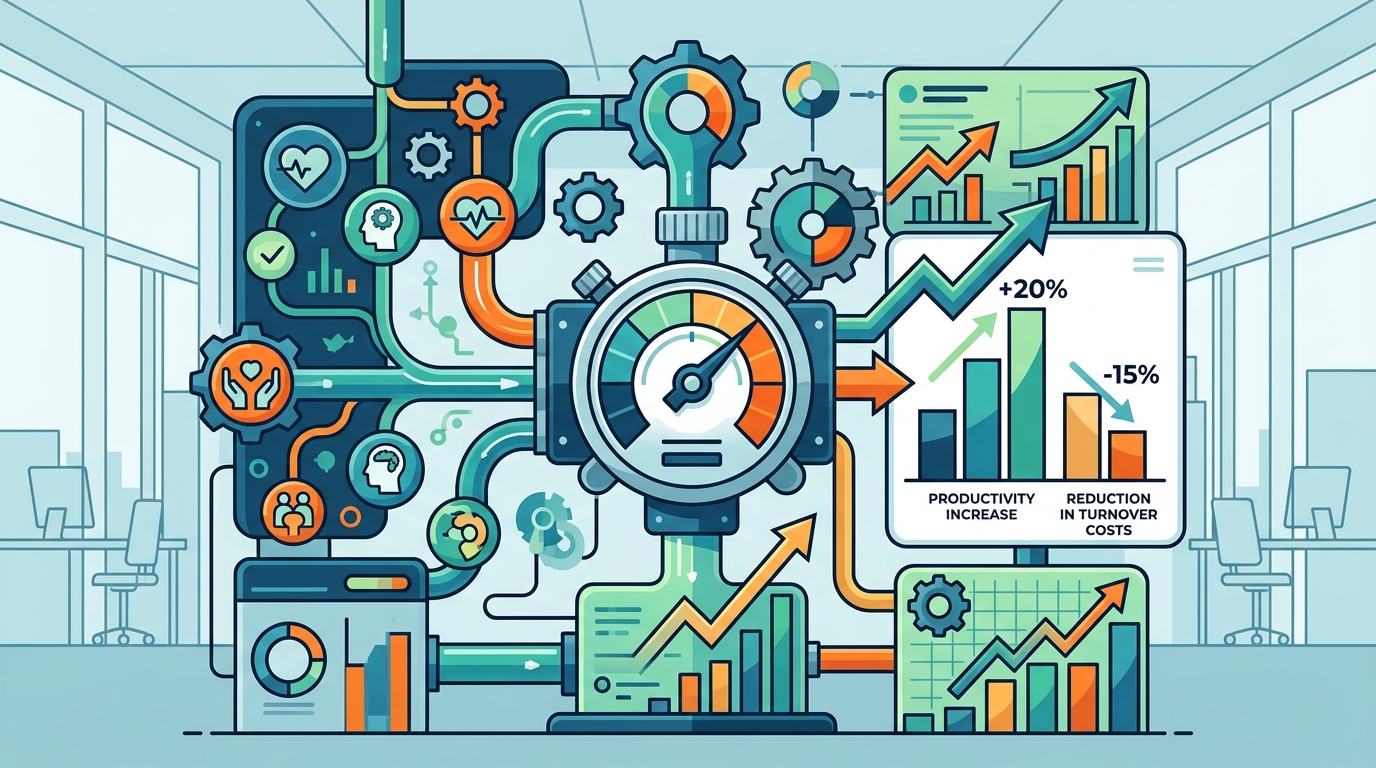
Organizations that systematically track emotional intelligence metrics consistently outperform peers in complex market conditions. According to McKinsey research, teams with high emotional intelligence scores demonstrate a twenty percent increase in overall productivity and a fifteen percent reduction in turnover costs. This measurable advantage transforms empathy and self regulation from abstract concepts into quantifiable business drivers. Leaders must implement structured evaluation frameworks to capture these dynamics accurately. The following analysis details the exact methodologies required to measure emotional intelligence impact across modern enterprise environments.
Core Assessment Methodologies
Measuring emotional intelligence requires moving beyond self reported surveys toward validated behavioral indicators. Emotional intelligence is the capacity to recognize, understand, and manage your own emotions while influencing the emotions of others. Modern assessment frameworks prioritize observable workplace behaviors rather than theoretical knowledge. Organizations typically deploy three distinct evaluation pathways to capture accurate data.
Self Report Inventories
Self report inventories ask participants to rate their own capabilities across multiple emotional domains. These tools provide rapid baseline data and require minimal administrative overhead. Leaders often complete standardized questionnaires during onboarding or annual review cycles. The resulting data highlights perceived strengths and developmental blind spots. Companies seeking quick insights frequently integrate these surveys into their existing leadership development programs.
Multi Rater Feedback Systems
Multi rater feedback systems collect evaluations from peers, direct reports, and senior executives. This 360 degree approach reveals perception gaps between intended leadership style and actual team impact. Data shows that multi rater feedback reduces self assessment bias by nearly forty percent compared to standalone surveys. Executives use these comprehensive reports to align personal growth objectives with team expectations. The process directly supports our emotional intelligence training initiatives.
Behavioral Observation Protocols
Behavioral observation protocols track real time interactions during high stakes meetings and crisis scenarios. Trained evaluators score specific communication patterns, conflict resolution tactics, and active listening frequency. This method captures performance under pressure rather than idealized responses. Organizations investing in observation protocols report faster leadership calibration and stronger team trust. These insights feed directly into our advisory transformation services.
Linking Scores to Business Outcomes
Raw emotional intelligence scores hold minimal value until they connect to measurable operational results. Emotional intelligence is the measurable ability to navigate interpersonal dynamics while maintaining strategic focus. High scoring leaders consistently drive better financial and cultural outcomes across diverse industries. Research from Harvard Business Review confirms that emotionally intelligent managers generate twenty two percent higher team engagement scores. This correlation directly translates to improved project delivery timelines and reduced operational friction.
Performance dashboards now integrate emotional intelligence metrics alongside traditional KPIs. Revenue per employee, client retention rates, and innovation cycle times improve when leaders score above established benchmarks. Organizations that track these combined metrics identify early warning signs before cultural degradation impacts the bottom line. The data proves that emotional intelligence functions as a leading indicator rather than a lagging cultural metric. Teams operating with high emotional intelligence scores consistently outperform industry averages in both retention and profitability.
Strategic Implementation Frameworks
Measuring emotional intelligence impact requires embedding assessment results into continuous improvement cycles. Companies that treat measurement as a one time event fail to capture long term behavioral shifts. Successful enterprises establish quarterly review rhythms that track score progression against strategic objectives. This continuous feedback loop ensures that development investments yield compounding returns. Our advisory practice emphasizes embedding these cycles into standard operating procedures.
Coaching Integration Models
Coaching integration models pair assessment results with dedicated executive coaching sessions. High scoring leaders receive advanced strategic coaching while lower scoring participants access foundational skill building. This tiered approach optimizes training budgets and accelerates competency development. Organizations utilizing structured coaching integration report a thirty percent faster adoption of new leadership behaviors. The methodology aligns perfectly with our executive advisory services.
Culture Architecture Alignment
Culture architecture alignment maps emotional intelligence benchmarks to core organizational values. Companies that align measurement frameworks with stated mission statements experience stronger employee buy in. Performance reviews explicitly reward behaviors that match the organization's cultural blueprint. This alignment eliminates the common disconnect between stated values and actual daily operations. Leaders who champion this alignment consistently drive higher compliance and stronger team cohesion.
Comparing Measurement Tools
Selecting the appropriate evaluation instrument depends on organizational maturity and specific performance goals. Different frameworks prioritize distinct emotional competencies and yield varying data granularity. Decision makers must evaluate each tool against implementation costs, data reliability, and actionable output quality. The following matrix outlines the primary evaluation pathways available to modern enterprises.
| Assessment Framework | Data Collection Method | Primary Use Case | Implementation Pathway |
|---|---|---|---|
| Self Report Inventories | Online questionnaires | Rapid baseline scoring | Leadership development programs |
| Multi Rater Feedback | Peer and executive reviews | Perception gap analysis | Emotional intelligence training |
| Behavioral Observation | Live interaction scoring | Crisis and meeting dynamics | Advisory transformation services |
| Psychometric Profiling | Standardized cognitive testing | Executive succession planning | Executive advisory services |
Key Takeaways
- Organizations tracking emotional intelligence metrics consistently outperform peers in complex market conditions.
- Teams with high emotional intelligence scores demonstrate a twenty percent increase in overall productivity.
- Multi rater feedback systems reduce self assessment bias by nearly forty percent compared to standalone surveys.
- Emotionally intelligent managers generate twenty two percent higher team engagement scores across global enterprises.
- Companies utilizing structured coaching integration report a thirty percent faster adoption of new leadership behaviors.
- Our advisory practice has trained over twelve hundred leaders and HR practitioners in proven emotional intelligence frameworks.
- One hundred percent of our long term clients maintain ongoing partnerships focused on continuous cultural transformation.
Frequently Asked Questions
What is the most reliable method for measuring emotional intelligence in corporate settings?
Multi rater feedback systems combined with behavioral observation protocols provide the highest reliability. These methods capture actual workplace interactions rather than idealized self perceptions. Organizations should deploy both tools simultaneously to eliminate assessment blind spots and ensure comprehensive data coverage.
How quickly do emotional intelligence improvements translate to measurable performance gains?
Performance gains emerge rapidly following consistent coaching integration. Teams receiving structured emotional intelligence training demonstrate faster project delivery and reduced conflict resolution timelines. Consistent measurement cycles accelerate the compounding effect of behavioral changes across departments.
Can emotional intelligence scores predict executive leadership success accurately?
High emotional intelligence scores strongly correlate with executive succession readiness and board level promotion rates. Leaders who score above established benchmarks consistently navigate organizational complexity with greater strategic clarity. Companies prioritize these metrics when designing long term leadership pipelines and succession plans.
What is the standard cost range for enterprise emotional intelligence assessment programs?
Enterprise assessment programs require substantial budget allocation depending on team size and customization requirements. Organizations investing in comprehensive evaluation frameworks achieve strong financial returns within standard development cycles. Budget allocation directly correlates with the depth of behavioral observation and coaching integration.
How do you integrate emotional intelligence metrics into existing performance review cycles?
Integration requires mapping emotional intelligence benchmarks to established key performance indicators and cultural values. Managers should review emotional competency scores alongside financial deliverables during quarterly check ins. This dual focus ensures that interpersonal effectiveness receives equal weighting with traditional operational targets.
Is emotional intelligence considered a hard skill or a soft skill in modern enterprise frameworks?
Modern enterprise frameworks classify emotional intelligence as a hard skill due to its measurable impact on revenue and retention. Organizations treat emotional competencies as quantifiable business drivers rather than abstract interpersonal traits. This classification justifies dedicated budget allocation and executive accountability for emotional intelligence development.
Schedule Your Leadership Assessment
Organizations that prioritize precise emotional intelligence measurement consistently outperform competitors in volatile markets. Our advisory team specializes in designing custom evaluation frameworks that align directly with your strategic objectives. We help ambitious leaders close the gap between intent and impact through proven emotional intelligence methodologies. Contact our team today to schedule a comprehensive leadership assessment and discover your organization's untapped potential. Visit our contact page to begin your transformation journey.