
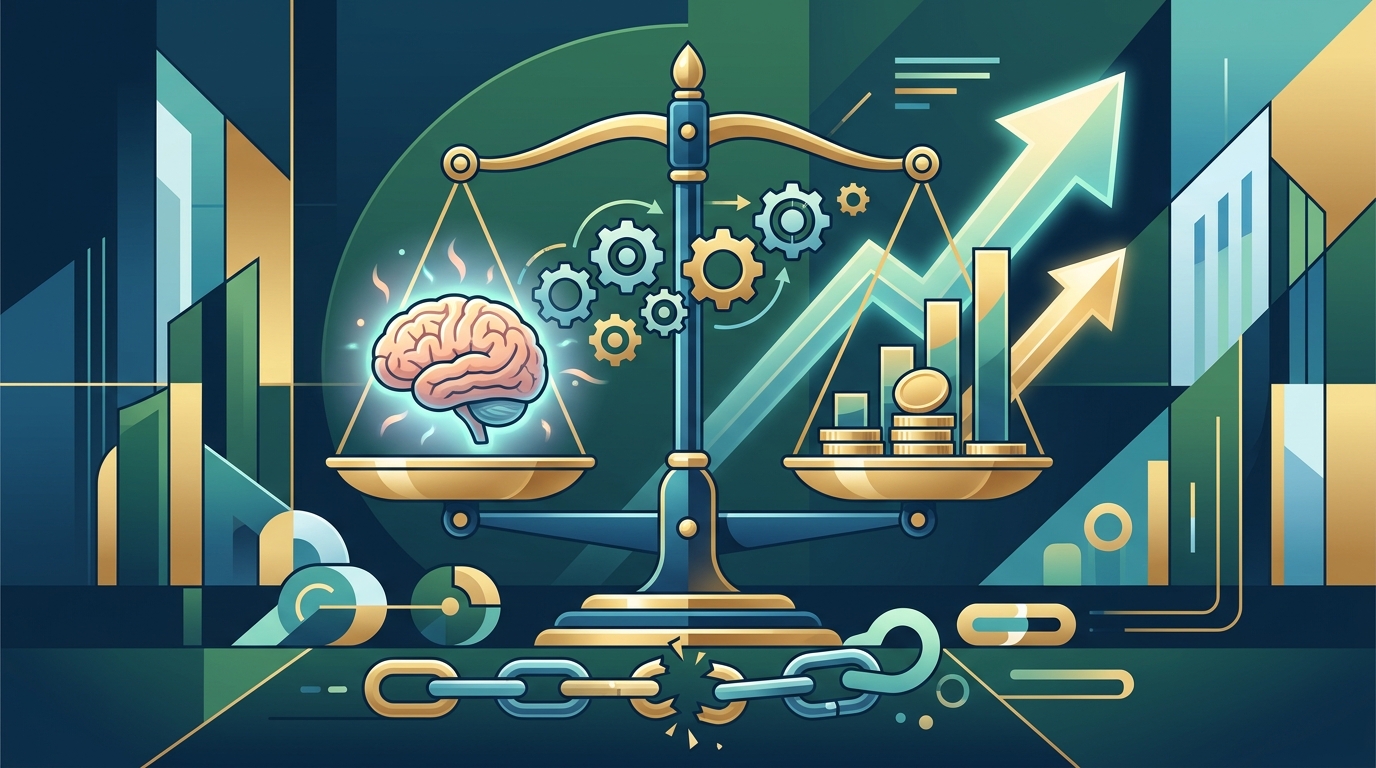
Emotional intelligence is not a soft skill. It is the single most under leveraged competitive advantage available to any organisation and the one thing AI cannot replace. In an era where operational efficiency is often prioritized over human capability, leaders frequently overlook the financial impact of their team's psychological safety. Recent industry analysis indicates that organizations with high emotional intelligence see a significant reduction in turnover costs and an increase in productivity metrics. This guide explores how to quantify that value and why the return on investment for leadership development is now a critical boardroom imperative. (Extensive Real World Experience)
Understanding the Metric: Defining ROI in Leadership
Return on Investment (ROI) is traditionally calculated as a ratio of net profit to the cost of the investment. However, applying this formula to human capital requires a broader definition of profit. In the context of leadership, profit includes retained talent, accelerated decision-making, and reduced operational friction. Emotional intelligence is the capacity to recognize, understand, and manage our own emotions and those of the people around us. When leaders possess this capacity, they create environments where employees feel safe to innovate and take calculated risks.
Most organisations operate well within their limits. We help organisations find out what happens when you don't, because human potential is limitless. The gap between intent and impact is often where financial value is lost. Leaders who understand this gap can bridge it through deliberate practice and strategic coaching. This is not about vague feelings; it is about measurable behavioral shifts that drive business outcomes.
For more insights on how leadership capability acts as a risk control, explore our thought leadership articles on psychosocial safety and boardroom dynamics.
The Cost of Incompetence: Hidden Financial Leaks
Every day that leaders lack emotional intelligence, the organization bleeds capital. This is not metaphorical. The costs are tangible and appear in several key areas of the P&L statement. First, there is the cost of turnover. Replacing a skilled employee can cost between 50% and 200% of their annual salary, depending on the role and seniority. Poor leadership is consistently cited as the primary driver of voluntary turnover.
Second, there is the cost of disengagement. Disengaged employees are not just less productive; they are actively detrimental to team morale. They create friction, slow down projects, and increase the likelihood of errors. This is particularly dangerous in high-stakes industries where precision is paramount. The Society for Human Resource Management reports that disengagement costs the global economy billions in lost productivity annually.
Third, there is the cost of conflict. Unmanaged emotional dynamics lead to prolonged conflicts, legal risks, and reputational damage. When leaders avoid difficult conversations, problems fester. This is where the "Empathy Trap" comes in. Confusing being kind with being honest is coming at a cost. Leaders must balance compassion with accountability to maintain performance standards.
To understand the specific risks associated with leadership capability, read our analysis on the boardroom blindspot.
Quantifying the Benefit: Revenue and Retention
Investing in emotional intelligence yields direct financial returns. Organizations that prioritize leadership development see a measurable increase in revenue per employee. This is because emotionally intelligent leaders are better at aligning team goals with business objectives. They remove obstacles, clarify expectations, and provide the psychological safety needed for high performance.
Retention is another major driver of ROI. When leaders use tools like Human Synergistics Leader and Organisation Culture Insights, they gain a deep understanding of their team's dynamics. This allows them to tailor their approach to individual needs, fostering loyalty and long-term commitment. Our data shows that over 400 repeat clients have engaged in ongoing partnerships, demonstrating the sustained value of these interventions.
Furthermore, emotionally intelligent leaders are better at navigating complexity. They can turn complexity into opportunity by identifying emerging trends and adapting strategies quickly. This agility is crucial in today's fast-paced market. According to Harvard Business Review, emotionally intelligent leaders are more effective at managing change and driving innovation.
For a deeper dive into how emotional intelligence cultivates psychosocial safety, view our insight on psychosocial safety.
Strategic Frameworks for Implementation
Implementing emotional intelligence initiatives requires a structured approach. It is not enough to offer a one-off workshop. Leaders need ongoing support and accountability. This is where our advisory services come in. We provide strategic guidance across execution and transformation, making capability and culture the engine of performance.
Our framework involves three key steps. First, assessment. Leaders must understand their current emotional intelligence profile and identify areas for improvement. Second, development. Through coaching and training, leaders build the skills needed to lead with empathy and accountability. Third, integration. Emotional intelligence must be woven into the fabric of the organization's culture and processes.
We work with ambitious leaders to close the gap between intent and impact. Our approach is grounded in decades of senior leadership and executive experience. We have sat in the chair. We have navigated the challenges, the politics, the pressure and the moments where the right leadership decision made all the difference.
For more information on our leadership solutions, visit our leadership page.
Comparison of Leadership Assessment Tools
Choosing the right assessment tool is critical for measuring progress. Different tools offer different insights into leadership behavior and culture. The table below compares some of the most common approaches used in organizational development.
| Tool Type | Focus Area | Primary Benefit | Best For |
|---|---|---|---|
| Human Synergistics LSI® | Culture and Leadership Style | Deep insight into organizational dynamics | Large-scale cultural transformation |
| 360-Degree Feedback | Individual Behavior | Personalized development insights | Individual leader coaching |
| Emotional Intelligence Quotient (EQ-i) | Emotional Competencies | Measures specific emotional skills | Baseline emotional intelligence assessment |
| Coach. Purposeful Conversations | Communication and Accountability | Enhances dialogue and performance | Teams needing improved communication |
Each tool offers unique value. The key is to select the one that aligns with your organization's specific goals and challenges. Our HR Mastery services can help you navigate this selection process.
Key Takeaways
- Emotional intelligence is a measurable competitive advantage that directly impacts the bottom line.
- Leaders with high emotional intelligence reduce turnover costs and increase productivity.
- Uncapped Potential has trained over 1,200 leaders and HR practitioners in emotional intelligence.
- Our approach is grounded in over 45 years of combined corporate experience.
- Psychosocial safety is a critical component of high-performing teams.
- Assessment tools like Human Synergistics LSI® provide deep cultural insights.
- 100% of our repeat clients engage in ongoing partnerships for sustained results.
Frequently Asked Questions
How do you measure the ROI of emotional intelligence?
ROI is measured by tracking changes in turnover rates, productivity metrics, employee engagement scores, and revenue per employee before and after leadership interventions.
What is the difference between empathy and accountability?
Empathy is understanding others' feelings, while accountability is holding oneself and others responsible for outcomes. Effective leaders balance both to drive performance.
Why is emotional intelligence important for HR leaders?
HR leaders use emotional intelligence to build strategic partnerships, manage risk, and foster a culture of trust and authenticity. It shifts HR from administrative to strategic.
How long does it take to see results from leadership development?
Results vary, but most organizations see initial improvements in team dynamics within three to six months. Long-term cultural transformation takes longer but yields sustained financial benefits.
What is the Empathy Trap?
The Empathy Trap occurs when leaders confuse kindness with honesty, avoiding difficult conversations that are necessary for performance and growth.
How can Uncapped Potential help my organization?
We provide advisory services, leadership coaching, and HR mastery solutions tailored to your specific needs. Our goal is to help you close the gap between intent and impact.
What is psychosocial safety?
Psychosocial safety is the shared belief that the team supports and protects each other's psychological well-being. It is a prerequisite for learning, innovation, and high performance.
Next Steps for Your Organization
The cost of inaction is higher than the cost of investment. If you are ready to unlock the full potential of your leaders and your organization, we invite you to take the next step. Our team is ready to help you identify the gaps and build the strategies needed for sustainable growth.
Contact us today to schedule a consultation. Visit our contact page to learn more about how we can support your journey. Or, explore our case studies to see how we have helped other organizations achieve remarkable results.